Sign in. It’s quick, free and it’s up to you.
An account is an optional way to support the work we do. Find out more.
Sign in. It’s quick, free and it’s up to you.
An account is an optional way to support the work we do. Find out more.
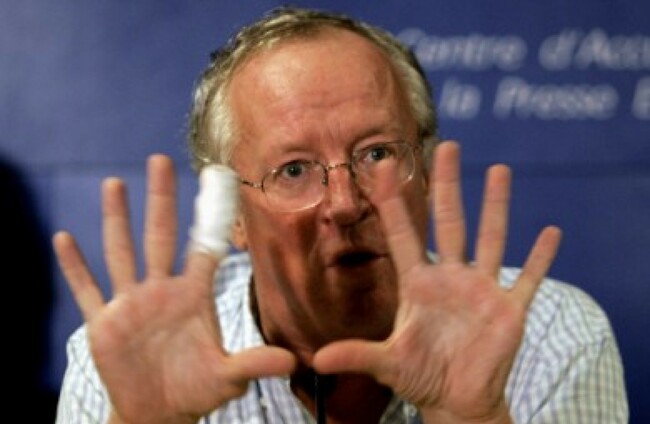
VETERAN FOREIGN CORRESPONDENT Robert Fisk has died aged 74.
The celebrated journalist, best-known for his work in the Middle East, passed away at St Vincent’s Hospital in Dublin after becoming ill on Friday, the Irish Times reported.
Fisk won numerous awards for his reporting on the Middle East. Over a career spanning five decades, Fisk also covered the Balkans and North Africa and in 2005 was described by the New York Times as “probably the most famous foreign correspondent in Britain”.
Born in Kent in 1946, Fisk later took Irish citizenship and lived in Dalkey.
Fisk also covered the Troubles in Northern Ireland between 1972 and 1975 for the Times before becoming the paper’s Middle East correspondent.
The Independent, for which Fisk wrote since 1989, described him as “the most celebrated journalist of his era”.
"With his passing the world of journalism and informed commentary on the Middle East has lost one of its finest commentators."
— President of Ireland (@PresidentIRL) November 1, 2020
Statement from President Higgins on the death of Robert Fisk:https://t.co/iuewqXuE4n
Christian Broughton, managing director of The Independent said: “Fearless, uncompromising, determined and utterly committed to uncovering the truth and reality at all costs, Robert Fisk was the greatest journalist of his generation. The fire he lit at The Independent will burn on.”
President Michael D Higgins and his wife Sabina expressed condolences to Fisk’s family.
“I have learned with great sadness of the death of Robert Fisk. With his passing the world of journalism and informed commentary on the Middle East has lost one of its finest commentators,” Higgins said in a statement.
“I have had the privilege of knowing Robert Fisk since the 1990s, and of meeting him in some of the countries of which he wrote with such great understanding. I met him in Iraq, and last year I had my last meeting with him in Beirut, during my Official Visit to Lebanon.
I knew that his taking of Irish citizenship meant a great deal to him, and his influence on young practitioners in journalism and political writing was attested by the huge audiences which attended the occasions on which he spoke in Ireland.”

To embed this post, copy the code below on your site




have your say