Sign in. It’s quick, free and it’s up to you.
An account is an optional way to support the work we do. Find out more.
Sign in. It’s quick, free and it’s up to you.
An account is an optional way to support the work we do. Find out more.
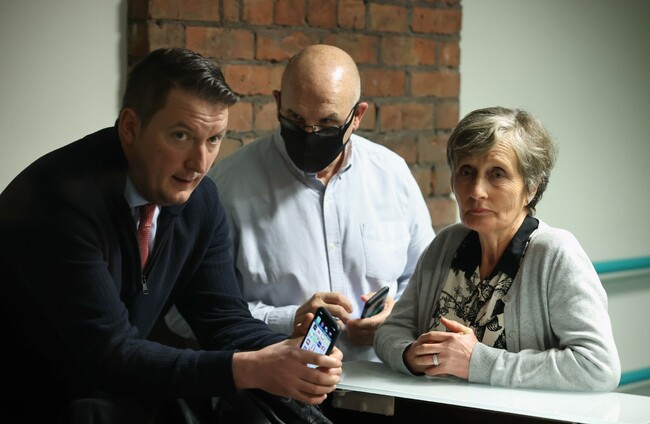
THE COUNCIL OF Europe has said that it will reopen the case of Pat Finucane’s 1989 murder, following the UK’s surprise decision last year not to launch a public inquiry.
The decision means the British government will have to justify that decision, and whether it contravenes the European Convention on Human Rights (ECHR).
The 47-nation council, which oversees the implementation of ECHR judgments, has also called on the UK authorities to step up efforts to conclude all legacy killing inquests within five years.
The Council has invited the authorities to clarify how the ongoing police and Office of the Police Ombudsman for Northern Ireland processes will proceed “promptly and in line with Convention standards”.
Pat Finucane, who represented republican and loyalist paramilitaries during the Troubles, was shot dead in his family home in north Belfast in February 1989 by the Ulster Defence Association in an attack found to have involved collusion with the state.
The decision was made this week by the 47-nation Council, which oversees the implementation of judgments from the European Court of Human Rights (ECHR).
Today’s decision to reopen the case was made “in order to supervise the ongoing measures to ensure that they are adequate, sufficient and proceed in a timely manner”.
The murdered solicitor’s son has called the Council of Europe’s decision “a hugely significant move”.
John Finucane, a Sinn Féin MP for North Belfast, wrote on Twitter:
This is a hugely significant move. The British government have been criticised internationally for their failure to establish an inquiry and this level of scrutiny is vital to ensure truth can finally emerge.
Finucane’s widow Geraldine and the couple’s three children have been campaigning for decades for a public inquiry to establish the extent of security force involvement.
There was shock when the British government announced in November that it would not hold an immediate public inquiry into Pat Finucane’s murder, including among the Irish government. The Taoiseach said at the time that he was “disappointed” with the decision.
Minister of Foreign Affairs Simon Coveney welcomed the decision adopted today.
“The Committee will recall that it has been the consistent and firmly held position of the Irish Government that a full and independent public inquiry, as provided for under the Weston Park agreement in 2001, is the right way forward on this case, and the best way for the UK government to uphold its Article 2 obligations.
“In 2019, the UK Supreme Court found that there had not been an investigation into the murder of Pat Finucane that was compliant with Article 2 of the Convention.
“In December, on the eve of our last meeting, the Secretary of State for Northern Ireland announced that he had decided against the holding of a public inquiry into the case at this time, and wished to allow the Police Service of Northern Ireland and the Police Ombudsman processes to move forward first. This position has been restated by the UK Government in their most recent submission to the Committee.
The Irish Government expressed its profound regret in response to this decision at the time, and the Committee adopted an interim resolution with a view to considering whether to reopen the supervision of individual measures.
The decision was also welcomed by Amnesty International. Patrick Corrigan, the human rights group’s Northern Ireland programme director, said: “This is a welcome move by the Council of Europe, but it is deeply regrettable that the UK Government’s shameful refusal to open a public inquiry into the murder of Pat Finucane has made it necessary.
Given the failure to properly investigate this killing, previously identified by the European Court of Human Rights and the UK Supreme Court, it is appalling that the government continue to shirk not only their duty to the Finucane family but also their obligations under international law.
In February 2019, the British Supreme Court ruled that investigations into the fatal shooting of the solicitor have not been effective and fell short of international human rights standards.
With reporting from the Press Association.

To embed this post, copy the code below on your site













have your say