Sign in. It’s quick, free and it’s up to you.
An account is an optional way to support the work we do. Find out more.
Sign in. It’s quick, free and it’s up to you.
An account is an optional way to support the work we do. Find out more.
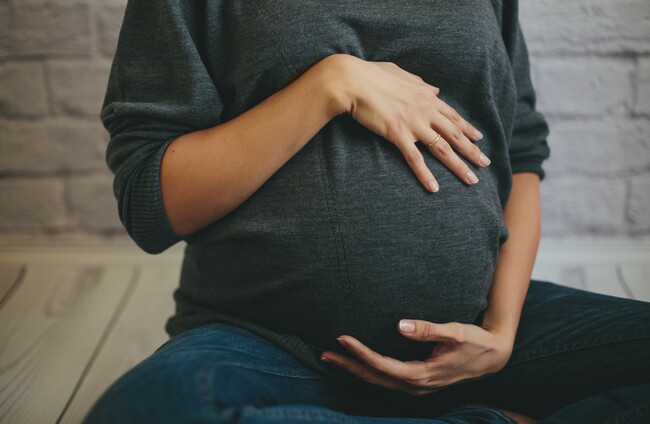
HEALTH EXPERTS HAVE said that there have been six cases of stillbirths and one case of a second-trimester miscarriage caused by Covid placentitis since the start of the year.
These six cases are out of a total of 11 cases of SARS-CoV2 placentitis identified in Ireland since the start of the pandemic.
The Faculty of Pathology and Institute of Obstetricians and Gynaecologists has noted that the reason why this is emerging now, and not in previous Covid waves in Ireland, is because it may be linked to the B117 variant, also known as the ‘British’ or ‘Kent’ variant.
“It may also partially explain why it is not a clear feature of Covid-19 infection in the international literature to date, which largely dates from Covid-19 cases seen in 2020,” a statement from both organisations said today.
On 4 March, NPHET announced that it was aware of four cases of stillbirths potentially linked to a complication of Covid-19 that results in the placenta becoming infected.
Today’s statement confirms a further two cases of stillbirths linked to SARS-CoV2 placentitis, as well as a miscarriage in the second trimester.
This condition appears to occur a relatively short time after contracting Covid-19 infection, ranging up to 21 days from experiencing symptoms.
Maternal Covid-19 symptoms varied from none to moderate, the health organisations said, while the gestations involved ranged from 20-36 weeks.
“Current clinical advice is for pregnant women to notify their treating hospital if they test positive for Covid-19, so as to ensure appropriate follow up, and to present early if there are concerns regarding reduced foetal movements,” a statement said today.
“Pregnant women should continue all measures to avoid contracting Covid-19 infection.”
Vaccination of pregnant women can occur between 14 and 36 weeks, where it is recommended they consult with their doctor. As it stands, there is no prioritisation of women for the Covid-19 vaccine – they fall into the age cohorts or other priority groups.
At last night’s NPHET briefing on vaccinations, chair of the National Immunisation Advisory Committee Professor Karina Butler said that the prioritisation review will take into account the risk to pregnant women, and admitted that that process got “a little bit derailed” this week due to the AstraZeneca vaccine issue of rare blood clots.
“Interestingly, it seems that actually pregnancy may have somewhat of a protective effect in terms of these adverse events. But actually, most as most pregnant women will be under 60 years of age, it will be preferentially recommended those who are at high risk to get the an alternate vaccine.”

To embed this post, copy the code below on your site














have your say