Sign in. It’s quick, free and it’s up to you.
An account is an optional way to support the work we do. Find out more.
Sign in. It’s quick, free and it’s up to you.
An account is an optional way to support the work we do. Find out more.

IT IS A “myth” that the expansion of the free contraception scheme to 16-year-old girls will lead to more young people having sex, a sexual health expert has said.
Dr András Költő, a Senior Postdoctoral Researcher at the Health Promotion Research Centre at the University of Galway, has said that the only change will be that younger people are having safer sex.
There has been much debate since Health Minister Stephen Donnelly said he would like to extend the free contraception scheme to 16-year-old girls over the potential impacts it could have on the age of consent.
Donnelly first spoke of expanding the scheme in an interview with The Journal last month. This week he acknowledged that there are “legitimate concerns” from stakeholders over the “legal complexities” with the proposed change.
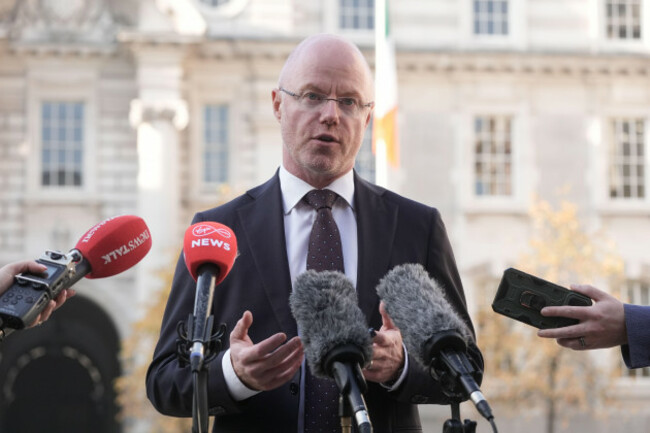
In Ireland, the age of consent is 17 years old though there is legislation that recognises the reality of under age, consensual relationships through the introduction of a ‘proximity of age’ defence.
This allows for someone to engage with consensual relationships where both partners are aged two years apart or less, provided one person does not hold any type of authority over the other.
There is no set minimum age in Ireland at which contraceptive advice and prescriptions may be provided. Women aged between 17 and 35 years old, only, are guaranteed free contraceptives from their GPs without the requirement to hold a medical card.
Donnelly said in his August interview that he wanted to expand the scheme further: “For me, contraception should be for all women from 16 up, that should be it. We’re certainly getting there. We’re now 17 to 35. I want to go 16 to any age.”
There is already some support for this move. The Irish Family Planning Association, while welcoming the expansion of the free contraception programme, said it was concerned that the extension does not include 16-year-olds.
It called on Government to do so and Donnelly said last month that the matter would be hammered out during Budget 2025 negotiations.
The Health Minister claimed that members of Fianna Fáil have broadly supported the measure – though when asked to comment on the matter on Wednesday, Tánaiste and party leader Micheál Martin said he had not seen the proposal yet.
Some political figures and media commentators have voiced concerns about the expansion, both in terms of the message it sends and whether there may be a legal impact on the age of consent.
Among them was Aontú leader and Meath West TD Peadar Tóibín who said that “children are incredibly susceptible to peer pressure”.
“This peer pressure may well increase for a child, if the state, in a practical sense, is giving licence to under age sexual activity. The state providing contraceptives for a child means the is state is giving licence to the activity,” he said.
Speaking about the issue of consent on Virgin Media’s Tonight Show on Wednesday, he said:
“What the minister is discussing here is a material contravention on the issue of consent for 16-year-olds.”
“The law on consent is an important protection for children.”
— TonightVMTV (@TonightVMTV) September 19, 2024
Aontú Leader @Toibin1 says the age of consent is a vital safeguard for children, and expanding free contraception to 16-year-olds may have an impact on younger teenagers.#TonightVMTV pic.twitter.com/8pTkpD8pa3
Tóibín said the law on consent is “an important protection for children” and claimed that changing the age of consent would push “pressure down on the age profile for sexual activity at a very-young age”.
Asked if the State would be looking at the age of consent, Donnelly said on Wednesday morning that that was a “broader question” and not a discussion included in this debate.
He added:
“My view on it is, if a young woman at 16 can avail of termination of pregnancy services, surely we should be able to provide her with contraception services as well.”
A study published earlier this year found that fewer teenagers were using contraceptives when engaging in sexual activity in 2022.
Of the 25% of 15-to-17-year-olds who said they had sex, less than half (48%) said they had used a condom – a 14% drop compared to figures from 2021.
Dr András Költő described the fall as “alarming” at the time and expressed the need for better sex education in schools.
Speaking to The Journal today, Költő said he would welcome measures that included 16-year-olds in the free contraceptive scheme and supported measures to include girls younger than that.
“There are countless studies that show the introduction of sex education, talking about contraception, talking about condom use is not making young people have more sex. It’s only making them have safer sex.
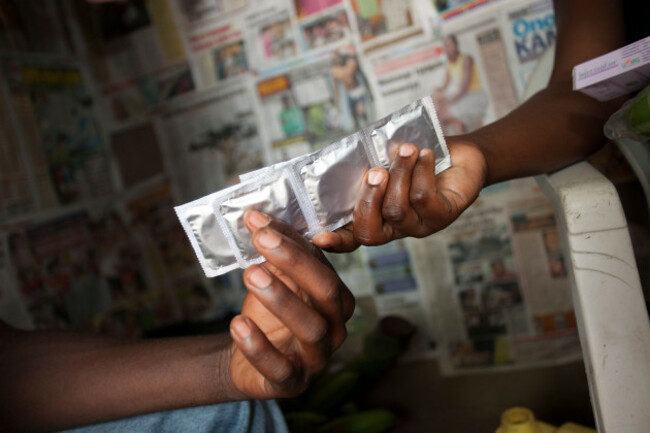
“Lowering the threshold [for the scheme], in my opinion, will not increase the likelihood of young people having sex. What we are seeing in the trend analysis of the studies we are doing with young people is that sexual activity is stagnating or decreasing,” he added.
Költő said he believes the Government needs to pay better attention to young people’s sexual health through educational programmes that outline safe-sex practices, include open conversations and provide better advice for protected sex.
He warned that if there was no action taken to provide better education to younger people that unsafe sex will increase and expressed the need for the burden of responsibility for contraception to also be shared with men purchasing condoms.
The researcher told also called for better supports for parents, acknowledging that some of the cohort find it hard to discuss sex-related issues with their children, and added that young people and their families need to be provided with the adequate tools to do so.
Earlier this year, the sex education curriculum was broadened for children in primary school, who are usually taught about sexual intercourse in their fifth year of school.
Safe-sex practices, inclusivity, personal safety and healthy-relationship building were included in the new curriculum. Költő has welcomed the changes, adding that it was providing the tools to young people to better understand how to be protected.
He said that claims that these curriculums and new frameworks, such as the expansion of the free contraception scheme, are pushing young people to have more sex is a “classic right-wing trope”.
“The opposite is true. We want young people to decide with whom they want to have sex in the safest way,” Költő said.
Speaking on Wednesday, Minister for Children Roderic O’Gorman expressed support for the expansion: “I think steps that we can take to avoid [unplanned] pregnancies definitely should be looked at.
“I think the free contraception scheme has been hugely beneficial. It’s taken a major expense away from women, and young women in particular. I’d be supportive of certainly examining what we can do in terms of bringing it to 16,” he added.

To embed this post, copy the code below on your site













have your say