Sign in. It’s quick, free and it’s up to you.
An account is an optional way to support the work we do. Find out more.
Sign in. It’s quick, free and it’s up to you.
An account is an optional way to support the work we do. Find out more.
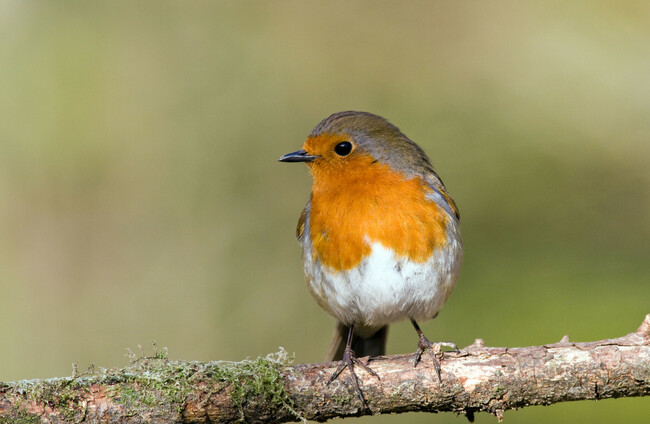
FOR THE FIRST time, a robin has been recorded moving between France and Ireland.
The robin was ringed in Calais in France in mid-September and was found in west Cork two weeks later.
Bird ringing allows people to track the movements of a bird and the data gathered can often be important in helping to protect bird populations.
Robins in Ireland are considered sedentary and rarely move beyond 10 kilometres of where they hatched.
But the distance between Calais and west Cork is over 750 kilometres.
A first for an Irish Robin!
— BirdWatch Ireland (@BirdWatchIE) October 23, 2024
A great record of a Robin ringed in Calais in France in mid Sept and found in West Cork two weeks later. This is the first record of a Robin moving between France and Ireland!
Thanks to Shona in Cork for contacting us when she found the ring! pic.twitter.com/CWzfnefrqy
Brian Burke, a member of the conservation team at BirdWatch Ireland, told The Journal that a member of the public called Shona came across the ringed robin.
Unfortunately, the bird was dead when Shona discovered it but she noticed that it was wearing a leg ring.
“She got in touch with us to try and find out where it came from,” said Burke.
“Some people think we do the ringing and tagging of just rare birds, but actually, a lot of the common birds are ringed and tagged as well.”
As for what misfortunate befall the record-breaking robin, Burke said: “We’re not sure how it died, but quite often, a cat might have got it or it may have flown into a window or something.”
Burke said hundreds of robins are ringed in Ireland every year and generally they’re found within a few kilometres of where they’re originally ringed.
“By and large, the Irish robin population stays put and moves a very small amount, within 10 kilometres in their whole lifetime from where they hatch,” Burke told The Journal.
“If you’re looking at a robin in your garden, you could be almost certain that it came from a nest not too far away from your house in the last few years.
“So that’s why this one is so unique in that it’s travelled so far.”
Burke noted that there are a small number of records of robins coming to Ireland from northern Scotland to “get away from snowy, cold parts of Scotland for the winter months”.
And while there are also a couple of records of robin interchange with Spain and Norway, BirdWatch Ireland said it is “exceptionally rare” for Irish robins to be found in other countries.
Burke added that birds are often “ringed or tagged for quite boring reasons” but that the data provides us with information on bird migration and on the typical lifespan of a bird.
“From the point of view of a bird ringer and a bird scientist, the boring improvements and things that might not make the headlines are quite interesting for us as well, but this is obviously so unique that it has captured a lot of people’s imaginations,” said Burke,
Meanwhile, he’s appealed to the public to be like Shona in Co Cork and to get in touch if they come across a dead bird with a ring on it and to take note of the full code.
“We’ll be able to trace it for you, tell you where and when it came from, and also that record goes into a big database that helps us learn more about the species as well,” said Burke.
“Absolutely, give us a shout if you come across a ringed dead bird and we’ll put you in the right direction.”

To embed this post, copy the code below on your site
















have your say