Sign in. It’s quick, free and it’s up to you.
An account is an optional way to support the work we do. Find out more.
Sign in. It’s quick, free and it’s up to you.
An account is an optional way to support the work we do. Find out more.

LAST UPDATE | 19 May
THE MINISTER FOR Agriculture, Martin Heydon, has today introduced draft legislation with significant reforms to dog breeding and ‘puppy farms’ in Ireland.
The Dog Breeding Establishments Bill 2026 will update existing laws related to dog welfare and breeding, sales, record-keeping, administration and enforcement.
In recent times, there have been sustained calls to update Ireland’s existing legislation in this area, the Dog Breeding Establishments Act 2010.
The aim of the Bill is to target sales practices that can lead to poor outcomes for puppies in terms of socialisation and early development, and to give consumers greater confidence and protection when purchasing a dog.
The new measures the bill aims to introduce include a lifetime limit of four litters per breeding dog, which can be extended to six with veterinary approval.
Breeding dogs are also to be limited to one litter per year, and there will also be age limits.
Dogs under one year old will not be able to be bred and the same applies to dogs over eight (except with veterinary approval).
Breeding dogs that have had two caesarean sections will be banned. Inbreeding will also be banned.
A mandatory staffing ratio of one worker per 20 breeding dogs will be introduced, but breeders will have two years to comply with the new rule.
In terms of selling dogs, there will be a complete ban on third-party sales and puppies must be sold from the site where they are born and reared. Puppies must also be at least eight weeks old before being sold.
People will have to be shown the pup’s mother when buying a puppy as well.
It will also become a criminal offence to fail to notify the local council of any sale or transfer.
To back up these new measures, enforcement officers will receive more robust powers and maximum penalties will increase, with fines of up to €250,000 and/or imprisonment of up to five years for serious offences.
My Lovely Horse Animal Rescue said the proposed changes are a “positive and overdue acknowledgment that the current system is failing dogs, puppies, rescues and responsible owners alike”.
However, a spokesperson said that while the proposals are welcome, “significant gaps still remain if Ireland is truly serious about tackling unethical breeding practices and protecting animal welfare”.
The spokesperson also raised concerns about the “practical implementation and enforcement of the proposed measures” and about “uneven enforcement across Local Authorities, limited inspection capacity and the absence of consistent welfare standards nationwide”.
Meanwhile, the animal rescue said it has been working with Fianna Fáil TD Pádraig O’Sullivan and the Office of Parliamentary Legal Advisers on a separate Private Members’ Bill to “to strengthen protections, close loopholes and improve transparency and enforcement within the sector”.
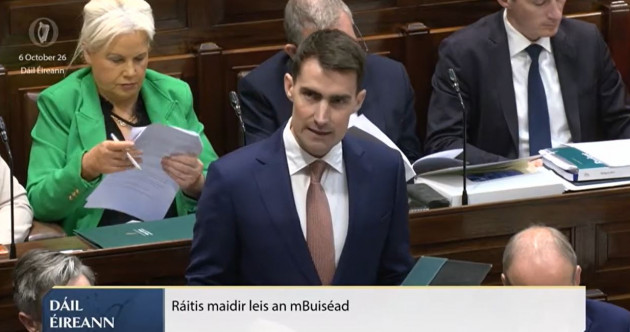
Elsewhere at cabinet today, Minister for Public Expenditure Jack Chambers is set to update his ministerial colleagues on improvements in infrastructure delivery times as a result of changes introduced this year.
As part of the progress report update, he is expected to tell cabinet that the Greater Dublin Drainage project will now be delivered in 2031, a year quicker than expected.
The Greater Dublin Drainage Project consists of a new regional wastewater treatment facility which will have the capacity to serve 500,000 people.
It’s set to be located on a 30-hectare site in Clonshaugh in Fingal.
Meanwhile, the Waterford Ballinamuck wastewater treatment plant will be delivered six months earlier than planned as a direct result of the infrastructure reforms introduced.
Meanwhile, Minister for Children, Disability and Equality Norma Foley will bring a memo to cabinet for the appointment of a new Special Rapporteur on Child Protection.
Human rights lawyer Caoilfhionn Gallagher‘s term in the role ended on 31 January this year.
The special rapporteur on child protection is appointed by the government to examine and report on legal and legislative matters in respect of child protection.
A Public Jobs open competition to select the nominee for the role of Special Rapporteur on Child Protection has recently concluded, and the new appointee is expected to be announced by government later this week.
With reporting from David Mac Redmond

To embed this post, copy the code below on your site











have your say