Sign in. It’s quick, free and it’s up to you.
An account is an optional way to support the work we do. Find out more.
Sign in. It’s quick, free and it’s up to you.
An account is an optional way to support the work we do. Find out more.

THE GOVERNMENT HAS sought to remedy the mistakes of last year’s budget by promising a small bit of everything to almost everyone in Budget 2027.
It’s a budget day strategy almost as old as time, one that typically provokes stark warnings from the public spending watchdog and generally leaves voters still asking for more.
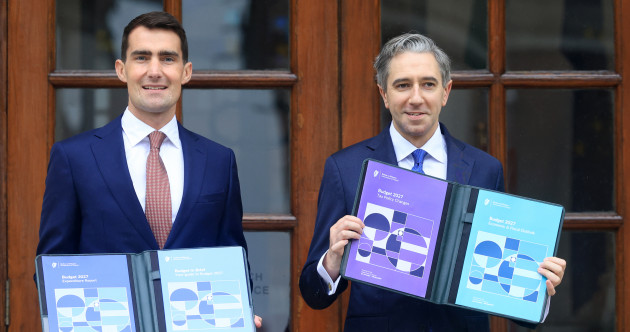
Rather than any single big-bang announcement targeted at a specific cohort, Finance Minister Simon Harris and Public Expenditure Minister Jack Chambers have opted to try and sprinkle tax cuts and spending increases across the board.
It marks a stark change in approach to last year’s budget, which left the average household worse off and was acknowledged to have gone down like a “lead balloon” by coalition TDs.
This time around, the government pledged to deliver for workers, with a number of tweaks announced on income tax, USC and tax credits.
Harris specifically referenced the “squeezed middle” in his speech to the Dáil this afternoon, saying “too many people are working hard, earning good money, and feeling like they’re just about getting by”.
So has this budget delivered for workers?
Well, that depends on what sort of worker you are. The big winners – if we can use that term loosely – are people who earn over €44,000, who will benefit from the entry threshold to the higher rate of tax being increased from €44,000 to €46,500.
This move, coupled with the €125 increase on the main tax credits and the USC tweak, will leave a worker with an annual income of €50,000 roughly €700 a year better off.
A person earning between €30,000 and €40,000 will gain significantly less – approximately €260 for a single person earning €35,000.
That said, after income tax bands were left untouched in last year’s budget, this year’s change sees the government begin to deliver on one of its key promises made at the outset of this coalition in early 2025 – namely, easing the burden of income tax.
The other big-ticket item in this year’s budget is the cuts to childcare costs.
After much criticism over the government’s failure to make progress on the commitment to deliver €200 childcare a month (over the lifetime of the government), this year’s budget will finally see prices capped at €550 per month per child.
This is down from the €735 cap that exists currently; however, it will not take effect until next September.
Baby steps, as they say.
Another item the government can mark done from its election promises list is the cost of disability payment, which it has introduced this year in the form of an annual €500 payment.
This equates to less than €10 a week, when the Disability Federation of Ireland say what is needed is €55.
The likes of Family Carers Ireland and the National Women’s Council have said that while this is welcome, it does not go far enough to support disabled people with the rising cost of living.
Across the board, early reaction to this year’s budget from interest groups and opposition parties has been the same: It does not go far enough on any measure.
While the government may be slowly starting to deliver on its election promises, this year’s budget is a reminder that trying to satisfy everyone often leaves no one all that happy at all.

To embed this post, copy the code below on your site














have your say