Sign in. It’s quick, free and it’s up to you.
An account is an optional way to support the work we do. Find out more.
Sign in. It’s quick, free and it’s up to you.
An account is an optional way to support the work we do. Find out more.
AUTHOR HARPER LEE has only published one book in her career, and it happens to be an American classic — 1960′s Pulitzer Prize-winning novel “To Kill A Mockingbird.”
Now, 55 years later, early reviews of her much-awaited follow-up, “Go Set A Watchman” (which was released today), have begun to come out. And a shocking revelation has surfaced.
 Harper Collins
Atticus Finch, the widowed father of the book’s main character, Scout, and a lawyer who fought against 1930s-era racism by defending black man Tom Robinson in his trial for allegedly raping a white woman, turns out to be a racist.
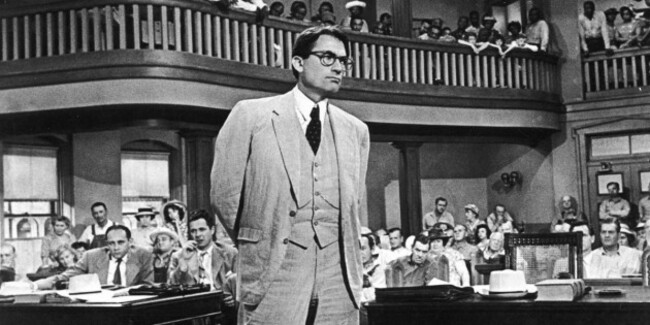
Finch’s inspiring moral center in “To Kill a Mockingbird” — and later immortalised by actor Gregory Peck in the film adaptation in 1962 — became canonised during the Civil Rights Movement and has inspired generations of readers in recognizing equality for all.
The American Film Institute in 2003 even named the Finch character in the film adaptation the greatest hero in American film.
However, in “Go Set A Watchman,” set in the 1950s, we find Finch as an aging racist who has attended Ku Klux Klan meetings and denounces desegregation, according to The New York Times.
“Do you want Negroes by the carload in our schools and churches and theaters? Do you want them in our world?” is one example The Times reports Finch says to a now adult Scout in “Go Set A Watchman.”
As you can imagine, many have reacted via Twitter:

Lee, who is 89, wrote “Go Set A Watchman” in the 1950s but set it aside when her editor suggested she write a novel from young Scout’s point-of-view.
Following the success of “To Kill A Mockingbird,” the manuscript for “Watchman” was considered lost until Lee’s lawyer found it in 2014.
The book is reportedly being published as it was originally written by Lee in the ’50s, long before Atticus Finch became an iconic figure for moral good.
- Jason Guerrasio for Business Insider

To embed this post, copy the code below on your site














have your say