Sign in. It’s quick, free and it’s up to you.
An account is an optional way to support the work we do. Find out more.
Sign in. It’s quick, free and it’s up to you.
An account is an optional way to support the work we do. Find out more.
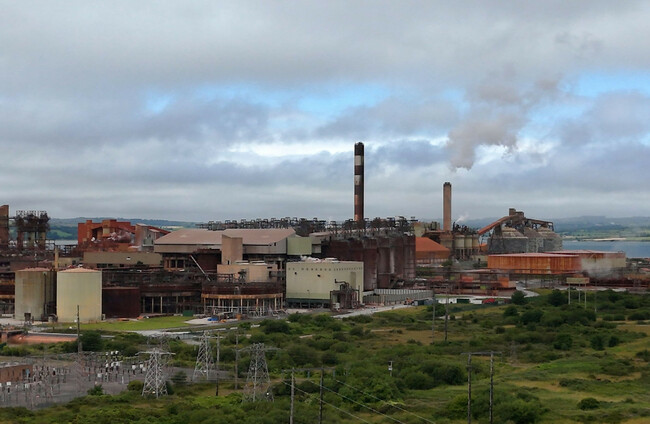
AN ANALYSIS BY a Kyiv-based agency has found what it claims is evidence that raw material produced in Ireland has ended up in Russian cruise missiles.
The report compiled by Roman Steblivskyi and his colleagues at the Kyiv-based of the Economic Security Council of Ukraine (ESCU) has analysed a number of strands of evidence.
The ESCU was formed in 2021 and is an independent body from the Ukrainian government which produces analysis to assist in securing their country’s economic security and documenting how Russia impacts the economy.
They examined supply lines and connections between front companies and how the alumina manufactured in Limerick’s Aughinish Alumina could end up in a factory manufacturing specialist gyroscope units for Russian missiles that target Kyiv and other locations.
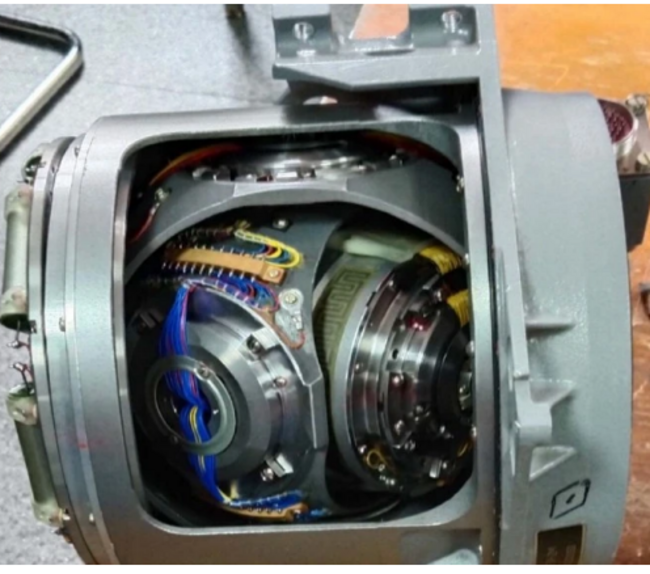
A gyroscope is part of the control unit for missiles which keeps it in controlled flight. They are manufactured using aluminium alloy.
Steblivskyi said his organisation, which is independent of the Ukrainian government, had carried out a much bigger study on how Russia sources minerals used in their war against Ukraine.
The analyst believes that the evidence is such that it can be used to impose further sanctions against Rusal, which operates the Aughinish site, to control the flow of alumina that has been refined in Limerick.
The controversial Russian-owned refinery has faced intense scrutiny because it has continued to ship alumina back to Russia.
It has been claimed, as first reported by the Irish Times, that the alumina is being smelted into aluminium to be used in Russian military weapons which, if proven, would be a breach of existing sanctions.
Rusal has links to Oleg Deripaska, a billionaire oligarch and close associate of Vladimir Putin.
In 2022, Deripaska was sanctioned by the US over Russia’s annexation of Crimea. That same year, he had also been sanctioned by the British government following Russia’s full-scale invasion of Ukraine. A Swedish tax investigation stated he retained control over Rusal.
“From our perspective, the evidence we gathered of the supply chains is enough to sanction the export of alumina,” Steblivskyi said.
He said his institute received leaked Russian tax data and was able to track how the various front companies link up inside Russia to supply the alumina to the arms manufacturers.
This is the crucial new analysis on which this latest report warning that further action is needed to prevent alumina from Limerick being used to make weapons hinges.
Steblivskyi explained that he and his colleagues analysed Rusal and a number of associated companies, their trading activity and supply chains. In particular, it analysed leaked tax data which allowed it to draw connections with producers of missiles.
“In this report you can see that the boxes holding the gyroscopes are made from the aluminium and Russian scientific journals write about it.
“That’s our logic. We can see the imports, we can see the business relations and the amounts of money inside Russia, and we can see the final end users of the products as the military producers. From our perspective, that’s enough for imposing sanctions,” he said.
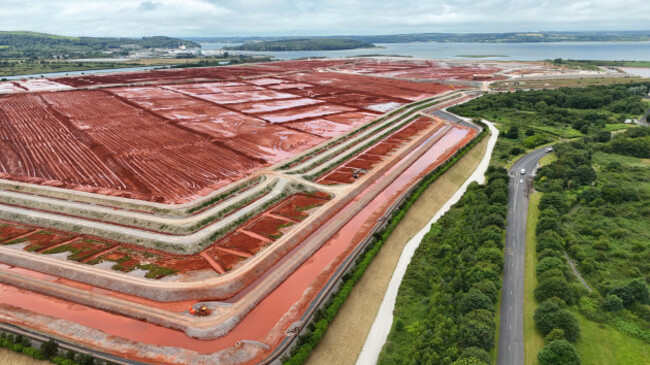
The report follows the alumina from the Limerick refinery and on to three Russian companies in the Rusal group. These include Rusal Krasnoyarsk Aluminium Plant, United Company Rusal – trading house, and Rusal Bratsk Aluminium Plant.
The volumes of these shipments from 2024 to March 2025, the period under analysis, amounted to 540,479.60 tonnes which was valued at more than $307.85 million (€269.88), which equates to 9.3% of the total value of alumina and related aluminium oxide imports into Russia.
The reports found that this alumina then moves to a Russian wholesale distributor of aluminium products called ASK LLC. That company handles a range of casting alloys, aluminium powders and foil. That company purchased the products from Rusal Bratsk Aluminium Plant and Rusal Krasnoyarsk Aluminium Plant and from Rusal Trading House.
The analysis found since 2022 that more than 100 Russian military companies that purchased aluminium from ASK LLC, 40 of which are under the EU sanctions regime.
The report says that one recipient of the ASK LLC products is PI Plandin Arzamas instrument making plant. the Russian tax leak shows Plandin Arzamas purchased from ASK as recently as March 2025.
PI Plandin Arzamas manufactures gyroscopes for various missiles including KH-101 cruise missiles. These missiles have been given the codename Kodiak by Nato and have been reportedly used across strikes on Ukraine.
Steblivskyi said that the problem of alloys supply into Russia extends far beyond Limerick and Ireland. Other states are also facilitating it, such as China. However, he believes that limiting Irish exports to Russia would damage the Russian war effort.
We obtained a copy of the internal unpublished Irish government report on Aughinish Alumina’s export of raw products to Russia. It found no sanction breaches.
This report did not find evidence that alumina from Limerick was being used to make weapons but also did not find evidence to categorically rule the possibility out.
The 50-plus page report carried out a comparison of exports from 2020 and 2026. It found that in 2020, 35% of the alumina produced at the Limerick factory was destined for France which is understood to be destined for a smelter in north-western France. 17% went to the Netherlands while 23% went to Russia.
In 2025, 43% of the plant’s exports went to Russia and 23% to France. There were other destinations such as countries in Europe, Scandinavia, the Caucuses and in Africa.
Steblivskyi said it was his group’s belief that imports and exports could be diverted from other countries to Russia.
The Irish government report spoke about diversification and said the company had struggled to find alternative customers in the wake of the fall-out from the Russian war on Ukraine.
The report stated that the parent company is meeting the gap in purchases by exporting more to Russia. The Department of Enterprise authors said diversification could only be achieved if the Irish government and the company worked together to find more customers in Europe.
The report claims that Aughinish and Rusal are hiring an independent Swiss expert to investigate and trace the destinations of its alumina.
The Department study listed a complex web of companies including those located in Dubai, Qatar and Cyprus.
Rusal told the department that it was not using the Irish alumina to manufacture military grade aluminium. It obtained a “warranty” document signed by Rusal chief executive Evengii Nikitin which was delivered during a meeting between the company and the department on 10 April last.
The report outlines documentation supplied by Rusal which specifies claims of where Irish alumina ends up in smelters in Russia. It claims that there are contracts that ensure that it is used only in civilian aluminium manufacturing.
The Journal had previously sought correspondence between the Department of Enterprise and Aughinish under the Freedom of Information Act, but it refused it stating that it was commercially sensitive.
The unpublished government report also shies away from giving specific data on the company for the same reason.
The report states that Aughinish Alumina and Rusal are client companies of the Industrial Development Agency, the Irish agency that encourages foreign direct investment into Ireland.
Steblivskyi believes Ireland’s continued support of Rusal is at variance to Ireland’s support for Ukraine. He said blind commitment to foreign direct investment could be damaging to a country.
“Usually foreign direct investments are connected to national security and a lot of countries actually ban foreign investments because there is a term of coercive capital when such investments actually have a bad impact on national security,” he said.
Aughinish Alumina did not respond to a request for comment.
The Department of Enterprise, Tourism and Employment said it takes the “potential breach of sanctions by any company based in Ireland very seriously”.
“If the [Economic Security Council of Ukraine] analytical report has not previously been part of public reporting and can be provided in a verifiable, detailed format that can potentially reach an evidentiary level, the department would welcome its provision.
“Any documentation provided would be treated with the highest level of confidentiality,” a spokeswoman said.

To embed this post, copy the code below on your site












have your say