Sign in. It’s quick, free and it’s up to you.
An account is an optional way to support the work we do. Find out more.
Sign in. It’s quick, free and it’s up to you.
An account is an optional way to support the work we do. Find out more.

IRELAND’S AMBITIOUS METROLINK project took one step forward last week when it got the green light from the government to start tendering for the 19km railway, but some large builders are holding off joining the hype train just yet.
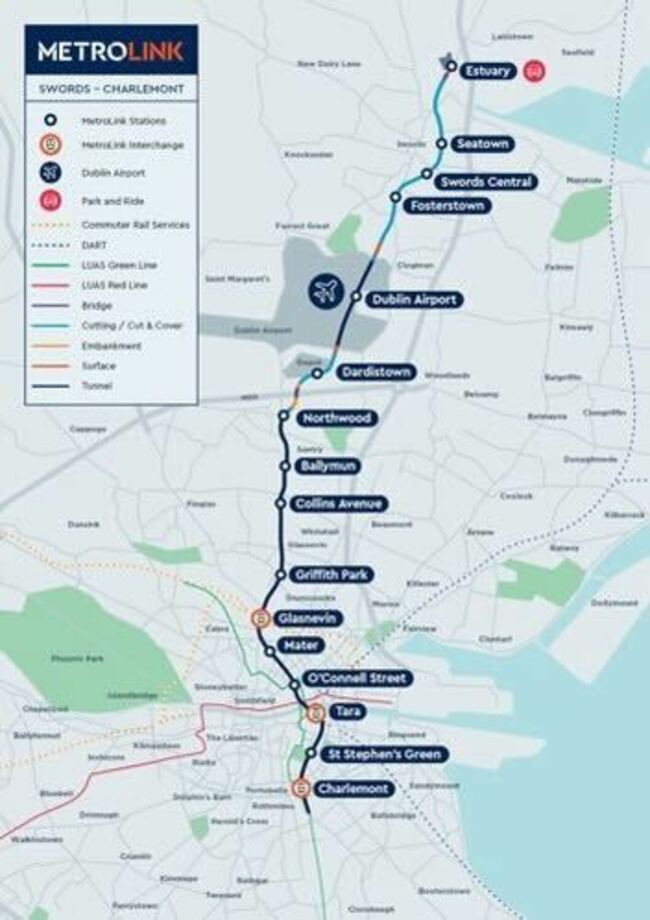
The Department of Transport expects the rail line, stretching from Charlemont in south Dublin to north of Swords, will be a catalyst for anywhere between 77,000 to more than 100,000 homes to be built, offering a regular and frequent way for people to get to Dublin city centre.
Dundrum-based property developer Castlethorn has parcels of land along some of the north Dublin line, but the company is in wait-and-see mode around developing that land, even when it comes to basic infrastructure such as a water connection, for the foreseeable future.
Ronan Columb, the group managing director of Castlethorn, told The Journal that there remains an apprehensiveness around MetroLink due to the lengthy timelines involved, with the first passengers not expected to board until at least 2036.
“We’ve heard about it for so long that people are nervous to make comparative investments on the back of it just yet,” Columb explained.
“It’s something we have an eye to but it’s not something we’re diving into,” Columb added.
Generally, planners can be reluctant to grant permission to new housing if public transport has not been upgraded in an area.
One recent case saw housing plans in Cork turned down as the proposed light rail line for Cork is still several years away, whereas the extension of the Luas Green Line to Cherrywood is credited as having unlocked thousands of homes there.
Columb pointed to remarks by National Transport Authority (NTA) chief executive Anne Shaw at a construction conference on Wednesday that too many people still feel the project “may never happen”, a sentiment that has plagued MetroLink since it was first mooted some 25 years ago.
Broadly, Columb added, Ireland needs to be “better at saying what we’re going to do”, rather than letting projects fall by the wayside.
“That gives the certainty to everybody about what’s going to happen, but we haven’t been great at that.”
He added that similar negativity was found with the Luas and the Dart when they were first proposed, in that “people were sort of hoping it would happen, weren’t sure when it would, but were delighted when it did”.
First mooted when Bertie Ahern was Taoiseach, Metro North was approved for funding in 2008 with construction due to begin in 2009.
At the time, the project was estimated to cost around €2.5 billion.
But plans to kick on with building were dashed by the 2008 financial crash.
At the annual Construction Industry Conference (CIF) this week, fears were raised by key transport figures over whether the multibillion euro rail project will stumble over its need for 8,000 workers for the decade-long works.
The NTA warned in particular that a combination of a “brain drain” of specialised engineers across the public sector, combined with the intense demand for workers to dig and tunnel through the ground, will cause a “capacity issue”.
These fears are based around the government’s ambition for several major infrastructure projects happening across the country at once, including the Greater Dublin Drainage Project and Luas Cork, and not enough workers to go around.
Several thousand workers are needed to tunnel through the ground and lay bricks for the proposed stops. MetroLink is also speaking to firms across Europe to source engineers and other specialised staff.
Wednesday’s summit in Croke Park heard how the construction labour force currently stands at 190,000, but that it needs to add another 100,000 people to ensure the government’s wider infrastructure plans can be met.
Michael Prenty, a director at Dublin-based Ballymore Group, was firmly of the belief that the construction sector will be able to meet the demands for MetroLink.
The company is responsible for multiple large-scale developments across the Dublin Docklands and regeneration projects in London.
“There aren’t 100,000 people waiting, sitting on the sidelines and waiting to start work in the morning. But the industry is flexible,” Prenty told The Journal.
“We built 90,000 houses at the peak the last time and we can do it again. It’s like a lot of things – you plan it, put it there, and we’ll deal with it, the industry will take it from there.”
This was echoed by Andrew Brownlee, chief executive of the CIF, who pointed out how the sector added 20,000 extra workers this year already to put its total nationwide workforce at 190,000.
“The industry flexes up when large projects are guaranteed in the pipeline,” Brownlee told The Journal.
Brownlee, who previously headed up state skills body Solas before joining the CIF, added that the industry does need to make the sector “more attractive” as a career option to keep headcounts rising steadily.
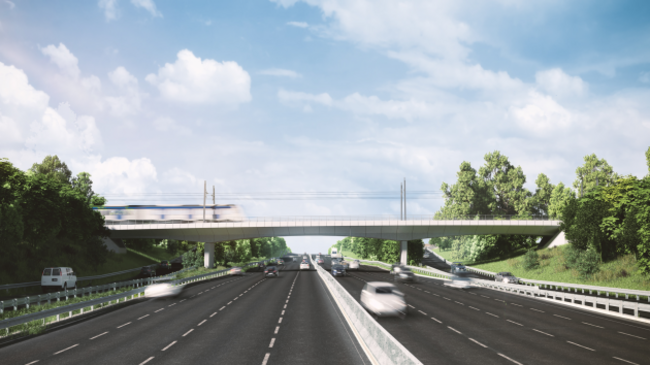
Prenty, of Ballymore Group, told us that the company had not invested in land along the MetroLink stops because they “couldn’t see it happening”.
But he added that the plans are a huge “game changer” as he urged the government to “go for it” and get it built.
Prenty, who is the chairman of the Irish Home Builders Association (IHBA), said the industry is reliant on MetroLink taking off to ensure further housing can be built in north Dublin.
“On the basic level, when you apply for planning for 500 houses, the neighbouring estate says, ‘Well, we can’t get out onto the road now. What happens if you put another 500 on there? We’ll never get out.’ All of a sudden you have a whole army of people against you.”
It’s for this reason, Prenty explained, that the industry wants to see MetroLink, as well as Dart West to Maynooth and Bus Connects, go ahead. He believes all would help reduce congestion on the M50.
“People won’t be as upset when planning goes in their area and they can see the transport is there, but it won’t happen if there’s no capacity and there’s no public transport,” he said.
Early stage works are due to start on MetroLink next year, with groundworks flagged to begin in 2028.

To embed this post, copy the code below on your site















have your say