Sign in. It’s quick, free and it’s up to you.
An account is an optional way to support the work we do. Find out more.
Sign in. It’s quick, free and it’s up to you.
An account is an optional way to support the work we do. Find out more.

MANCHESTER CITY STRIKER Erling Haaland has sparked a massive carrot craze in his home country of Norway, referred to as the “Haaland effect.”
Following the 2026 World Cup, sales of carrots surged after Haaland was frequently spotted snacking on raw carrots before training, while meeting fans and appearing in an advertisement with wholesaler fruit and vegetable distributor BAMA.
Children have been swapping sugary snacks for raw carrots – now known as ‘Haaland candy’ or ‘Haaland’s lollipop,’ with Norwegian carrot sales almost doubling over the summer. Parents are reporting children begging for carrots to “become like Haaland.”

The Haaland effect is one example of how positive influencing can impact children’s view of healthy food choices. What we eat is often down to what’s culturally normalised at the time. Nowadays, many parents will say that their children won’t touch vegetables and some fruits. But deeply entrenched resistance can be shifted with the right approach.
When I was in school, I had a fondness for sardine sandwiches that announced themselves to the class long before lunchtime. I liked tomato sandwiches too… soggy by mid-morning but better than the alternative slice of cheese or corned beef, or smear of ‘sandwich spread’.
Homemade fruit scones, a staple in our household, were swapped on yard for bags of Taytos that never featured in the lunch boxes of seven school-going siblings.
Now, two government-commissioned reviews will form the basis of an overhaul of the free hot school meals scheme following evidence of shortcomings in the service.
A key recommendation is the inclusion of cold school meals as a daily option that could transform ongoing low daily intake of vegetables and fruit among many primary school children. An additional benefit would be a much-needed steady market for local producers of fruit and vegetables across the country.
Minister for Social Protection, Dara Calleary, is seeking Cabinet approval for changes to the €300 million scheme that delivers about 500,000 meals to primary schools across the country every day. The review found that nearly a fifth (18.9%) of all hot school meals were “uneaten”, but this was largely due to absenteeism. When accounting for absences, this fell to 11.1%. Still a sizeable chunk.
There were further concerns around quality – particularly about the amount of highly processed food and a lack of transparency around production methods. High fat, salt and sugar foods were preferred choices and portion sizes for first to sixth class were the same, meaning calorie content for older children was low.
The Nutrition Review analysed 360 meals from 15 suppliers and 54 schools across Ireland. The majority (84%) of parents felt children should have the option of a cold lunch.
Recommendations include development of a standardised menu cycle, different-sized meals for different age groups, adaptations for special schools, special classes and children with dietary requirements; as well as the option of a cold lunch every day.
The CEO of Food Policy Ireland, Ruth Hegarty, said the nutritional value and quality of the hot school meals programme is framed very narrowly – primarily on eliminating high fat, salt and sugar food.
“But we also know that the meals are very low in fruit and vegetable content, which is really what Irish children desperately need,” she said.
Good food habits set early in childhood can last a lifetime. Cold food options could be an opportunity to set children up for life with snacks and lunches centred around wholegrains, protein, vegetables and fruit.
Safefood provides guidelines around exactly what is needed for a nutritious, filling lunch.
The lunchbox should include at least one serving from each group:
- Vegetables, salad and fruit – use carrot or celery sticks with cheese for a more savoury snack
- Wholemeal cereals and breads, potatoes, pasta and rice. The type of bread used can be varied – pitta bread, bagels, rolls – so long as wholegrain varieties are used to support gut health and prevent constipation.
- Meat, poultry, fish, eggs, beans and nuts – lean meat, not processed
- Milk, yoghurt and cheese – low fat dairy is suitable for children over the age of two years
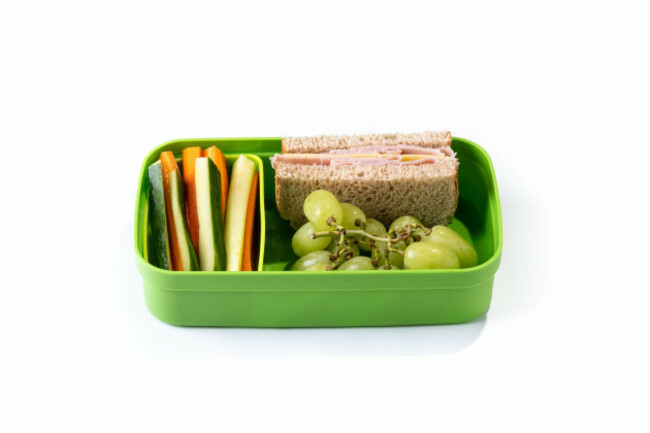
The key to good uptake is to mix and match to allow a variety and spectrum of nutrients. Examples include a mid-morning snack of carrot sticks with cream cheese; half a bagel with nut butter (if the school allows) and banana; yoghurt and a pear; crackers with cheese; cucumber sticks with hummus.
Lunch options could include: chicken salad roll, tuna pasta salad, pasta salad with tomatoes and grated cheese; cold rice and chickpea salad (tinned chickpeas, chopped tomato and peppers); ham, lettuce and tomato sandwich.
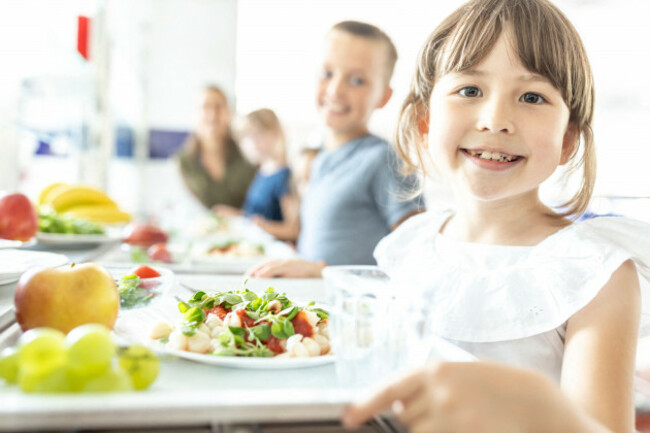
Fruit options include 10 grapes, 2 mandarins, 1 apple, 1 banana, 1 pear, 1 orange, 2 kiwis, 10 blueberries.
A wide variety of fruit and vegetables increases the range of vitamins, antioxidants, soluble and insoluble fibre, and high and low sugar content that maximise energy, boost immunity and protect against chronic disease.
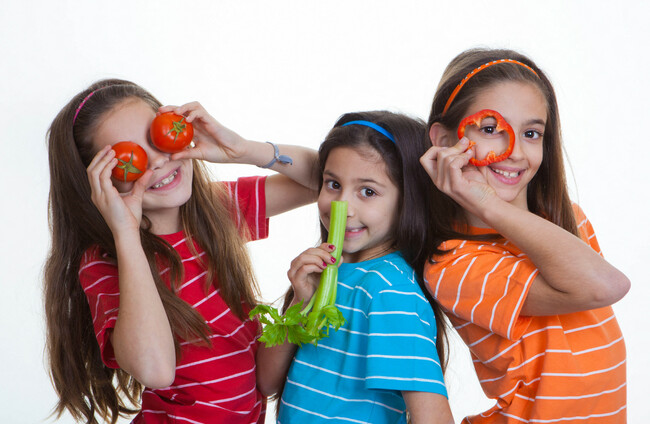
It is possible to change the eating habits of children. The UK group Veg Power adopted a similar approach to the Haaland effect in 2018, when they launched a campaign called Eat Them to Defeat Them. Forget five-a-day lectures. This award-winning programme uses fun to get kids excited about vegetables. Seven years and £20 million (€23.32 million) of advertising later has seen the campaign in 6,000 schools, with a whopping 1.8 million children taking part across the UK.
I saw this campaign in a primary school in Belfast with kids from low-income backgrounds tucking into bean salad, broccoli, peppers and multicoloured fruit salad. They were learning about veggies in the classroom, doing fun activities, taste-testing delicious fruit and veggie snacks and taking home reward charts and stickers.
And guess what? It’s actually working. Parents reported children gobbling up more veggies than ever before. It turns out while children might not want to be “healthy eaters”, they absolutely love being a veggie conquering hero.
The positive energy in schools encourages kids to try something new. But to make lasting changes, the support of parents and carers is needed to reinforce those behaviours at home. Veg Power supplies a Mission Pack and Sticker Sheet for each child to be sent home in school bags. These packs help parents to repeat, reward and normalise new vegetable consumption habits. An online portal is available, packed full of expert tips and advice.
Eat Them to Defeat Them has proven that it helps most families, including those on the lowest income and those with children who are most resistant to vegetables, including many children with autism and other special education needs. Eat Them to Defeat Them focuses on fun and games. Here’s the secret. Most children don’t actually dislike veg, our society has just conditioned them to think that they don’t – this programme reboots that thinking.
A similar approach to vegetables, incorporated into the School Meals Programme, could change the way children think about vegetables and transform the national diet in all age groups and backgrounds – both in schools and in households across the country.
Fresh fruit and vegetables provided five days a week to primary schools across Ireland would provide a steady market for local food producers, providing local employment and fresh produce in short supply chains and giving communities a much-needed boost in both economic and social terms.
Professor Janas Harrington from the School of Public Health, University College Cork, is leading the field in this space, contributing to local and international food policy through the Cork Food Policy Council, in terms of academic and sustainable initiatives aimed at creating healthy, equitable and more sustainable food systems.
School meals are not just about feeding children. They are an important public health and food policy intervention, with the potential to improve children’s diets while supporting healthier, resilient food systems. To make it really work, taking “healthy eating” arguments out of the discussion with kids and replacing them with “fun and games” could transform the way children think about food as well as what they eat.
Dr Catherine Conlon is a public health doctor in Cork and former director of human health and nutrition at safefood.
To embed this post, copy the code below on your site













have your say