Sign in. It’s quick, free and it’s up to you.
An account is an optional way to support the work we do. Find out more.
Sign in. It’s quick, free and it’s up to you.
An account is an optional way to support the work we do. Find out more.

BANK OF IRELAND has said there was a “significant spike” in scam ‘impersonation’ messages last month.
The bank said reports of cases of the fraudulent texts rose in recent weeks, and it is urging customers to be vigilant.
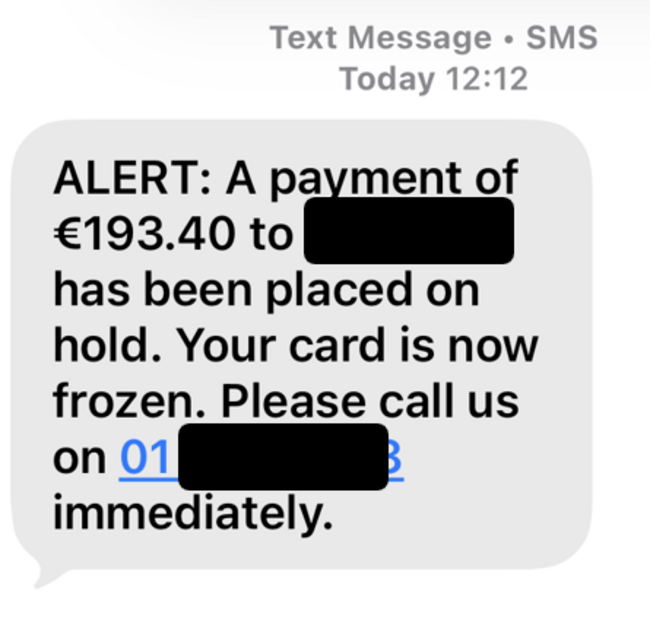
The impersonation texts often refer to a suspicious or declined transaction and pressure the customer to call the phone number included in the message.
When they call, they are connected to a fraudster posing as a member of the bank’s fraud team who attempts to convince them to make a payment or give their banking details over the phone.
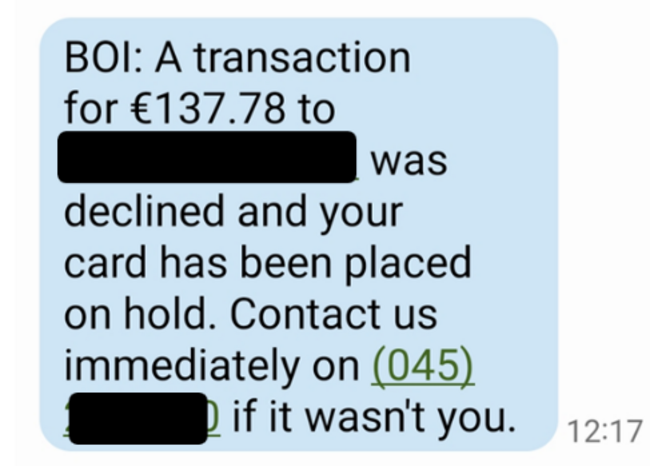
Customers may also be told on the phone that their money is at risk and must be moved immediately to a “safe account”, which is controlled by the fraudster.
In some cases, scam texts can even appear under trusted contact names stored in a customer’s phone, making them even harder to spot.
Bank of Ireland’s head of fraud Nicola Sadlier said that while many people believe this is something that would never happen to them, these scams are carefully designed and can target anyone.
“Fraudsters use familiar brands and everyday transactions, and create a sense of urgency to respond. They know how to create convincing, conversations that feel legitimate, and how to apply just enough pressure and pace to stop people hesitating in the moment.”
Sadlier said the most effective defence is a zero trust approach.
Customers should question any unexpected contact, even if it appears to come from their bank, and should never rely on phone numbers or links provided in the messages.
Those who receive a suspicious text should call their bank directly using a trusted number from its official website or the back of their card.
They can also email a screenshot to 365Security@boi.com and then delete the message.
They can also use the TextChecker service by copying the text of the scam message, pasting it into a new message and adding the word CHECK before sending it to 50365.
Bank of Ireland customers who believe they may have shared banking information should call the bank’s 24/7 freephone line immediately.

To embed this post, copy the code below on your site














have your say