Sign in. It’s quick, free and it’s up to you.
An account is an optional way to support the work we do. Find out more.
Sign in. It’s quick, free and it’s up to you.
An account is an optional way to support the work we do. Find out more.
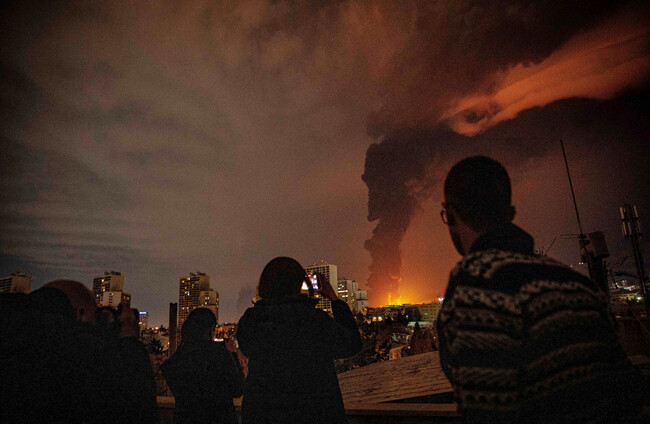
PEOPLE IN TEHRAN woke up in darkness yesterday morning, even though the sun had begun to rise, as black smoke from fires caused by Israeli strikes on oil depots filled the horizon and created an apocalyptic scene in the Iranian capital.
Israel began targeting Iran’s critical infrastructure yesterday and the smoke from the oil fires has sparked concerns about the environmental and health impacts from the chemicals released into the air.
“These attacks on fuel storage facilities amount to nothing less than intentional chemical warfare against the Iranian citizens,” said Esmaeil Baqaei, a spokesperson for Iran’s foreign ministry.
“These strikes constitute war crimes, crimes against humanity, and genocide—all at once,” he said.
The fires released soot, smoke, oil particles, sulphur compounds, and likely heavy metals and inorganic materials from the buildings, said Dr Akshay Deoras, a research scientist at the University of Reading’s meteorology department, who added there are “reported fears of acid rain over Tehran”.
Coinciding with the massive plumes of smoke rising above the city of nine million people was a low pressure system that typically sweeps across Iran and western Asia at this time of year, bringing rainfall.
“The raindrops acted like little sponges or magnets, collecting whatever was in the air as they fell, which is why residents observed what’s being described as ‘black rain’,” Deoras said.
“In terms of atmospheric chemistry, the oil fires produce sulphur and nitrogen compounds that could form acids if they dissolve in rainwater.”
He said the risks to human health come from inhaling or touching the smoke and particles.
“Immediate impacts can include headaches, irritation of the eyes and skin, and difficulty breathing—particularly for people with asthma, lung disease, older adults, young children, and those with disabilities.”
The Iranian Red Crescent Society said that “significant quantities of toxic hydrocarbons, sulfur and nitrogen oxides” were released into the air.
The organisation also said on Sunday that about 10,000 civilian structures across the country had been damaged, including homes, schools and medical facilities.
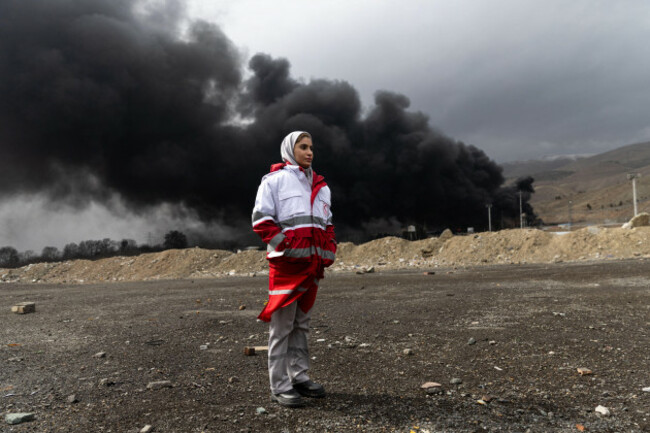
Israel’s military confirmed it had struck “fuel storage facilities in Tehran” that it said were used “to operate military infrastructure”.
Four oil depots and a petroleum logistics site in and around Tehran were hit.
Local authorities said six people were killed and 20 wounded at one of the sites.
On the streets of Tehran, security forces directed traffic while wearing special coats and masks to protect themselves.
Authorities in Iran have urged residents to stay indoors.
With the Sun blotted out, disoriented people in Tehran had to turn on their lights to see through the gloom yesterday morning.
“I thought my alarm clock was broken,” a driver in his 50s told a reporter with the AFP news agency on condition of anonymity.
By 10.30am local time, cars still needed their headlights to drive along Valiasr Street, a main thoroughfare that runs north-south through the city.
Dozens of kilometres away from the fuel depots, residents swept their balconies, which were covered by a mix of rain and puddles of fuel.
With reporting from AFP
Unsure of what exactly is happening with the earth’s climate? Check out our FactCheck Knowledge Bank for essential reads and guides to finding good information online.

To embed this post, copy the code below on your site











have your say