Sign in. It’s quick, free and it’s up to you.
An account is an optional way to support the work we do. Find out more.
Sign in. It’s quick, free and it’s up to you.
An account is an optional way to support the work we do. Find out more.
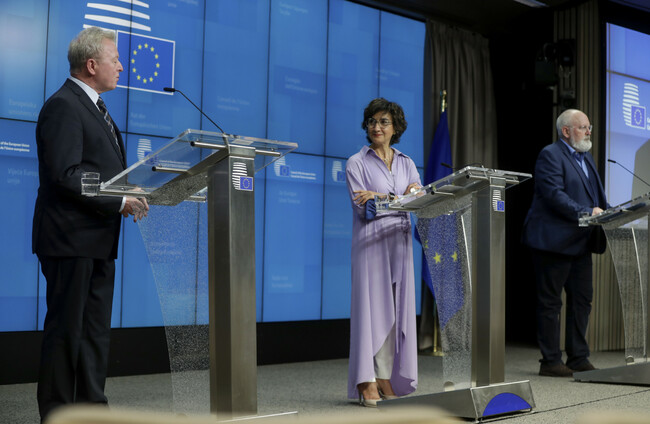
EU MEMBER STATES and the European Parliament have agreed on a major reform of farming subsidies, drawing concerns from NGOs that said it was not “green” enough.
“Today’s agreement starts a real shift towards a greener and fairer Common Agriculture Policy (CAP),” tweeted the European Commission’s vice president Frans Timmermans.
“It’s not perfect, but still a big step in the right direction,” he said.
The deal came after several rounds of the crunch negotiations failed largely on environmental concerns. It should be signed off by EU farming ministers on Monday.
The president of the Irish Farmers’ Association, Tim Cullinan, said the agreement is a “bad deal for Irish farmers”.
“The combined effects of the proposal will decimate a cohort of farmers in Ireland. The Minister [for Agriculture Charlie McConalogue] must push for further flexibility for farmers here,” Cullinan said in a statement.
A statement from the Department of Agriculture this evening said Minister McConalogue and his officials will “study the details of the proposals when this is made available” in advance of next week.
“The agreement is provisional, pending approval by the EU’s agriculture ministers at the upcoming Agriculture and Fisheries Council meeting, which will take place on Monday and Tuesday next, 28 and 29 June,” the statement said.
Fine Gael MEP Colm Markey described the agreement as a “reasonable compromise which embraces our environmental responsibility while ensuring not to undermine the viability of important agricultural sectors”.
Sinn Féin TD and party spokesperson on agriculture Matt Carthy said he welcomes an agreement, but claims it falls short of what “Irish farming needs in terms of redistribution”.
The sums involved are huge. The CAP runs to €387 billion over seven years – a third of the EU’s total multi-year budget – with €270 billion going in direct aid to Europe’s farmers.
The EU’s 27 member states approved the reform of CAP in October, but they had to agree with MEPs on the details.
“We were keen to strike a balance between the economic development of farms and the necessary protection of the environment and climate,” said centre-right French MEP Anne Sander, who was a key player in the deal.
“Some people sometimes lose sight of the fact that without farm income, there will be no environmental and climate sustainability,” she added.
The agreement was reached after long delays over concerns in particular on special premiums granted to farmers who adopt practices deemed more beneficial for the environment.
MEPs initially called for them to represent at least 30% of direct payments to farmers, while the member states argued for a threshold of 20%t.
In the end, the agreement provides for an average of 25% per year over the seven-year CAP period, with the ability to gradually phase-in the new system.
MEPs and member state negotiators also agreed to penalise farmers who do not respect workers’ rights, with the risk of payment cuts in the event of infringement.
One of the most contentious discussions was over biodiversity requirements with environmentalists furious that obligations on farmers didn’t go further.
The World Wildlife Fund complained that the resolve originally demonstrated by MEPs ended up being “just a mirage”.
The deal handed the bloc’s farming-intensive member states “full satisfaction”, it said.
With reporting by Orla Dwyer

To embed this post, copy the code below on your site















have your say