Sign in. It’s quick, free and it’s up to you.
An account is an optional way to support the work we do. Find out more.
Sign in. It’s quick, free and it’s up to you.
An account is an optional way to support the work we do. Find out more.
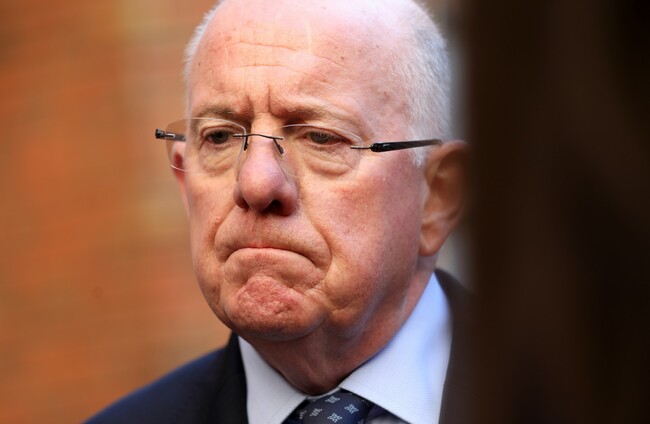
JUSTICE AND EQUALITY Minister Charlie Flanagan has said that a “root-and-branch” change of the Direct Provision system would “ultimately lead to the abolition of the system”.
“I do very much acknowledge the difficulties here, I’m not happy, my colleague Minister David Stanton is not happy. The Taoiseach himself indicated that he’s not happy, in fact nobody is happy [with the system],” he said.
“What we need and what we’re going to have,” Flanagan continued, “is a root-and-branch transformation of the system, and I’m pleased that we’re making progress on that,” change, he said, adding that “ultimately, it will lead to the abolition of the system”, but he said he couldn’t say when that would be.
“This is a complex system… When I hear slogans like ‘End Direct Provision, Abolish Direct Provision’, we need to understand and appreciate the complexity of the situation.”
Speaking on RTÉ Radio One’s This Week programme, he said that the problems couldn’t be solved solely by the Department of Justice, as it related to getting access to jobs, drivers’ licences, and education.
He said that they were working on implementing the following changes to the Direct Provision system: “extending the right to work, acknowledging that we need to explore, pretty urgently, alternative housing models, and of course, reducing the amount of time that applications take”.
Access to housing is a particular issue, he said.
If we have 7,700 people in the Direct Provision system, and we’re calling for that system to be immediately abolished and changed, the question of how is it fundamental
We don’t have that number of houses or apartments freely available at this point in time, but we can work towards that.
Flanagan said that he and Stanton – who is the junior minister with special responsibility for equality, immigration and integration – have been speaking to housing associations about how a housing scheme could play an “important role” in alternatives for Direct Provision.
He said that issues with Direct Provision will be included in the five-year programme for the current Fine Gael, Fianna Fáil, and Green Party government.
When asked whether he thought he would be a minister in the next government, Flanagan said “this is not about me, nor indeed is it about bums on seats”.
“This is about forming a government that will actually renew society, and rebuild the economy having regard to the very serious strains of recent times,” he said.
Reaction
Senator Annie Hoey of the Labour Party said that “until we see action those are just words”.
“We want a commitment from the next Government that they will tackle the issue of systematic racism here in Ireland today.
“The Labour Party wants an end to the current system of Direct Provision. We need a more humane and dignity-centred system for persons seeking international protection. A new system will require time to implement, but needs the political will for change.
“However, the following five actions that can be taken in the immediate term and would make a substantial start to the reforms we need to:
“We also need to challenge misinformed views and myths about refugees in Ireland, and now is the time when political action can have a real impact,” she said.

To embed this post, copy the code below on your site














have your say