Sign in. It’s quick, free and it’s up to you.
An account is an optional way to support the work we do. Find out more.
Sign in. It’s quick, free and it’s up to you.
An account is an optional way to support the work we do. Find out more.
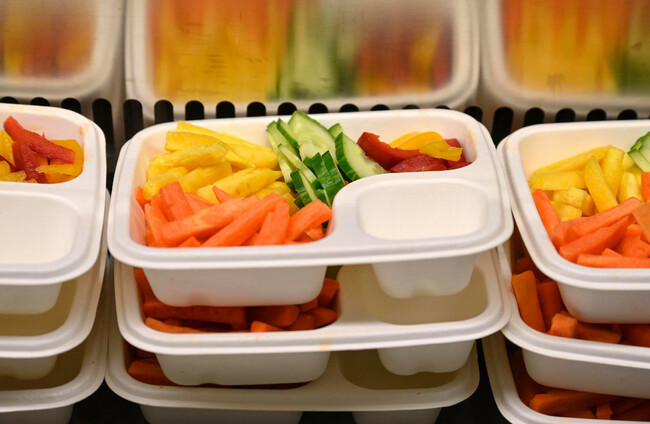
CHILDREN SHOULD HAVE the option to choose a hot or cold meal under the government’s school meals programme, according to an audit of the scheme.
Minister for Social Protection Dara Calleary ordered the independent review to assess the nutritional value of the food that is on offer under the €300 million scheme, after parents and others raised concerns about the quality of the food, as well as food waste.
More than 360 meals from 15 suppliers were examined. The review, which was carried out by a dietician and involved visits to 54 schools, made a number of recommendations.
Announcing the findings today, Calleary said he will act on these recommendations “immediately”.
“Ensuring that children have access to healthy, nutritious food is a key priority for this Government,” he said.
“By providing regular, nutritious meals, we are helping children to fully engage in their education, while at the same time reducing the costs faced by their parents.”
Overall, the study found that there is a wide variety of meals offered under the Scheme, with good availability of nutritious and well-balanced options.
Of all the meals analysed, 82% did not contain foods considered to be high in fat, salt or sugar (HFSS) such as chicken goujons, sausages or fried potatoes. Only 15% of meals audited contained HFSS foods.
However, it found that these processed foods, as well as ‘no vegetable’ options, were more likely to be chosen by children or their parents over healthier options when available on the menu.
It also said that more vegetables, fruit, salad and wholegrain carbs like brown rice, pasta and wholegrain bread needed to be made available in the meals.
Only 20% of vegetarian and vegan meals were found to contain the required amount of protein compared to 74% of meat options, while the same portion size was found to be served to all students, which resulted in older children not receiving enough calories.
The review found that nearly a fifth (18.9%) of all hot school meals were “uneaten”, but this was largely due to absenteeism. When accounting for absences, this fell to 11.1%.
Some 78% of teachers rated meals as acceptable, good or excellent for nutritional value, and 79% rated meals as acceptable, good or excellent on quality.
The review recommended the development of a standardised three-week menu cycle to support suppliers in providing meals that are fully compliant with nutrition standards, and for suppliers to receive clear instructions to provide different size meals for different age groups.
It also recommended that menus be adapted for special schools and special classes, and for children with special dietary requirements, and for flexibility to order either a cold or hot lunch on any given day.
As well as a study on nutrition, Calleary also ordered a survey of students’, parents’ and teachers’ views of the scheme.
IPSOS Behaviour & Attitudes surveyed 6,884 children, 86,637 parents and guardians and 2,420 teachers and principals across 747 schools, as well as 47 suppliers.
It found that 85% of children liked their hot school meal, while 76% said that they eat all, most or some of their meal.
Only 13% of children said they did not like their lunch.
The main concerns raised by parents related to perceptions of processed foods, their children’s dislike of certain meals and concerns regarding fruit and vegetable content.
Some 84% of parents also felt that their children should be given the option of a hot or cold meal, with 28% of children also raising this point.
The Hot School Meals Scheme was introduced in 2019 as a pilot in 37 Deis primary schools.
Since then, it has expanded to around 550,000 primary school children in 3,200 schools across the country.

To embed this post, copy the code below on your site












have your say