Sign in. It’s quick, free and it’s up to you.
An account is an optional way to support the work we do. Find out more.
Sign in. It’s quick, free and it’s up to you.
An account is an optional way to support the work we do. Find out more.
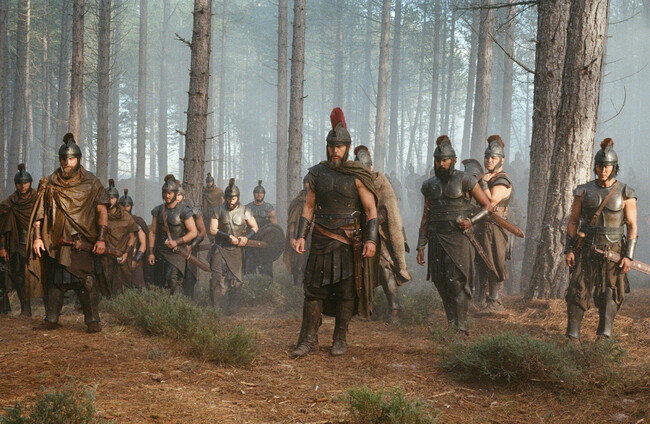
FOR ALMOST 3,000 years, every generation has found a new way to tell the story of Odysseus.
Ancient poets reshaped it each time they performed it. James Joyce transplanted a version of it to the streets of Dublin in Ulysses. The Coen brothers turned it into a Depression-era road movie in O Brother, Where Art Thou.
Now it’s Christopher Nolan’s turn. The Odyssey arrives in cinemas today, bringing Homer’s epic to the screen with an all-star cast, a blockbuster budget and the kind of visual scale previous adaptations could only dream of.
Matt Damon stars as Odysseus, the king of Ithaca, whose 10-year journey home after the Trojan War sees him battle monsters, witches, gods and the sea itself, while Anne Hathaway’s Penelope fights to keep control of their kingdom from a palace overrun by ambitious suitors.
For a story nearly three millennia old, is there such a thing as a “faithful” retelling?
“I always think that retellings of the Odyssey are a little like the weave unpicked and rewoven by Penelope in the poem,” said Dr Ashley Clements, Associate Professor of Greek Literature and Philosophy and head of the Classics Department at Trinity College.
“Each retelling is a remaking and a reimagining.”
Rather than thinking of Homer’s poem as a fixed text, Clements argues it should be understood as something that was constantly changing from poet to poet long before it was ever transcribed.
“Before we worry about being faithful to an original text,” Clements said, “it helps to imagine Homer’s poem not as a static text but as an always moving object.”
For Dr Alastair Daly, an Assistant Professor in Greek at Trinity College, asking whether a film has remained faithful to Homer can sometimes be the wrong place to start.
“The argument from fidelity presumes that we already know what the text is about and how it should be read,” Daly said.
“One person’s faithfulness is another’s interpretation.”
Instead, he believes the more interesting question is why modern filmmakers choose to tell a story in a certain way.
“If something’s been changed from the original, why?”
That approach perhaps explains why The Odyssey has survived for almost 3,000 years.
“We consider it a classic, a foundational and canonical text,” Daly said.
“But it is also a very good story.
“There is something in the basic premise of one man’s journey home that has a universal resonance.”
At the same time, the story is always entertaining.
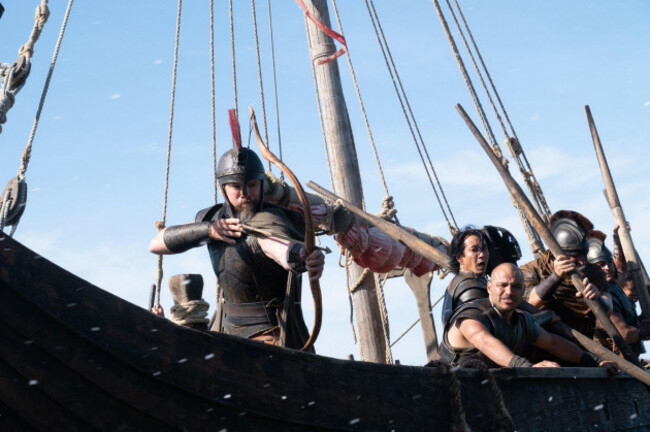
“There’s revenge, deceit, action and adventure, travel to mysterious and dangerous places,” Daly said.
“It tickles that itch as well.”
Dr Evelien Bracke, a visiting scholar in the Department of Ancient Classics at Maynooth University, agrees.
“The story is really exciting,” Bracke said.
“Odysseus has to overcome giants, monsters and alluring goddesses on his way home from the Trojan War, while his wife Penelope fends off eager wannabe husbands at home.”
“The hero even goes through hell to get home.”
More importantly, she believes everyone recognises something of themselves in Odysseus.
“We all feel like Odysseus at times in our lives, and his hero’s journey shows us how imperfect humans try to make sense of and survive in complex and difficult circumstances.”
That enduring appeal is part of what made Nolan such an intriguing choice to adapt the poem.
Unlike previous screen versions, Daly said, Nolan finally has the resources to capture the sheer scale Homer imagined.
Bracke is less convinced Nolan is breaking entirely new ground.
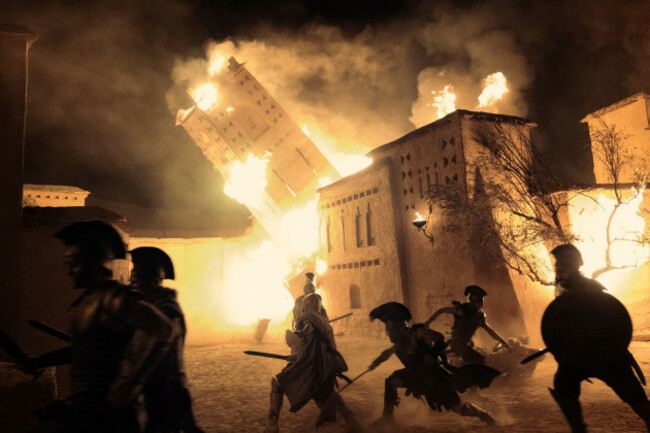
“Well he’s certainly bringing more giants in metal armour,” she joked.
“But apart from that and the truly epic IMAX cinema experience, I’m not sure he’s bringing anything that’s necessarily new.”
Instead, she is particularly interested in how Nolan handles the gods.
While Athena (the Greek goddess of wisdom) appears throughout the film (played by another A-list star, Zendaya), Bracke notes that, in the film, divine intervention is often represented through natural forces instead.
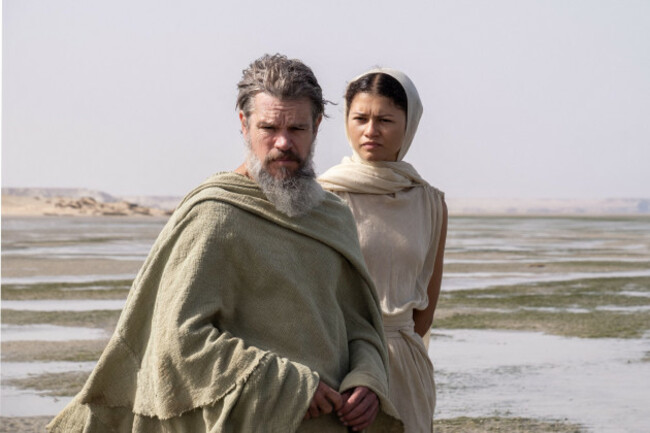
“In a time of climate change, that’s an interesting choice to make,” Bracke, who recently penned a book on how ancient mythology informs the stories we tell ourselves about modern times, said.
Like the poem itself, Nolan’s version presents Odysseus as a hero, but the scholars are quick to point out that hero doesn’t necessarily mean virtuous.
“In the Homeric poems, Odysseus is a hero because he is an aristocratic male who is close to the gods and achieves great things,” Daly said.
“The moral code of Homeric heroes can be described as helping friends, harming enemies.”
Viewed through a modern lens, however, he can look rather different.
Bracke describes him as “a proper trickster hero”.
“He doesn’t fight straight like Achilles,” she said. “He takes an indirect approach and tries to use his enemies’ weaknesses to his advantage.”
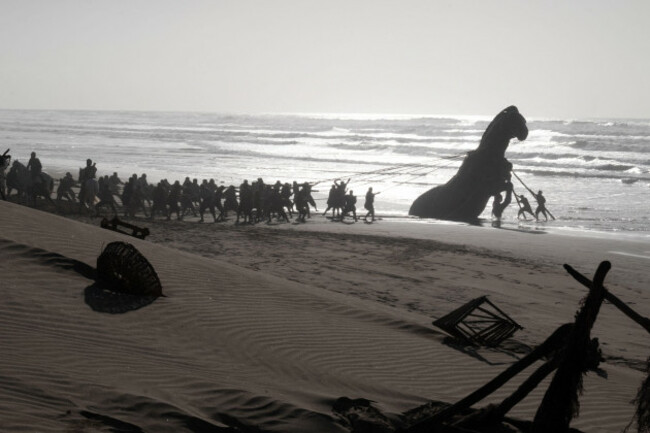
She points to the Trojan Horse as one of the best examples of his cunning.
“It’s not particularly nice behaviour, but Odysseus succeeded where other heroes failed.”
If readers are inspired to return to Homer after watching Nolan’s film, scholars think the biggest surprise won’t necessarily be the plot.
For Bracke, it’s how much influence the goddess Athena has over events, and the fact Odysseus’ adventures don’t truly end when he reaches Ithaca.
For Daly, it’s the poetry itself.
“A film can show us incredibly rich and beautiful images,” he said.
“But the poet has to conjure them up in the mind of the audience with words alone.”
Daly points to one of Homer’s most famous similes, where Odysseus’ tears are compared not simply to grief, but to a woman weeping as her city falls, and she is led away into slavery.
Moments like that, Daly said, reveal “a broader and more complex vision of life and what it means to be human.”

To embed this post, copy the code below on your site














have your say