Sign in. It’s quick, free and it’s up to you.
An account is an optional way to support the work we do. Find out more.
Sign in. It’s quick, free and it’s up to you.
An account is an optional way to support the work we do. Find out more.

LAST UPDATE | 7 Oct 2025
THE GOVERNMENT HAS confirmed a “permanent” €500 cut to third-level student fees as part of Budget 2026, the first long-lasting reduction in college costs in decades.
From 1 January, the annual student contribution fee will fall from €3,000 to €2,500, applying to the current academic year for all eligible students.
The move replaces last year’s temporary cost-of-living reduction of €1,000, which ministers had indicated would not be repeated.
This effectively means that students will have to pay €500 more than they did last year.
The measure comes amid a number of tight changes announced in the Budget, with the government seeking to balance cost-of-living supports and fiscal restraint.
This permanent student contribution fee reduction comes after months of backlash when the government scrapped the temporary €1,000 subsidy that had been in place for three years.
Over the summer, student leaders described the reversal as a “slap in the face” for families still grappling with high rents and living costs, while opposition parties accused ministers of abandoning a key programme-for-government commitment.
Higher Education Minister James Lawless said at the time he intended to wind down college fees over the lifetime of the government.
Both Tánaiste Simon Harris and Lawless had hinted earlier in the summer that a longer-term fee reduction could still feature in Budget 2026, a pledge now seemingly fulfilled with the new €500 cut.
In addition to the fees reduction, thousands of extra students are set to qualify for SUSI student grants, following a decision to raise the household income threshold to €120,000.
An €810 million capital allocation fund was also announced, part of which will be dedicated to student accommodation projects at Maynooth University and UCD.
Elsewhere in the Budget’s education package, a total of €13.1 billion was announced for the Department of Education.
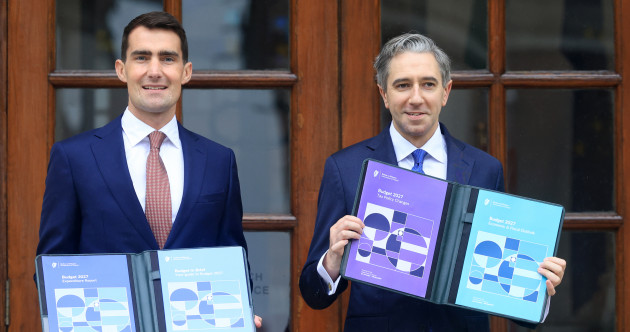
During his announcement, Minister for Public Expenditure Jack Chambers described Ireland as having “one of the strongest education systems in the world”.
The education funding will allow for thousands of new jobs in the education sector, Chambers said, including 1,042 new teaching posts.
These new teaching posts will include 860 additional special education teachers.
It comes after Education Minister Helen McEntee confirmed last month that there were more than 1,500 unfilled teaching posts in Ireland for the 2024/2025 academic year – though the department claims this is a relatively low figure.
There will also be funding provided for a new DEIS+ scheme targeting the highest levels of educational disadvantage, as well as significant investment in special education.
This includes 1,717 new special needs assistant posts, and the rollout of a new education therapy service to provide direct supports in special schools.
There will now be almost 24,900 SNAs working across the education system, the highest number ever recorded.
The Budget also provides for in-school funding across both primary and post-primary levels, aimed at easing classroom pressures and expanding support services.
An increase in standard capitation rates - per-student funding grants from government used by schools to cover day-to-day running costs like heating, lighting, and cleaning – was announced.
This will include, on a per-pupil basis, an extra €50 for primary and special schools (an increase from €224 to €274 per pupil) and €20 for post-primary schools (an increase from €386 to €406).
Funding has also been provided for the delivery of 300 school building projects, most of which will be completed in the next two years.
The Students’ union of Ireland, Aontas na Mac Léinn in Éirinn (AMLÉ), said students will see the €500 reduction in student fees as “an effective €500 increase in fees and are extremely disappointed”.
AMLÉ President Bryan O’Mahony said although the permanent reduction is welcomed, students are angry at the outcome and feel they have been subjected to an increase.
Opposition parties were quick to criticise the announcements today.
Labour TD Eoghan Kenny slammed the Budget for its “lack of ambition” in education, saying it fails to tackle child poverty, overcrowded classrooms, underfunded schools, and the ongoing mistreatment of education workers.
“The absence of any mention of reducing class ratios in this budget is a clear statement of intent. This government has no plan to reduce the pressure on teachers, pupils or parents,” Kenny said.
Labour was one of several opposition parties to call for an end to voluntary contribution fees and a permanent €1,000 cut to third-level fees.
The Irish National Teachers’ Organisation (INTO) added that the government “has broken its promise to tackle overcrowded classrooms”, a key pledge in its programme.
“Teachers across Ireland will see this as a major let down, knowing how smaller classes benefit every child,” the organisation added.
“By failing to act for the third year in a row, the government is ensuring that mainstream teaching jobs will be lost next September due to falling enrolments, adding to the serious challenges already facing classrooms.”
The INTO welcomed the €50 per-pupil capitation increase as progress, but criticised the government for failing to reduce class sizes and warned that staffing and funding challenges persist.
“Today’s announcements show government has heard our calls for a much-needed increase in the main source of funding for primary and special education,” an INTO statement said.
“Although the rise falls short of the €75 per pupil demanded by the INTO, it should help our primary and special schools to balance the books next year.”

To embed this post, copy the code below on your site












have your say