Sign in. It’s quick, free and it’s up to you.
An account is an optional way to support the work we do. Find out more.
Sign in. It’s quick, free and it’s up to you.
An account is an optional way to support the work we do. Find out more.
LAST UPDATE | 29 Feb 2020
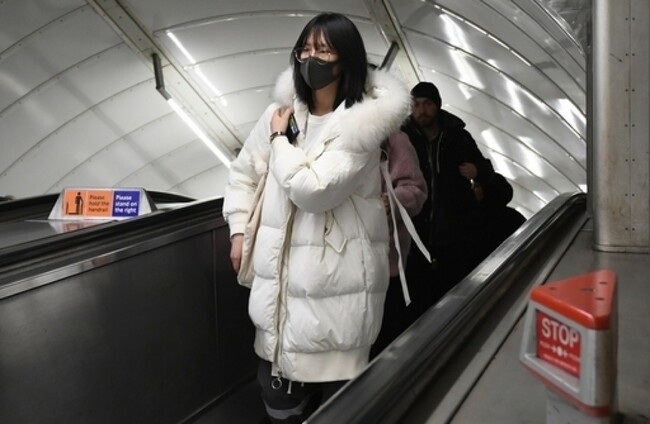
A NEW COVID-19 patient in England has become the first to catch the illness within the UK, while a further three patients have tested positive for the virus bringing the total number of confirmed cases there to 23.
It comes a day after a man who had been on a quarantined cruise ship became the first Briton to die from the virus.
The developments came as the UK government prepares to bring in new emergency powers to help stop the spread of Covid-19.
The PA news agency understands that this will give schools, councils and other parts of the public sector powers to suspend laws – including health and safety measures – to cope with a pandemic.
Teachers and nursery workers will be allowed to have larger classes to cope with staff absences under the laws, which are due to be introduced next week.
Two of the patients diagnosed today had recently travelled back from Italy while the other had returned from Asia, Chief Medical Officer Professor Chris Whitty said.
The three cases – one in Gloucestershire, one in Hertfordshire and another in Berkshire – are being investigated and any individuals who had contact with the patients are now being traced.
Health leaders confirmed yesterday that a 20th patient had tested positive for the virus, and that it had been passed on within the UK.
Whitty said it was not yet clear if it had been transmitted “directly or indirectly” from somebody who had recently travelled abroad.
Meanwhile, a British man, reported to be in his 70s and said to have lived abroad, was confirmed as the first UK citizen to die from coronavirus.
The man, who was on board the Diamond Princess cruise ship which has been quarantined off Japan’s coast amid the outbreak, was the sixth person from the vessel to have died.
Prime Minister Boris Johnson said that the coronavirus was “now the Government’s top priority” as critics accused him of failing to take a lead on the UK response.
He told reporters yesterday that he had met with the Health Secretary and chief medical officer to discuss the preparations.
He said: “On the issue of coronavirus, which obviously is a great concern to people, I just want to reassure everybody and say that the NHS is making every possible preparation.
“As you can imagine, the issue of coronavirus is something that is now the Government’s top priority.”
Health Minister Helen Whately said it was “likely” more people in the UK would contract coronavirus and that plans were in place should it become a pandemic.
The Conservative MP told BBC Newsnight: “I can’t reiterate enough that we are well prepared but we do have to recognise that it is likely we will see more cases in the UK.
“We have plans in place and have carried out exercises so in the event of something like a ‘flu pandemic, we are ready.”
Asked whether that meant mass gatherings could be banned and schools closed, such as in parts of Italy, she said such measures were “being considered”.
“Clearly, how to deal with those sorts of things absolutely has been considered and is being considered. That is rightly all part of the planning,” she added.
Confirming the latest case in England on Friday evening, Prof Whitty said: “One further patient in England has tested positive for Covid-19.
The virus was passed on in the UK. It is not yet clear whether they contracted it directly or indirectly from an individual who had recently returned from abroad. This is being investigated and contact tracing has begun.
“The patient has been transferred to a specialist NHS infection centre at Guy’s and St Thomas’,” he added.
The Department of Health and Social Care (DHSC) said the original source of the virus was “unclear”, adding that there was no “immediately identifiable link” to overseas travel.
As of today, according to the latest toll from the European Centre for Disease Prevention and Control (ECDC), there have been 85,203 Covid-19 infections cases and 2,921 deaths worldwide (23 in the EU/EEA/UK/Switzerland).
The first confirmed case on the island of Ireland was announced on Thursday by authorities in Northern Ireland.
According to the most extensive study done so far, the novel coronavirus was benign in 80.9% of cases, “serious” in 13.8% and “critical” in 4.7%. The remaining 0.6% was not specified.
Part of the reason Covid-19 been declared a public health emergency is due to the speed at which it has spread compared to other coronaviruses (like Sars and Mers) and the fact that there’s a lot about the disease we still don’t know – including how exactly it’s being transmitted.

To embed this post, copy the code below on your site










have your say