Sign in. It’s quick, free and it’s up to you.
An account is an optional way to support the work we do. Find out more.
Sign in. It’s quick, free and it’s up to you.
An account is an optional way to support the work we do. Find out more.

AS CONCERNS GROW that the centres driving the AI boom are pushing up electricity costs and water use, New York has become the first US state to impose a moratorium on data centres.
In July, governor Kathy Hochul placed a one-year construction ban for data centres using 50 megawatts or more. She is also reportedly pursuing new legislation to repeal sales tax exemptions for large data centres.
Moratoriums have also been considered elsewhere. In 2022, the Netherlands implemented a ban for centres using 70 megawatts or more, with Amsterdam banning new or expanded data centres from 2025 to at least 2030.
Other countries, including Denmark and Australia, are considering legislation to regulate data centres.
But what is happening in Ireland, and are we likely to follow suit?
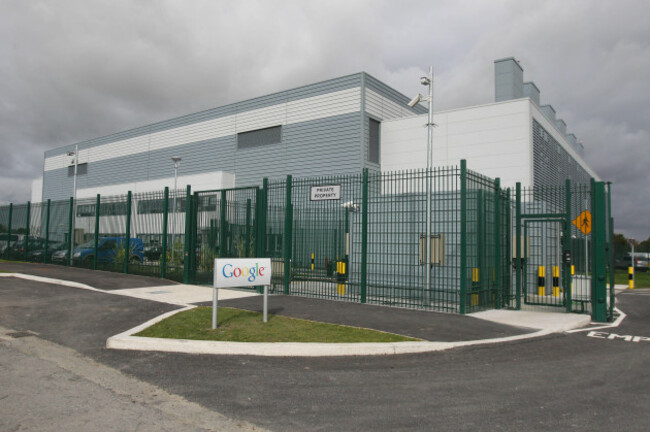
Ireland has a remarkably high concentration of data centres per capita. Dublin is the second-largest data centre market in Europe, just behind London, with approximately 1,150 megawatts in operation as of mid last year.
97 of Ireland’s 129 data centres are around Dublin, while Ennis and Kildare have the second-largest number, with six a piece.
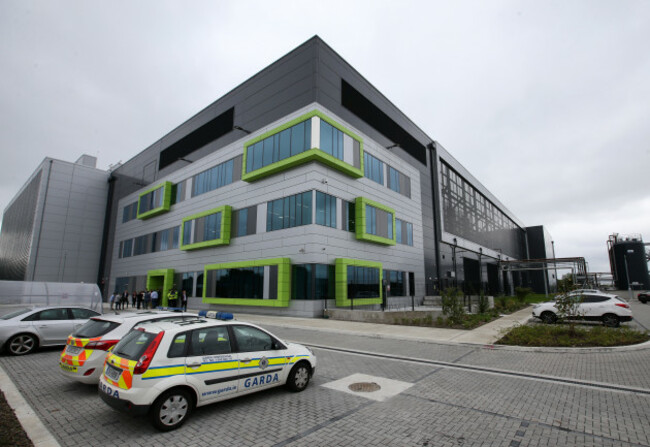
Debates have been sparked over the detrimental effect the energy and water usage by these centres may be having on the cost of living.
Unlike countries with larger national grids, Ireland’s facilities consume roughly 22% of metered national electricity. This means that data centres use more electricity in Ireland per capita than anywhere else in the world.
This is projected to increase to 30% by 2030 and as much as 55% in the following years if their growth is not constrained.
Research commissioned by Friends of the Earth and Beyond Fossil Fuels found that, between 2015 and 2023, the data centre price effect could be as much as €263 in electricity per household - or an additional €715 million.
But this figure was challenged by Deputy Alan Dillon, who, in a response to a PQ, said:
Let us be clear: households are not subsidising data centres. All users of our electricity grid contribute to its development.
“The CRU [Commission for Regulation of Utilities] as the independent regulator, ensures costs are fairly and proportionally allocated. In fact, extra large energy users, including data centres, have seen network costs increase in recent years compared with those for domestic customer.”
In 2021, Ireland’s grid operator EirGrid blocked new data centre connections around Dublin after warnings that the facilities were straining the grid.
This, however, ended in December 2025, but the burden was shifted onto developers, and new connections are now required to bring their own on-site power generation.
Tighter regulation has been discussed in Ireland, with Labour’s climate spokesperson Ciarán Ahern bringing a motion to the Dáil which called for a moratorium on building new data centres earlier this summer.
But the motion did not pass as Environment Minister Darragh O’Brien did not accept it; instead, tabling a counter motion.
O’Brien said that data centres are good for Ireland as a small open economy and likened them to Germany’s car manufacturing industry.
He said that Ireland is not a large industrial nation, and is reliant on the ICT sector which employs around 200,000 people.
“We need an infrastructure that supports that, and data centres are part of that,” he said.
He also suggested that retrofitting homes is a better way to “protect families and businesses”, and said that investment in the grid is also important.
In January, cabinet approved a new plan to build data centres across the country.
Speaking at a conference, Darragh O’Brien said data centres are “central to Ireland’s economic and digital future as they are a key part of our foreign direct investment (FDI) and the associated employment”.
“Many of the significant employers in our state need to see a horizon of certainty when they’re investing,” he said.
“FDI isn’t like a tap, you can’t turn it off for a few years and say we’ll come back to it in five years’ time.”
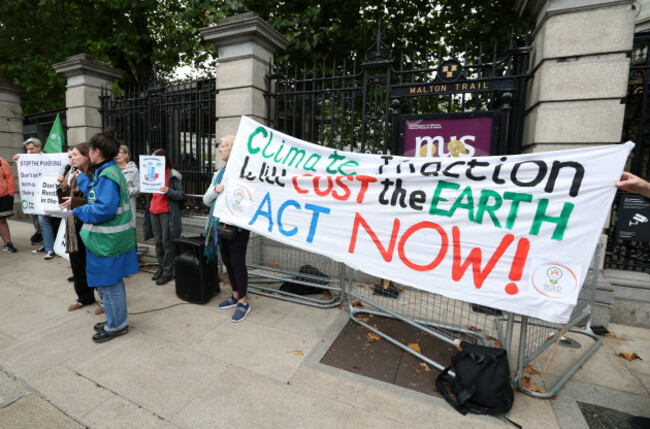
Rosi Leonard from Friends of the Earth said that the solutions that the government is proposing just “move the problem around the country and contradict their own climate and renewables targets”.
Ireland should be considering a moratorium on new data centres for as a ”bare minimum”, she said.
“A temporary pause on new data centres would give the grid time to catch up and would enable fair roll out of renewables in a way that actually benefits the country and goes to serve climate action, not just the tech industry.”
She said she supports the ban for several reasons, including “energy security, climate action, and as a cost of living measure”.
Such a ban should only be lifted once it is clear “how data centres can continue to expand in line with carbon budgets and decarbonisation goals”.
A temporary ban is “not only legally feasible but it’s really the bare minimum we need to be looking at in terms of limits on the industry”, she said.
The toll that data centres are taking on our energy security, on our bills and on our ability to decarbonise our grid cannot be overstated.
Data centres “hoover up” limited capacity on the public grid, which affects the capacity available for any other new developments such as housing, services or other businesses, she said.
“Our grid cannot keep up with that demand, and neither can renewables. So we are in a situation where growth from data centres is outstripping new renewables that are coming on stream.”
To embed this post, copy the code below on your site














have your say