Sign in. It’s quick, free and it’s up to you.
An account is an optional way to support the work we do. Find out more.
Sign in. It’s quick, free and it’s up to you.
An account is an optional way to support the work we do. Find out more.
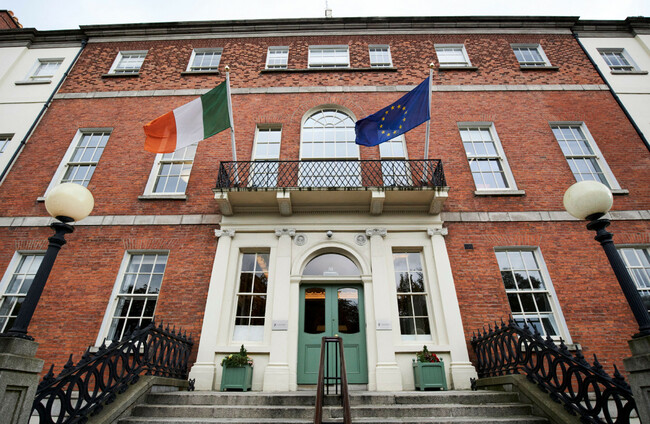
23 PEOPLE LIVING in or who may have recently left IPAS accommodation died last year – the highest ever annual figure and up from 15 in 2024.
The data, provided to The Journal, shows that 16 men and seven women died while in accommodation for refugees and asylum seekers.
It means 152 residents have died since records were first collected in 2002. Twenty deaths took place offsite last year and three in the accommodation.
The previously published figures, which covered to the end of February last year, showed 23 children aged up to two-years had died; the most recent figures for the whole of 2025 show that increased by four. Also, since February last year another young person aged 13 to 17 died.
A spokesperson for the Department of Justice said: “Any death of a resident is a tragic event for their family, friends and neighbours, and also for the accommodation centre staff who know them. We are unable to confirm the identity of a deceased resident, or provide any specific information that may lead to the identification of a deceased resident, or their family members.”
The Department said between 2023 to 2024, the number of people resident in IPAS increased by more than 25% and added there is no legal obligation on any individual or organisation to notify IPAS of a death of a current or former resident.
“Accordingly there may be cases where a death occurs off-site of a resident who had recently left IPAS accommodation where neither the Centre Manager, nor IPAS, is advised of the death.”
The spokesperson said supports were available, both in and outside IPAS centres, including a dedicated Resident Welfare Team and the IPAS Vulnerability Assessment Programme, which was expanded last year.
It comes as separate data shows thousands of people with status to remain in Ireland are still in IPAS accommodation, sometimes for years, while many of those who have left IPAS have since entered emergency accommodation.
Figures from the Department of Justice, released under Freedom of Information, show that at the end of last October, 4,901 people with status to remain in Ireland were still in IPAS accommodation.
Of those, 579 had their status secured with at least three years, while another 390 people were in IPAS at least two years after their status to remain in Ireland had been granted.
The number of people leaving IPAS was lower: 1,490 single people left IPAS last year, as well as 41 couples and 362 families. Separately, 109 single people transferred to other accommodation, as did four couples and 109 families. Another 410 people across the three categories had their move from IPAS ‘on hold’ for reasons such as welfare and medical.
Responsibility for IPAS accommodation has moved back to the Department of Justice last May, but in response to a parliamentary question in February last year, Minister for Children Norma Foley outlined the process under which those with status might be transferred out of IPAS accommodation.
The Minister said: “People in IPAS accommodation who have had their status for the greatest length of time are currently being offered a transfer to alternative emergency accommodation, currently singles/couples who have their status for in the region of six to nine months, and families who have their status for in the region of 12 to 18 months. This process began in September 2022 with single people with status.
“To date, 3,300 households have been written to and advised of this transfer to alternative emergency accommodation. These households have been accommodated in various counties all over Ireland.
“The International Protection Accommodation Service (IPAS) continues to accommodate people who have been granted status, until such time that they progress into accommodation [in] the community.”
However, the figures from the Dublin Region Homeless Executive (DRHE) show that the number of families who left IPAS but then later entered emergency accommodation increased, from 29 families in 2024 to 69 in 2025.
The number of single people who left IPAS and then became homeless fell to 450 last year from 559 the year before.
Kate Fitzsimons, Head of Operations at the Mendicity charity in Dublin, said some people with status but who have been living in IPAS accommodation around the country tend to move to Dublin as they feel there are more work and accommodation options.
But she said the Local Connection Test – a requirement for social housing in which applicants must prove a link to a specific council area through criteria including residence or employment – often made that difficult.
Mike Allen, Head of Advocacy at Focus Ireland, said the growing number of families leaving IPAS and entering emergency accommodation was worrying and that those from the Direct Provision system faced obstacles in accessing private rented accommodation, including a lack of references.
A report by charity ActionAid claimed that lone parent migrant families were faced with unaffordable rents and with racism and discrimination as they sought housing.
A spokesperson for the CCMA (County and City Management Association), which represents local authorities, said every effort was made to support people out of homelessness.
“The resourcing of housing and related supports for local authorities in transitioning people from IPAS to housing is a matter for central government, specifically the Department of Justice and the Department of Housing, Local Government and Heritage,” the spokesperson said, adding that the CCMA “remains committed to working collaboratively with both Departments to ensure the effective delivery of services and supports to those in need.”

To embed this post, copy the code below on your site













have your say