Sign in. It’s quick, free and it’s up to you.
An account is an optional way to support the work we do. Find out more.
Sign in. It’s quick, free and it’s up to you.
An account is an optional way to support the work we do. Find out more.
LAST UPDATE | 5 Jan
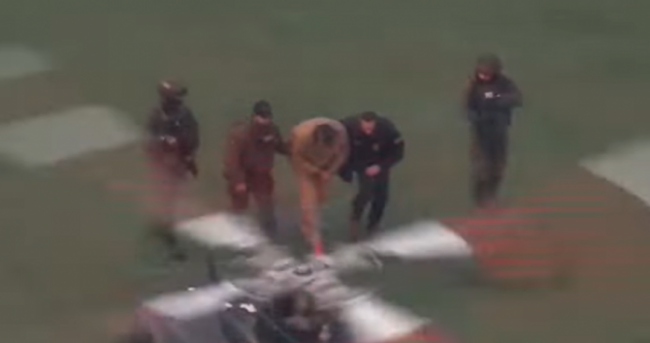
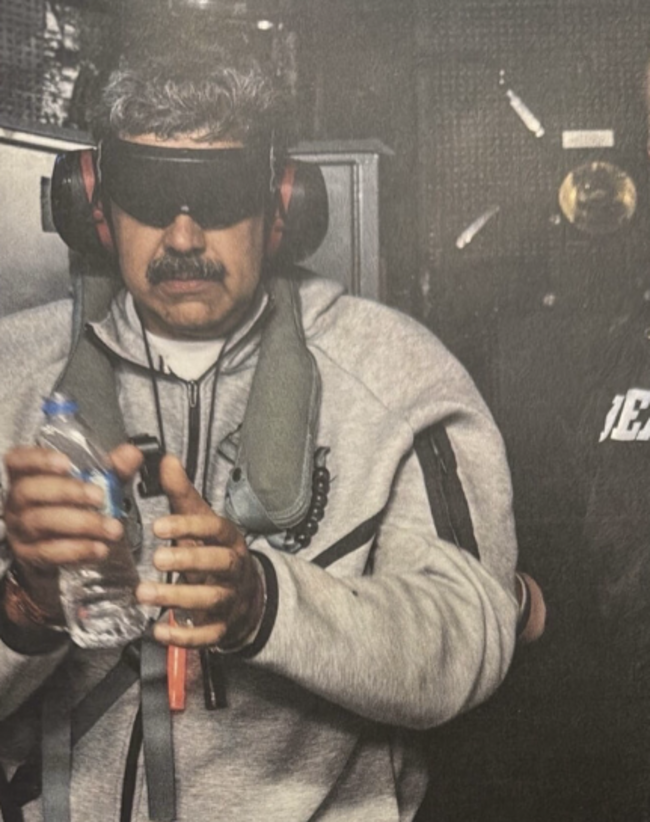
OUSTED VENEZUELAN PRESIDENT Nicolas Maduro is being transferred by US authorities who are holding him in custody ahead of a court appearance later today.
Video images broadcast by US media showed an armoured vehicle travelling in convoy from the detention facility Maduro was being held, before he was transferred to another vehicle and then into a waiting helicopter.
Maduro and his wife were seized by the United States over the weekend in a military raid in the Venezuelan capital of Caracas.
Maduro, 63, faces narcotrafficking charges in the US along with his wife, who was also seized.
BREAKING: Venezuelan president Nicolas Maduro is seen in handcuffs as he is transferred to court from the detention facility he was held in.
— Sky News (@SkyNews) January 5, 2026
He is due to make an initial appearance at the Manhattan federal court todayhttps://t.co/5MpePzQTlm
📺 Sky 501 pic.twitter.com/FuJKXCNWtF
Meanwhile, the UN Security Council is due to hold an emergency session at Venezuela’s request, which will provide a platform for international concern over US intentions in the country.
US President Donald Trump asserted that the US would be “in charge” of Venezuela after deposing its president.
Maduro’s successor and interim leader Delcy Rodriguez issued a statement late yesterday offering to work with Trump.
“We extend an invitation to the US government to work together on an agenda for cooperation,” the former vice president said.
This was hours after Trump threatened that she’d pay a “very big price, probably bigger than Maduro,” if she didn’t bend to US wishes.
When asked what he needs from Rodriguez, Trump said: “We need total access. We need access to the oil and other things in their country that allow us to rebuild their country.”
While there are no known US forces left inside Venezuela, a huge naval presence, including an aircraft carrier, remains off the coast.
The Trump administration says it retains powerful economic leverage by blockading oil tankers from Venezuela. Trump has also threatened additional military attacks if needed.
Secretary of State Marco Rubio claimed yesterday that the US is not looking for radical overhaul, and that rather than seeking to topple the entire Maduro government, “we’re going to make an assessment on the basis of what they do”.
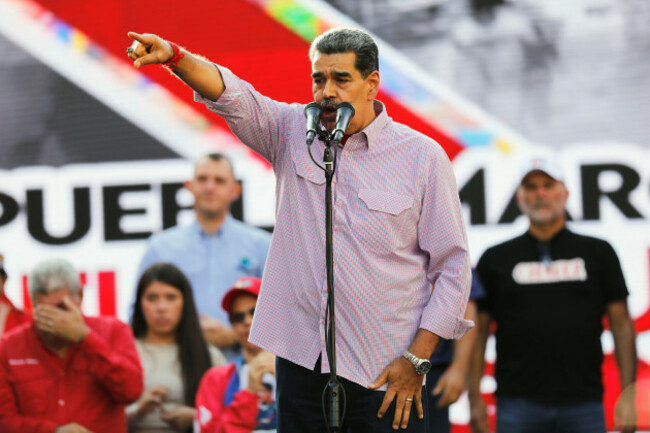
The US position leaves the Venezuelan opposition — which the Trump administration says was robbed of victory by Maduro in recent elections — out in the cold.
Leading opposition figure Edmundo Gonzalez Urrutia said the US intervention was “important” but “not enough” without the release of political prisoners and acknowledgement that he won the 2024 election.
Countries such as China, Russia and Iran, which have longstanding ties with Maduro’s government, were quick to condemn the operation. Some US allies, including the EU, expressed alarm.
China called for Maduro to be “immediately released” in a condemnation of the US operation, which its foreign ministry said was a “clear violation of international law.”
Colombian President Gustavo Petro, whose country neighbors Venezuela, called the US action an “assault on the sovereignty” of Latin America, which would lead to a humanitarian crisis.

To embed this post, copy the code below on your site












have your say