Sign in. It’s quick, free and it’s up to you.
An account is an optional way to support the work we do. Find out more.
Sign in. It’s quick, free and it’s up to you.
An account is an optional way to support the work we do. Find out more.
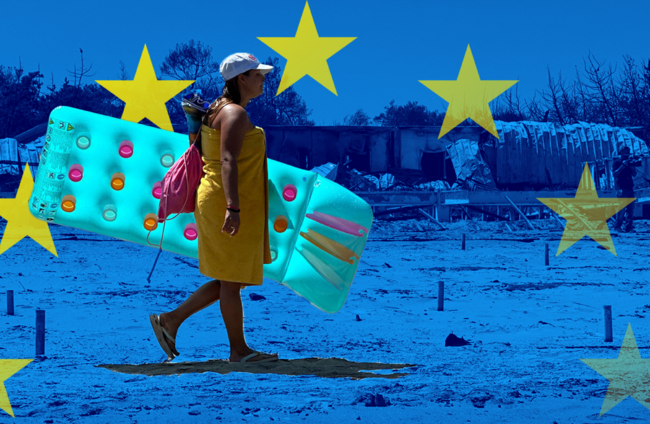
ALMOST A THIRD of Irish people think about climate change when booking a summer holiday – with women more likely than men to weigh the issue up as they choose a destination.
Some 31% of Irish people consider issues such as heatwaves and wildfires when booking their summer holiday, according to the latest opinion poll carried out by The Journal and Ireland Thinks.
Six in 10 people (63%) don’t factor in climate change when choosing where to go on holiday, and 5% are unsure.
Women are more likely to take climate change into account, at 39% versus 24% of men.
People aged 35 to 44 years are the age group least likely to consider climate change when booking a holiday (at 23%), according to the poll.
At least 30% of all other age groups said they do consider climate change when booking a trip away.
Some 1,770 people took part in the poll from 30 to 31 May; the margin of error is plus or minus 2.4%.
Ireland relies overwhelmingly on aviation for both inward and outbound tourism. A record 39 million people used Irish airports in 2023, a 20% jump year on year, according to statistics compiled by the CSO.
Six in 10 adults in Ireland took two or more holidays abroad in 2023, according to research from Aer Lingus released earlier this year.
Aviation accounts for 2.5% of global CO2 emissions.
Massive fires swept through parts of Greece last summer in the largest wildfire ever recorded in the European Union. Over 20 people died and there was widespread destruction to homes and wildlife.
Greece suffers wildfires every summer, its deadliest killed more than 100 people in 2018.
Several other countries have also experienced soaring temperatures and fires in recent years. Residents of Paris have a greater chance of dying in a heatwave than the residents of any other European city, according to The Lancet medical journal.
Floods recently devastated parts of Brazil and led to evacuations in Germany.
Last month was the warmest May on record for both Ireland and the world.
Last year was a year of record-breaking heat across the world as climate change drives up average global temperatures, destabilises weather patterns, and causes more frequent and more intense extreme weather events like heatwaves and storms.
Temperature increases of just one or two degrees above average may seem minor but, in fact, even seemingly small variations in temperature can have major implications if sustained.

To embed this post, copy the code below on your site













have your say