Sign in. It’s quick, free and it’s up to you.
An account is an optional way to support the work we do. Find out more.
Sign in. It’s quick, free and it’s up to you.
An account is an optional way to support the work we do. Find out more.
DUBLIN CITY COUNCIL’S funding for cycling and walking infrastructure has fallen sharply this year, raising concerns about the delivery of long-planned projects despite continued government claims of strong support for active travel.
Dublin City Council has been allocated €35.95m for walking and cycling projects in 2026, down from €45m last year and €54.1m in 2024.
The funding is part of a nationwide €360m Active Travel and Greenways funding programme for 2026.
Critics say the programme been fixed at €360m annually until 2030 despite rising construction costs and inflation.
While Dublin City Council will still receive the single largest allocation of any local authority, the Green Party has warned that the drop threatens projects that have taken years to plan and are now approaching construction stage.
Feljin Jose, a Green councillor, said the funding decrease is a “huge concern” given the scale of Dublin City Council’s active travel pipeline, much of which has only recently become ready to progress after years of design and consultation.
“We’ve built up a very large pipeline of projects over the last three or four years, and many of them are now ready for construction,” he said.
“If the funding isn’t there at that point, it puts everything at risk.”
Jose said that while schemes already under construction are likely to proceed, projects planned for the next three to four years may now struggle to secure funding.
The Green Party has warned that the value of €360m annual funding, set in 2020, is undermined by construction inflation.
Janet Horner, a Green Party councillor, said almost every local authority in the country will “lose out in real terms”.
“Construction costs keep rising, while the funding stays the same,” Horner said. “Essentially, it’s less for everyone.”
Horner said Dubliners were already frustrated by the slow pace of delivery of active travel infrastructure. She added that any further constraints will undermine efforts to improve road safety.
“Nobody needs a nice map of potential cycle routes,” Horner said.
What people need is infrastructure on the ground that actually makes streets safer.”
Horner added that funding uncertainty can damage trust with communities who have engaged in lengthy consultation processes, only to see projects delayed or pushed beyond 2028.
“You can’t spend years consulting with residents and then tell them the money isn’t there when a project is finally ready to go,” Horner said.
More than €97.6m (around 27% of the national allocation) will be spent across Dublin’s four local authorities this year.
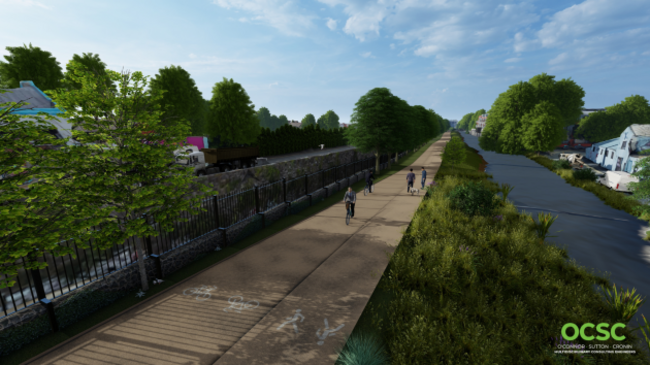
Dublin City Council’s allocation includes funding for projects such as the Royal Canal Greenway, the Liffey Cycle Route, the North Circular Road cycle scheme and the Dodder Greenway. In addition, €3.8m will go towards staffing costs in the council’s active travel office.
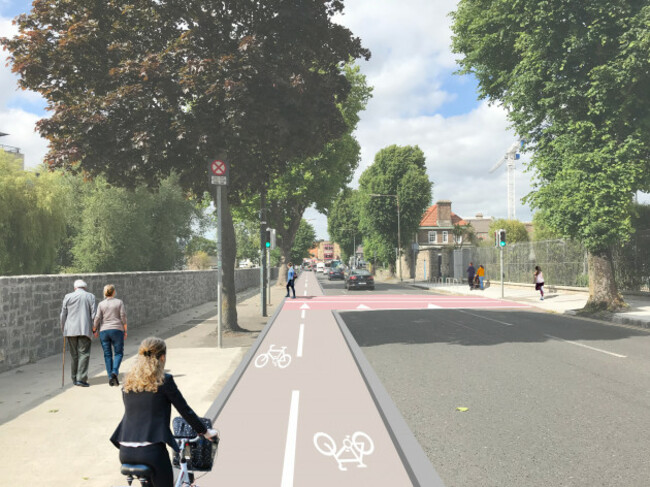
The Department of Transport has said the programme is expected to deliver around 200km of walking and cycling infrastructure nationally in 2026, in line with Climate Action Plan targets.

To embed this post, copy the code below on your site








have your say