Sign in. It’s quick, free and it’s up to you.
An account is an optional way to support the work we do. Find out more.
Sign in. It’s quick, free and it’s up to you.
An account is an optional way to support the work we do. Find out more.
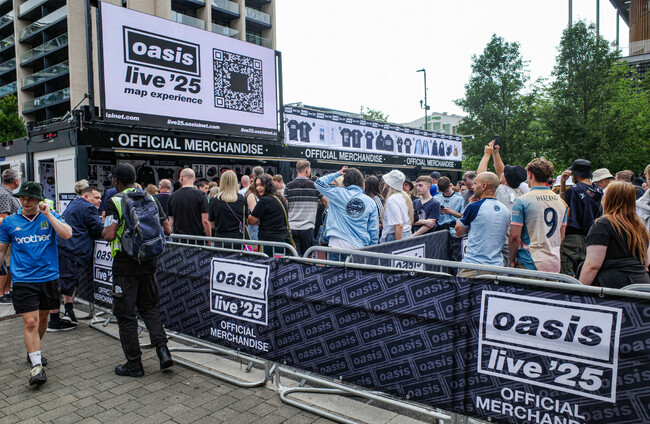
CONCERT PROMOTERS WILL be required to disclose how many tickets are available at each price point while a person is in a queue online waiting to purchase, according to EU Commissioner Michael McGrath, Ireland’s European commissioner for justice.
The new rules will form part of the Digital Fairness Act which will be launched during the Irish Presidency of the EU Council in November.
Ireland will be hosting a consumer summit in Dublin on 19 November where it is expected McGrath will outline the new rules, which will take in dynamic pricing of not just concert tickets, but also hotel prices and airline tickets.
Speaking to The Journal in Cork on Friday, where Ursula von der Leyen, EU Commission president, and the college of commissioners gathered to mark Ireland taking over the EU Presidency, McGrath said:
“What I would like to see is that as you are in a queue [online], that you are being given accurate, up-to-date information about what the price is of the tickets that you are currently queuing for, so that you can make a decision.
“Because we all know of situations where people have spent a half a day queuing for tickets, and then eventually they’re offered a ticket, but it could be at a multiple of the price that they originally intended to buy and they’re forced into a situation of making a difficult decision, having invested so much time.”
McGrath said Europe cannot regulate pricing, in general, ruling out any sort of outright ban on dynamic pricing.
At a minimum, more transparency and more information should be provided to the consumer, he said, adding that this will certainly feature in the Digital Fairness Act.
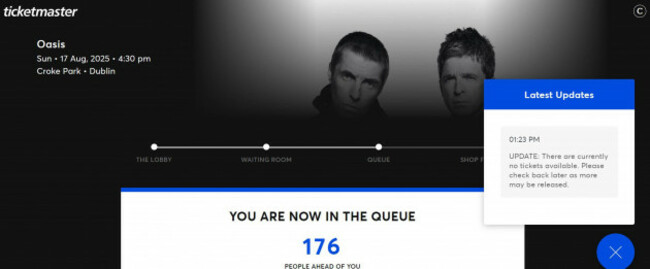
The competition watchdog in Ireland is currently carrying out an investigation into Ticketmaster’s sale of Oasis concert tickets.
It follows on from a similar investigation in the UK following the band’s reunion tour in 2024, whereby fans were not told that standing tickets were being sold at two different prices, and that prices would jump as soon as the cheap tickets sold out.
He said it is important that consumers have all the information that they need when they are making a decision about what they are buying.
“I do think it is fundamentally unfair to go on an online queue, waiting for tickets to become available, thinking that you stand a chance of getting a ticket for maybe €70 or €80, and it ends up being many multiples of that,” he added.
Confirming that he will propose the legislation in quarter four of this year, he said it will be in the hands of the co-legislators in the European Parliament and the member states, to negotiate that proposed legislation and ultimately agree on it.
Asked when the rules might kick in, McGrath said certainly within the “next couple of years”.
“It will probably take that kind of time before we will have the full set of measures in the Digital Fairness Act actually operable in every market in the European Union, hopefully faster than that,” said the former finance minister.
“I want to be realistic and honest with people, it does take a period of time, but it’s important that we get it right,” McGrath told The Journal.
He went on to say that the Digital Services Act which he is driving in the commission will also deal with issues such as dark patterns and addictive design features, as well as subscription traps.
Consumers signing up to free trial periods, and then being automatically rolled on to a permanent commitment that is very difficult to get out of is also in his sights.
“It should be as easy to get out of as it is to get into such an arrangement, so it should be a single click. So this is all part of the Digital Fairness Act,” he added.
Regulating social media influencers, who McGrath said are doing “legitimate commercial activity”, is also a focus.
While he said the activity is regulated to some extent in Ireland, that is not the case in every EU member state.
“So again I think consumers deserve a minimum level of transparency that if there is an underlying commercial transaction, if it is a paid for advertisement, basically I think people should have that information,” said McGrath.

To embed this post, copy the code below on your site
















have your say