Sign in. It’s quick, free and it’s up to you.
An account is an optional way to support the work we do. Find out more.
Sign in. It’s quick, free and it’s up to you.
An account is an optional way to support the work we do. Find out more.
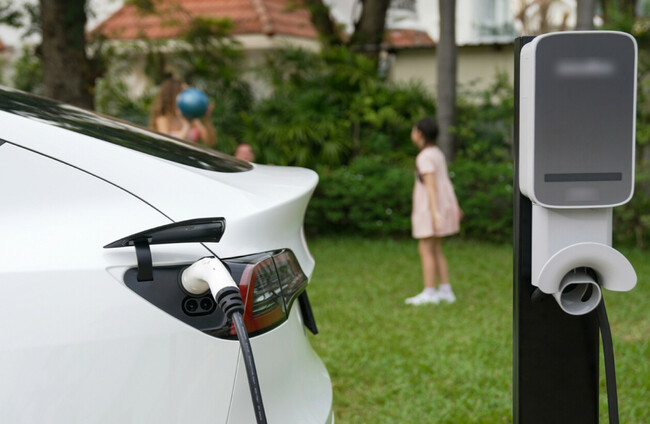
THIS YEAR HAS seen a boom in the sale of electric vehicles, as drivers try to avoid the spiralling costs of fuel caused by the US war on Iran, but EV owners are facing a challenge when it comes to charging their battery.
This is not in the charging points installed alongside motorway service stations, but much closer to home: complaints are growing over whether new housing estates are being built with the correct number of charging stations, or even with the ability to charge at all.
The Irish Environmental Network said it was an “unbelievable own goal” and “deeply frustrating” given that people are now making the switch to EVs, only to find they can’t charge their car outside their home.
Under legislation introduced in 2022, new housing developments are to include a certain number of charging points as part of the government’s ambition to switch 30% of the country’s private cars to electric by 2030.
In July, The Journal reported on a probe launched by Fingal County Council into whether builder Glenveagh had left a new estate in Balbriggan, north Co Dublin without several dozen charging points.
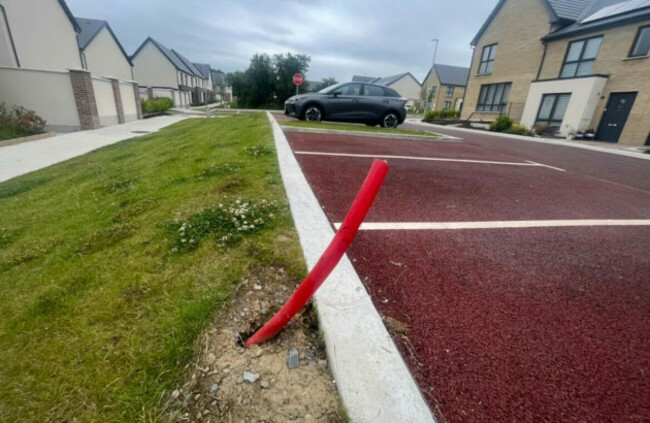
That investigation is also examining whether infrastructure, in the form of ducting planted into the ground, was also not included at enough parking spaces in Folkstown Park as required by the planning permission, which stated a minimum of 20% of spaces would be provided with EV charging stations.
Since then, The Journal has been contacted by residents in other new estates around Dublin amid unhappiness about the infrastructure available for their EVs.
So are residents of new housing estates being left short-changed?
The answer varies from estate to estate. Confusion also persists in some estates as to the timelines for delivery of EV charging infrastructure.
Some developers also privately complain that when infrastructure is installed, the next steps around turning on connections can often fall into a ‘grey area’, leading to delays in getting chargers up and running.
One development that saw complaints was Shanganagh Castle Estate, near Shankill in south Dublin.
The estate, numbering almost 600 homes, was delivered by the Land Development Agency (LDA) and Dún Laoghaire-Rathdown County Council.
However, Dún Laoghaire TD Barry Ward said that while the infrastructure was installed, “no agency had taken responsibility to turn on the power”.
The “inexplicable and unacceptable” situation in the estate dates back to at least April 2025, Ward told The Journal.
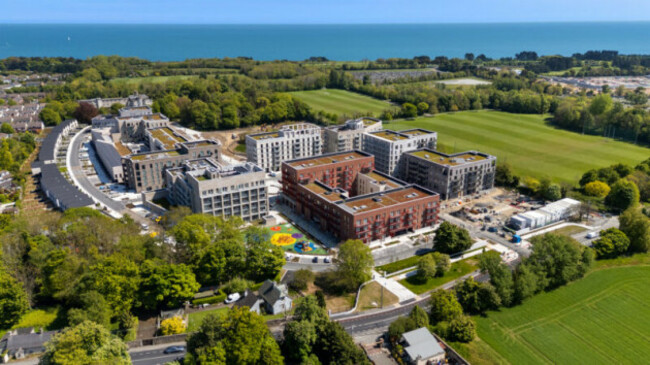
The Fine Gael TD summed up the frustration in the estate, which is made up of cost rental, affordable purchase, social housing and homes sold privately.
“It’s ridiculous. There has been a lot of buck-passing – you get onto the council and they say it’s a matter for the LDA, but the LDA says it’s for the developer,” Ward said.
“When people bought or moved into these homes they would have been told the EV chargers were there. And we need to have more and more EVs on the road, it’s an important part of the government’s strategy,” Ward added.
When contacted, the LDA said that the Owners Management Company (OMC) is responsible for EV chargers in Shanganagh Castle Estate.
The LDA said it is “actively supporting” the OMC, which is now in talks with an EV operator who will provide the necessary software integration and testing to facilitate the operation of installed meters.
“Once their technical checks are completed and the chargers commissioned, the OMC will share full instructions with residents on how to register and use the chargers,” the LDA said.
In Adamstown, new residents in Redford housing estate and builder Evara have held talks in recent weeks to resolve frustrations over charging infrastructure in the area.
Local residents told The Journal of frustrations with the situation.
They added that their contract prohibits residents from installing their own EV charging points at designated parking spaces, yet they also said the contract is “completely silent” on whether the required EV ducting infrastructure has been provided.
Redford housing estate remains under construction and is being delivered in phases. However, this has meant that the new homes are awaiting connection from utility companies.
They argue that the only provision is communal chargers in visitor spaces, but have struggled to get clarity on the number or timeline for their delivery.
After these talks, there has been confirmation that all driveways in the new estate are wired to allow for the provision of EV chargers.
A further seven chargers have planning permission for parking spaces throughout the estate, but these are yet to be connected.
Evara did not comment.
Sources close to the developer said that two are certified and awaiting an ESB connection, while another two are progressing through certification before they can then be connected by the ESB.
The remaining three spaces are in a part of the estate that is still being built.
Ducting has been provided to allow for the future provision of EV chargers to all non-driveway spaces within the estate, but an ESB connection is also required for this.
When contacted, the ESB said it was “not aware” of any specific issues relating to EV charging infrastructure.
Instead, it said that public EV charging connections are delivered through a standard connection process, through which “timelines can vary”.
This depends on the scale of the connection, whether any network reinforcement works are required and the builder’s “readiness to proceed” with a connection.
In relation to Redford, Adamstown, the ESB said that two EV charging connection projects are expected to be energised in the coming weeks.
While problems are being gradually resolved in Redford, it’s a less happy story in Swords.
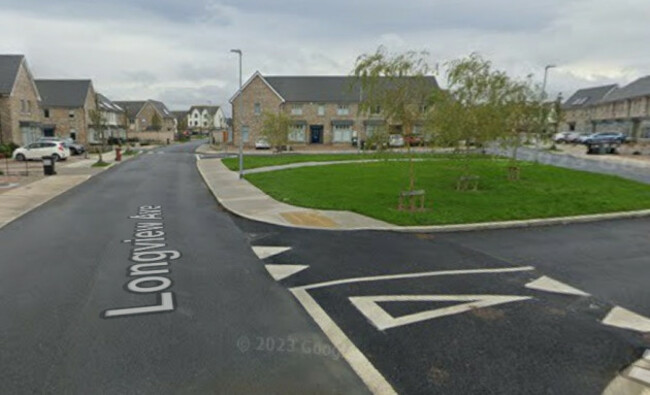
The Journal was contacted by residents who complained of the lack of connection at Millers Glen apartments and houses.
While some of the estate dates to before the key 2022 legislation requiring more EV chargers, planning conditions from Fingal County Council did require that for “ducting only”.
This requirement only applies where the parking spaces are in driveways.
Despite this, there have been a number of EV chargers installed, marked as Ezo – an operator of public and private EV charger networks.
However, residents have complained of feeling at a loss as to why charges are not working, several years after first moving to the area.
One man told us that “Ezo are blaming ESB for not connecting the chargers”, which he criticised as passing responsibility.
When contacted, Ezo told The Journal it was aware of the problem and that it is “actively working with the relevant parties to resolve the matter as quickly as possible” at Miller’s Glen.
“At this stage, we do not have any further information to share, but we will provide an update as soon as we are in a position to do so,” the company said.
Builder Gannon Homes and ESB were both contacted on different occasions for comment but have not responded.
“We’re four years waiting,” this resident said.
There have also been problems facing residents of older estates who try to switch to EVs, but this problem shouldn’t be arising for Ireland’s new estates, according to energy analyst Oisín Coghlan.
Coghlan told The Journal that it would be “stupidity” if Ireland misses this opportunity to “fast-track the transition away from fossil fuel cars because the Government can’t get its act together to ensure people can charge their EVs” outside their homes in new housing estates.
He added that the government is “spending millions on reducing the price of petrol and diesel, while increasing public transport fares”, but at the same time is failing to provide electric charging infrastructure that works.
“It’s an unbelievable own-goal,” Coghlan said.
Coghlan, who is policy adviser to the Irish Environmental Network, added that the government had set hugely ambitious targets for the uptake of EVs, that looked out of reach until Trump’s war on Iran drove up fossil fuel prices, and China’s development of new EV models drove down car prices.
“EV sales have surged in response to the spike in petrol and diesel prices,” he said.
“So it’s deeply frustrating if the main obstacle now is our own Government’s failure to ensure there is adequate charging infrastructure, so people can actually drive their new cars. That should be the easy bit.”

To embed this post, copy the code below on your site













have your say