Sign in. It’s quick, free and it’s up to you.
An account is an optional way to support the work we do. Find out more.
Sign in. It’s quick, free and it’s up to you.
An account is an optional way to support the work we do. Find out more.
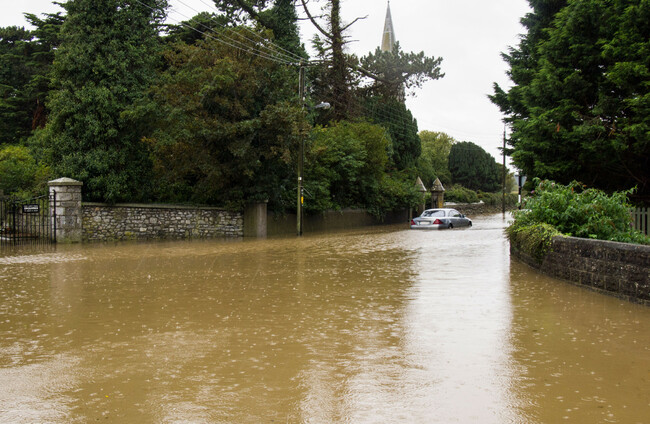
EXTREME RAINFALL LIKE that experienced in the southeast of the country earlier this month during Storm Claudia is twice as likely due to climate change – and we can expect more of the same, and even more intense rain to come.
A new study by researchers at Maynooth University and climate scientists at Met Éireann found that the storm came after several months of unusually wet conditions.
There was significantly more rainfall than usual recorded in September alone.
These conditions left soils saturated and river levels elevated – something researchers said “seriously tested” flood defences.
The research found that due to global warming, the intense rainfall seen during Storm Claudia, as well as significantly wetter Autumns, are now twice as likely. If the planet continues to heat up these weather conditions can be expected once every one to two years.
One of the researchers, Claire Bergin, said: “With further global warming we can expect the magnitude of rainfall to increase, with more rain falling during events like this.”
She said that this is “especially concerning” when combined with the general increase in wet weather as it will increase the likelihood that soils will be saturated and rivers full when heavy rain arrives.
The researchers said extreme weather events in Ireland have previously happened when the sea is at low tide, which reduced the risk of severe flooding.
Lionel Swan, one of the report authors said: “It is important to stress how lucky Ireland has been in recent years when it comes to the occurrence of extreme weather events such as storms and heavy precipitation events.”
He said the Midleton flooding of 2023, Storm Éowyn in January, Storm Amy in October and Storm Claudia this month all coincided with either a neap tide, which is a period of moderate tides, or with a spring low tide.
“These tidal conditions allowed water from our rivers to essentially escape to the ocean, reducing the severity of flooding,” he said.
“The worry is that our luck will run out eventually, we will experience an extreme event that coincides with a spring high tide, and the resulting impacts for flooding are likely to be far worse than we’ve experienced before.”
Another researcher, Conor Murphy, said now is the time to invest in measures to reduce the impacts of flooding and protect communities.

To embed this post, copy the code below on your site

















have your say