Sign in. It’s quick, free and it’s up to you.
An account is an optional way to support the work we do. Find out more.
Sign in. It’s quick, free and it’s up to you.
An account is an optional way to support the work we do. Find out more.
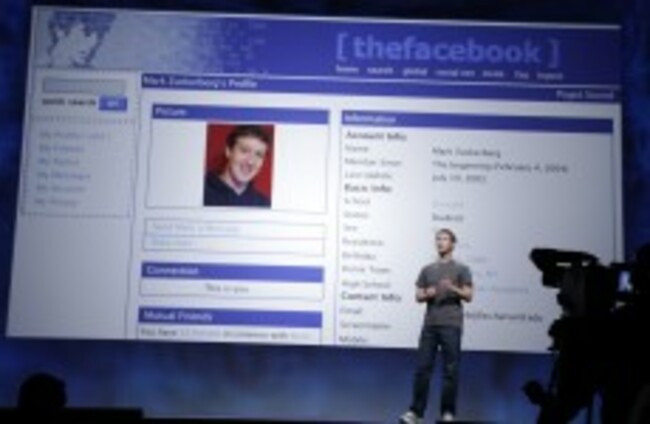
FACEBOOK HAS SET itself up for a potential valuation of up to $96 billion dollars when its shares finally go on public sale later this year.
A regulatory filing yesterday confirmed that the company would sell about 337.4 million shares in its initial public offering, with those shares valued at between $28 and $35 each.
Bloomberg notes that this valuation would mean the company would raise around $11.8 billion in its IPO – making it easily the most lucrative IPO in internet history.
Google, when it went public in 2004, raised $1.9 billion through the public sale of its shares; German firm T-Online International raised $2.8 billion when it floated in 2000.
Bloomberg’s compilations also note that the company would therefore be valued at 24 times the amount it took in in sales last year, a relatively high amount when compared to the likes of Google, whose value – currently $199 billion – is equivalent to five times its turnover.
Co-incidentally, the 24-times-sales radio also reflects the increase in the social network’s income in the last four years: its sales for 2011 were 24 times its sales for 2007.
The documentation shows the company’s founder and CEO, 27-year-old Mark Zuckerberg, could potentially become an instant billionaire (in cash terms) when the shares are launched.
Zuckerberg is selling 30.2 million shares – around 5.6 per cent of his total stake – which would bring in $1.05 billion if the shares sell at $35 each.
His remaining stash of 500-million-or-so shares (which include preference shares worth proportionally more than regular stock) would be worth up to $40 billion, cementing his status as one of the world’s foremost self-made billionaires.
Analysts had expected Facebook to aim for a total valuation of around $100 billion, but the slightly smaller valuation is unsurprising given how the company’s financial results for the first quarter suggested a deceleration in profits.

To embed this post, copy the code below on your site













have your say