Sign in. It’s quick, free and it’s up to you.
An account is an optional way to support the work we do. Find out more.
Sign in. It’s quick, free and it’s up to you.
An account is an optional way to support the work we do. Find out more.
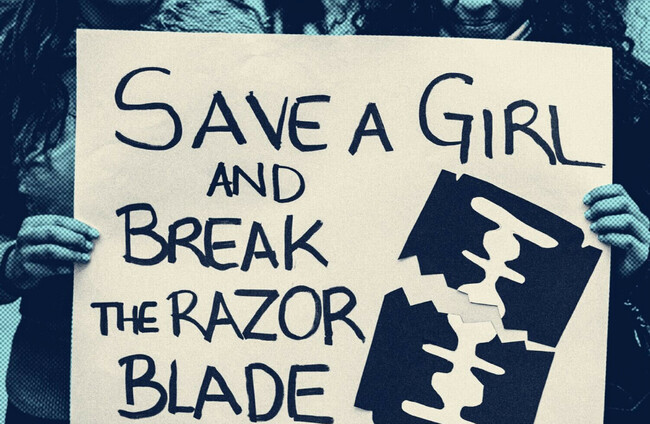
 InvestigatesFGM care in Europe
ACROSS EUROPE, THOUSANDS of women and girls are living with the lasting injuries of a crime outlawed decades ago.
Yet, despite strong laws, Female Genital Mutilation (FGM) victims in many EU countries have been left waiting for healthcare, support and justice.
In a cross-border investigation, The Journal Investigates has found that in many regions, specialist health services are under-resourced, perpetrator prosecutions are rare, and national data is either missing or outdated.
As revealed earlier today, Ireland’s sole specialist FGM clinic has experienced a 330% increase in demand for its services, with patients waiting around 12 months-plus for treatment.
In Spain, France and Austria, similar scenes are playing out, where severely injured women and girls depend on overstretched services for basic medical care.
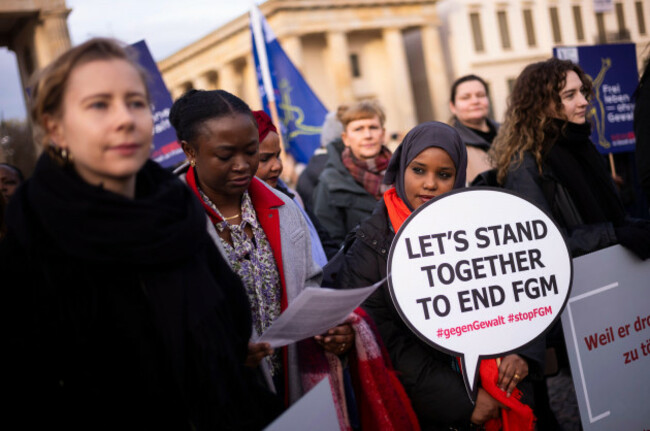
Investigations like this don’t happen without your support… Impactful investigative reporting is powered by people like you.
According to the European Institute for Gender Equality (EIGE), around 600,000 women and girls are living with the consequences of FGM in the EU, while another 190,000 remain at risk from the cruel practice.
Rooted in cultural, social, or religious beliefs about femininity and purity, FGM involves the partial or total removal of external female genitalia. It is usually carried out on girls between infancy and adolescence.
The procedure has no health benefits, and can leave its victims with severe physical and psychological trauma.
“Women who have gone through FGM, the first thing they will always remember is the cut,” Ifrah Ahmed, a Somali-Irish campaigner, told The Journal Investigates.
“Everything else is second, from becoming a wife to giving birth to your first child.
“They can still feel the scissors, they can still hear their sisters screaming, and they can still see the blood. It’s a horror.”
Over the last number of years, Europe has seen an increase in migration from areas where FGM is prevalent, such as Africa, the Middle East and Asia.
Thousands have presented at borders requesting international protection from having already undergone FGM, or fears they – or their daughters – are at risk from the practice.
In Ireland, asylum applications citing FGM as the primary reason for protection has increased ten-fold since 2020.
However, the true scale of those living with FGM injuries is unclear as national statistics have not been updated in seven years.
The Irish Family Planning Association (IFPA), which runs the country’s only FGM treatment service, estimated in 2018 that around 5,000 women and girls living in the country have undergone FGM.
But with no national follow up since, that number is believed to have increased significantly. It’s a data issue that appears to be a trend across Europe.
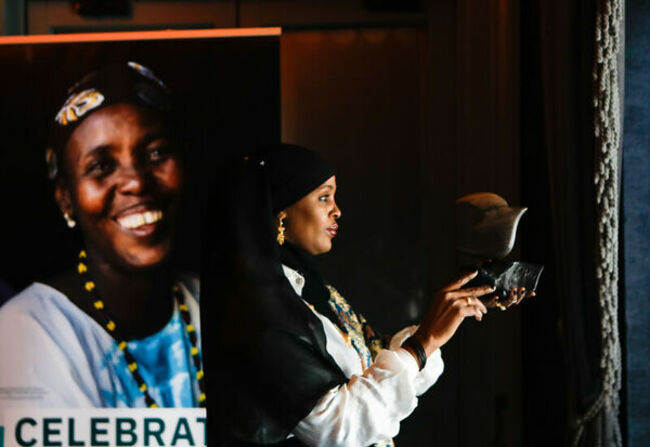
In Spain, there is no official prevalence survey of women living with FGM. Doctors of the World, a Spanish human-rights health NGO, reported it assisted 1,115 survivors last year.
Austria’s first official national estimate of those living with FGM trauma was published last year, and estimated around 11,000 girls and women were affected.
France, which has one of the highest numbers of women and girls afflicted with the barbaric practice, records around 139,000 people living with FGM injuries and complications.
The Journal Investigates has found that across these areas, grassroot networks and NGOs are stepping in to provide either support or medical care to women and girls when the state cannot.
In Dublin, migrant women’s support group AkiDwA regularly trains midwives, social workers and teachers on recognising and reporting FGM.
While in Vienna, non-profit women’s centre FEM South runs awareness projects led by trained “FGM peers” from affected communities.
The Dexeus Mujer Foundation, based in Barcelona, performs free genital reconstruction surgeries for survivors.
Doctors of the World has also created “tea time” gatherings where women living in Spain can talk openly about sexuality, motherhood and trauma.
Amal Hussein, a Somali refugee and project leader with Doctors of the World, said it is a “safe space” to discuss things “that are usually silenced”.
“That’s how we start to break the taboo,” she said.
Yet most of these programmes depend on limited EU or national grants. Once the funding ends, so does the outreach.
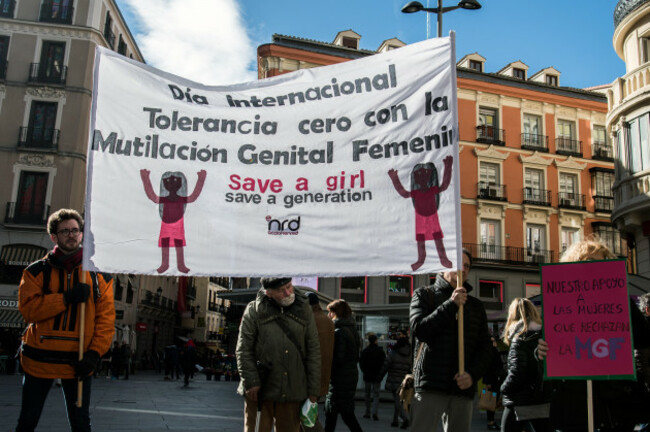
Even when survivors seek medical attention, the services they receive differ greatly across Europe.
France’s Montreuil Hospital Unit, near Paris, is one of few offering multidisciplinary treatment under one roof. This includes gynaecology, sexology, psychotherapy and social care.
Austria’s FGM Coordination Centre in Vienna opened in 2021 to coordinate prevention and referral work, though it still relies heavily on short-term government funding.
In Dublin, women currently face waiting over 12 months for medical care due to a 330% increase in demand on the country’s only FGM treatment service.
The IFPA, which runs the clinic, said current provisions are “neither fair to clients nor sustainable” for the organisation.
Chief executive Niall Behan has called for state-funded regional services to be rolled out to ease the backlog.
In Spain, the 2015 National Healthcare Protocol sets out how professionals should identify and respond to FGM, but NGOs say implementation varies by region.
“Compared to other countries, Spain is quite pioneering,” said Hussein, whose mother was a victim of the practice.
“But sometimes the protocol is triggered too early, and that can lead to long and traumatic processes to prove that a girl has not undergone FGM.”
Her organisation trains police, doctors, social workers and teachers to identify risk and support affected women.
But Hussein said genuine prevention depends on cultural understanding, not suspicion.
“Many families believe they practise FGM out of love, thinking it protects their daughters from being rejected if they return to their home country,” she said.
“When cases are reported and children are separated from their parents, they don’t understand why.
“We believe it’s essential to accompany both children and parents so they understand why the law intervenes.”
While criminalised in every EU member state, often with extraterritorial reach, FGM convictions are rare.
Austria’s Protection Against Violence Act defines FGM as bodily harm punishable by up to 10 years in prison. Yet searches of Austria’s legal database show no recorded prosecutions.
France, despite having one of the strictest codes and the largest affected population, reports only sporadic prosecutions.
Spain was the first to convict parents for FGM committed abroad, but most of its cases date back more than a decade.
Ireland’s single conviction in 2019 was later quashed, and a retrial collapsed.
The couple at the centre of the allegations, parents accused of carrying out the practice on their young daughter, have now formally applied to Dublin’s Court of Appeal for a miscarriage of justice certificate. Their case is set to be heard in the new year.
Campaigners say the next phase of Europe’s gender strategy must focus on accountability, tracking not only prosecutions but also treatment outcomes and survivor support across the continent.
For Hussein, the starting point is empathy. “It’s not just about criminalisation,” she said.
“It’s about giving women the right to heal, to talk, and to trust the system that promised to protect them.”
Reporter: Patricia Devlin • Editor: Noel Baker • Social Media: Cliodhna Travers • Main Image Design: Lorcan O’Reilly
This article is part of PULSE, a European collaborative journalism project.
With reporting by Patricia Devlin (The Journal Investigates, Ireland), Lola García-Ajofrín (El Confidencial, Spain), Ann Wiener (Der Standard, Austria) and Voxeurop.

To embed this post, copy the code below on your site
















have your say