Sign in. It’s quick, free and it’s up to you.
An account is an optional way to support the work we do. Find out more.
Sign in. It’s quick, free and it’s up to you.
An account is an optional way to support the work we do. Find out more.
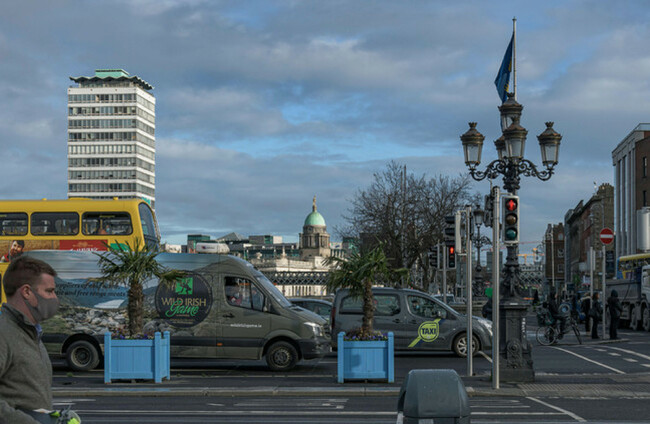
THE FIRST MEASURES of the Dublin City Centre Transport Plan will come into effect next month.
It aims to reduce traffic in Dublin by preventing private cars from travelling through the city from one side to the other.
The first set of measures, being brought in on 25 August, will be implemented on the North Quays at Bachelors Walk and on the South Quays on Burgh Quay and Aston Quay.
The use of private cars in these parts will be restricted from 7am to 7pm.
Access will be restricted during these hours to buses, taxis, cyclists and pedestrians.
Outside of these hours, the restrictions will not be in operation and all vehicles can travel as before.
However, all other routes on the quays and all other routes in the city remain the same, and access to all Liffey Bridges will also remain the same.
Road markings and signage changes will notify motorists of these changes.
Dublin City Council would like to announce that the first of the measures contained in the Dublin City Transport Plan 2023 will come into effect from 25th August 2024. For more details on the new measures please click here: https://t.co/Mj8xVoDVNc pic.twitter.com/DolOFgtDHs
— Dublin City Council (@DubCityCouncil) July 25, 2024
On the North Quays, the new restrictions commence after the existing bus gate on Bachelors Walk and there are no changes before this area.
General traffic can continue to travel along the North Quays and Bachelors Walk as far as O’Connell Street but will not be permitted to continue onto Eden Quay.
On the South Quay, the changes commence east of O’Connell Bridge on Burgh Quay and there are no changes before this area.
General traffic can continue to travel along the South Quays and Burgh Quay as far as O’Connell Bridge but will not be permitted to continue straight onto Aston Quay.
Access for residents will be maintained, though there may be a different route to or from the area.
There will be no changes to the disabled parking bays and there are no changes to for taxis.
Dublin City Council added that the “vast majority of routes to hospitals will remain the same” and that the “majority of routes to city centre carparks remain the same”.
It’s all part of a plan to increase walking, cycling and public transport rates, while driving down car and taxi journeys.
Decision made: the first sections of the Dublin City Centre Transport Plan are going ahead on 25th of August.
— Michael Pidgeon (@Pidge) July 25, 2024
It's the right call by the Chief Exec.
It's been a long fight. Well done to the council staff, councillors, and campaigners who have pushed for this. pic.twitter.com/pLSBU8AF5Z
Dublin City Council added that these first set of measures on the North and South Quays “address the 60% of general traffic in the city centre that is not stopping, working or shopping but is travelling through the city”.
It noted that between 7am and 7pm, just 2% of movements at the Bachelors Walk / O’Connell Street junction are undertaken by people in cars, yet at least 50% of the road space is assigned to cars.
These figures are the same on the South Quays at the Aston Quay / O’Connell Street Bridge junction.
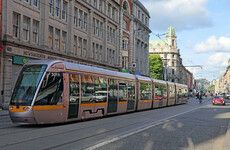
This causes delays to the public transport network, particularly buses which account for 49% of users at these junctions.
The Council said that creating additional road space is not an option, so the existing space “needs to work as efficiently as possible”.
It added that the measures will allow for more space to be allocated to public transport, which will improve the reliability, speed and service for public transport.
The Council said a working group, chaired by the Dublin Lord Mayor James Geoghegan, will now be established to monitor the impact of changes.
This group will include business organisations, the National Transport Authority, elected members and other interested parties, such as members of the disability community.
Originally, the plan was to ban private cars on Bachelor’s Walk on a 24/7 basis.
Minister of State for Business, Employment and Retail Emer Higgins had also asked Dublin City Council to delay the plans until at least after Christmas.
She said there was a “need to get this right” and added: ““I would prefer for further consultation with retailers and further implementation of Bus Connects before we introduce a significant change like this.”
In response, Green Party councillors labelled the move “bizarre” and a “major overreach”.
Speaking at the time, Green Party leader on DCC Cllr. Michael Pidgeon said that people in the city are “sick of waiting in traffic and waiting for buses” and that the plan should proceed.
“This last-ditch intervention by Minister Emer Higgins is utterly bizarre. She is doing the work of vested interests – car park owners who fear any progress that would undermine their bottom line,” he said.
Transport Minister Eamon Ryan also backed councillors to have the final say on the plans.
“It’s up to the city council to decide, they decided twice and if they decided to delay now I think the people of Dublin would be rightly deeply upset,” he said.

To embed this post, copy the code below on your site










have your say