Sign in. It’s quick, free and it’s up to you.
An account is an optional way to support the work we do. Find out more.
Sign in. It’s quick, free and it’s up to you.
An account is an optional way to support the work we do. Find out more.
THE HUGE GROWTH in weight-loss drugs may help to protect Ireland’s corporation tax take in the face of continuing US threats over tariffs.
That’s one of the scenarios outlined in a new report by Ireland’s budget watchdog, which has found that Ireland’s corporation tax receipts continue to boom.
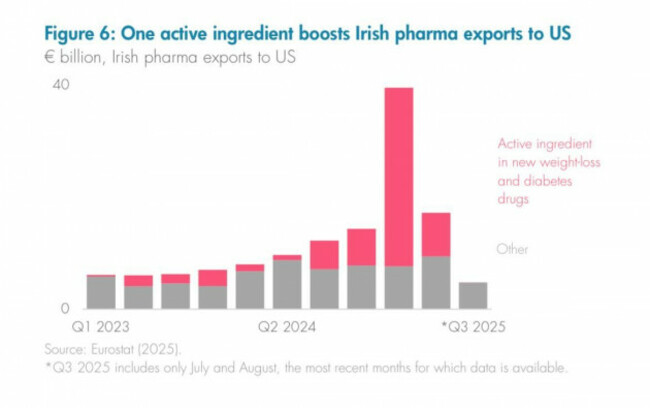
The report by the Irish Fiscal Advisory Council found that “almost all” of the €40 billion surge in pharma exports from Ireland to the US in the first five months of this year was due to the active ingredient needed for increasingly popular weight-loss and diabetes drugs.
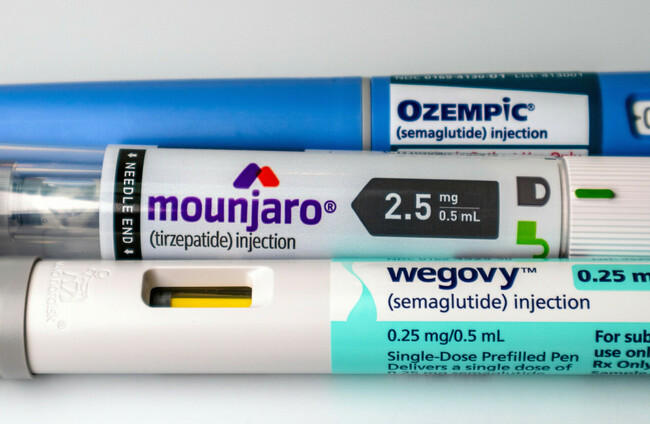
These are used by the likes of Eli Lilly for its Mounjaro drug at its Co Cork plant, and by Novo Nordisk for Ozempic at its Athlone facility.
“This spike in exports likely reflects strong US demand for these medicines, along with stockpiling in the US ahead of potential tariff changes,” the Fiscal Council said.
However, it noted that “risks are growing” and the tax receipts are dependent on the direction Donald Trump’s America takes policy-wise.
Corporation tax now makes up over a quarter of Ireland’s total tax revenue, with roughly three-quarters of it paid by large US multinationals. This makes Ireland’s public finances particularly exposed to changes in US trade and tax policy.
A longer-term effect of US tariffs could see a “dampening” on trade, future investment and job creation here, according to the report.
It has also found that the largest payers of corporation tax have not yet been directly impacted by the new US tariffs – but the situation remains “highly uncertain” for the government.
This is because the tech and pharma sectors – which account for 87% of the corporation tax paid by large US-owned multinationals – have been exempt from tariffs so far.
This is all the more critical as about three-quarters of corporation tax receipts are paid by large US multinationals. At some €20 billion, the report noted this equates to the Government’s combined spend on hospital services and schools in 2023.
Commenting on the report, author Brian Cronin said corporation tax remains critical to Ireland’s public finances but warned that it’s also one of the “most volatile and uncertain” sources of revenue.
“Our analysis shows that recent US policy changes haven’t yet had a major impact on Ireland’s biggest taxpayers. In fact, some of the changes may have temporarily boosted corporation tax receipts,” Cronin said.
This was due to large companies frontloading their stock in advance of tariffs.
But that could change quickly. The US is trying to encourage more manufacturing at home, and it’s also pushing to lower drug prices domestically. Both could reduce the corporation tax paid in Ireland.
Thee budget watchdog highlighted that future corporation tax revenues could drastically diverge depending on the US.
They could wind up “much higher or lower” than current levels, the report said. This depends on “how US policy evolves, how multinational firms respond, and how global demand for key products” develops.
A bright spot for Ireland, said the report, is that it’s currently producing highly profitable weight-loss and diabetes drugs.
This was due to one product, protein- and peptide-based hormones. This category includes the active ingredient used to make increasingly popular weight-loss and diabetes medicines.
US sales of these weight-loss and diabetes medicines hit $6.7 billion (€5.78 billion) in Q2 of this year, up more than 80% on the previous year.
“Demand for these drugs is expected to grow strongly,” the report said.
In the tech sector, profits could rise due to advances in artificial intelligence and growing demand for products and services. Already in the past year, stock prices for a small number of companies have shot up thanks to the growth in the area.
The sector accounted for a record €6.2 billion – or 22% – of Ireland’s corporation tax revenues last year.
The watchdog also noted that tax receipts from the pharma sector could suffer due to deals Donald Trump has been attempting to strike with individuals companies in the US in a bid to lower the market price of their drugs.
“Multiple forces are at play, from potential tariffs and drug price reforms to new blockbuster drugs and buoyant underlying demand,” the report said.
“Each could have an influence on the value of Ireland’s pharma exports to the US and, hence, Ireland’s corporation tax receipts.”

To embed this post, copy the code below on your site















have your say