Sign in. It’s quick, free and it’s up to you.
An account is an optional way to support the work we do. Find out more.
Sign in. It’s quick, free and it’s up to you.
An account is an optional way to support the work we do. Find out more.
THE STATE’S SPENDING watchdog has criticised the government’s lack of future planning, arguing that Budget 2026 is not prudent enough.
The Irish Fiscal Advisory Council (IFAC) says the numbers have been distorted by the “extraordinary” amount of corporation tax that is being collected. Without it, the Council says, the State could have a deficit of €14 billion next year, a deterioration of €6.2 billion.
As things stand, total spending in 2025 is set to be €109 billion. That’s an increase of €12.5 billion (12.9%) on last year, relative to what was originally set out for 2024.
“These increases above what was set out on Budget Day are due to a combination of repeated expenditure overruns and within-year policy changes,” the IFAC said.
“Spending in 2025 could be even higher than currently forecast, if spending trends seen so far this year continue.”
It says the current rate of spending, even after accounting for inflation, is “much faster than the sustainable growth rate of the Irish economy”.
The IFAC says that while the tax package announced today appears to be relatively modest – none of the tax bands were expanded – it will have a bigger impact in future years.
The full-year costs will be much higher than the cost in 2026 (€2.3 billion versus €1.3 billion), it says, due to measures introduced midway through 2026.
3/4 The White Paper suggests large and growing underlying deficits in 2025 and 2026. Excluding excess corporation tax, the White Paper estimates a deficit of almost €10 billion next year. This is before any new budgetary measures are introduced. pic.twitter.com/e5RYD6nqfH
— Irish Fiscal Advisory Council (@fiscalcouncil) October 4, 2025
The IFAC said, however, that Budget 2026 includes more realistic forecasts for corporation tax receipts.
The government now expects a €3 billion positive impact from OECD international tax reforms in 2026, which is much higher than earlier estimates of a €2 billion negative impact. This is consistent with the Council’s projections.
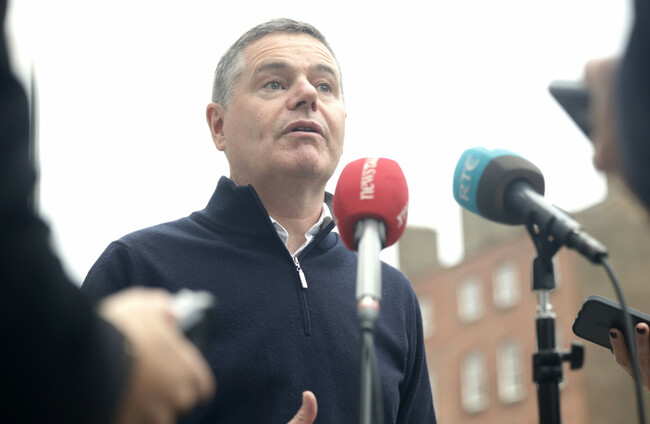
Public Expenditure Minister Paschal Donohoe acknowledged the risk associated with depending on corporate tax receipts, and that caution is illustrated in the budget surpluses of recent years.
He said in response to the IFAC’s comments: “We take them on board. The budgetary process is very difficult, and we’re running very large surpluses.”
The Council has also consistently stressed the need for more future planning, as the government’s current fiscal forecasts only show 15 months ahead. The Council says they should be looking at least five years ahead.
The government has yet to submit an updated five-year plan to the European Commission, which was due last summer.
“This suggests the process is not being taken seriously,” the IFAC said.

To embed this post, copy the code below on your site















have your say