Sign in. It’s quick, free and it’s up to you.
An account is an optional way to support the work we do. Find out more.
Sign in. It’s quick, free and it’s up to you.
An account is an optional way to support the work we do. Find out more.

LAST UPDATE | 7 Aug 2025
A NEW GUINNESS World Record has been set at Fleadh Cheoil na hÉireann in Wexford for the biggest céilí band set.
A record 1,018 musicians took part in the attempt at Chadwick’s Wexford Park, beating the previous record of 384.
John Ryan, one of the organisers, told The Journal earlier today that setting the new record would not be a “slam dunk record”.
“It is very challenging,” he said.
“If we can’t get the coordination right, if people don’t play in sync, that’s the biggest risk of [not breaking] this record. So we need everyone really to be on their game today.”
But success was achieved, with the group playing three pre-prescribed polkas in unison – the Wexford Polka, the Gaelscoil Polka and The Little Diamond.
“There’s 15 different musical instruments, including harps, banjos, bodhráns and even some people playing the bones,” says Ryan.
“There’s old people, there’s young people, there’s new beginners, there’s people that have been playing for their lives.”
Gathering at the GAA park at 4pm, the current record for the biggest céilí band, which was set in Croke Park in March 2024, was beaten.
This is the second year that Fleadh Cheoil has achieved a Guinness Book of World Record.
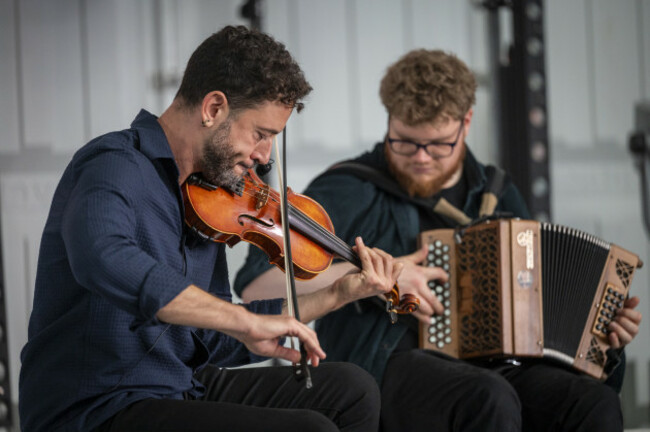
Last year, the festival broke the record for the most tin whistles played in unison. Some 2,516 musicians played in one place for five minutes.
Today’s attempt was a collaboration between the Fleadh, Wexford County Council, the GAA, the Guinness World Records team, and Castlebridge Inspire, which is a community group that promotes the town where the world records concept originated.
The story goes that in 1951, the managing director of Guinness Breweries, Hugh Beaver, was on a shooting trip in Castlebridge.
He missed a shot at a golden plover and subsequently had a disagreement with other members of the group about whether the Golden Plover was Europe’s fastest game bird.
He could not find reliable reference data to confirm his view that the plover was the fastest bird.
In 1954, Guinness commissioned the McWhirter brothers to compile what would become the Guinness Book of Records, which was first printed in August 1955.
The book went on to be the definitive reference data source for World Records, or as Ryan calls it, “the Google of its time”.
The Fleadh runs until 10 August and has a varied programme of events in Wexford which can be viewed here.

To embed this post, copy the code below on your site













have your say