Sign in. It’s quick, free and it’s up to you.
An account is an optional way to support the work we do. Find out more.
Sign in. It’s quick, free and it’s up to you.
An account is an optional way to support the work we do. Find out more.
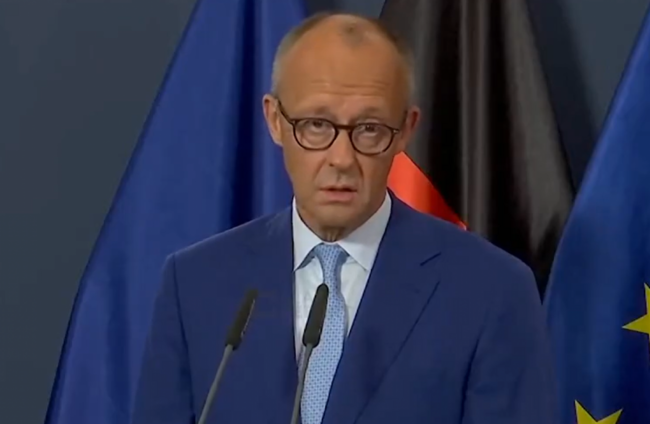
GERMAN CHANCELLOR FRIEDRICH Merz has conceded that his party suffered a “disaster” in two regional elections, but vowed to remain in office as pressure on his position mounts.
In the north-eastern state of Mecklenburg-Western Pomerania, his centre-right Christian Democratic Union (CDU) fell just below the 5% of the vote needed to keep seats in the regional parliament.
It is the first time that has happened in 77 years of modern Germany’s federal republic, after losing more than half its support.
While the far-right Alternative for Germany (AfD) party looks set to win the most votes there, the centre-left Social Democratic Party (SPD) – the junior party in Merz’s national governing coalition – is expected to continue governing the state by forming a coalition with left-wing allies.
Meanwhile, the CDU also dropped to second place in Berlin behind the hard-left Left Party (Die Linke), which is in pole position to lead the next city government – though Merz’s party could, depending on how coalition talks go, still retain city hall.
The elections took place on Sunday, two weeks after the AfD surged to a resounding victory in an election in the eastern state of Saxony-Anhalt. The CDU - which has led Saxony-Anhalt for 24 years – lost half its support.
Good Morning from Germany, where voters have delivered a historic blow to the political mainstream. Merz’s CDU has been shut out of a state parliament for the first time in the Federal Republic’s history: just 4.9% in Mecklenburg-Western Pomerania, where the far-right AfD won… pic.twitter.com/UcCyURYy3X
— Holger Zschaepitz (@Schuldensuehner) September 21, 2026
Just 16 months in office, Merz has seen his approval ratings plummet. According to a poll released earlier this month, just 13% of Germans are happy with the job he is doing.
Fighting speculation that his CDU/CSU bloc may try to oust him, the 70-year-old took the unusual step of addressing the nation on TV on Sunday, just minutes after the first exit polls were announced.
After admitting that his CDU had suffered a “disaster” in Mecklenburg-Western Pomerania, Merz said that “trust in our country’s institutions is waning” and being “actively undermined by radical parties on both the left and the right”.
“What needs to be done now requires backbone, steadfastness and patience,” he said.
I will demonstrate this as CDU party chairman and, above all, as chancellor of our country.
Analysts saw it as an attempt to gain the advantage before another hailstorm of criticism comes raining down.
“His extremely early move shows that Merz is staking a claim to define the narrative,” political scientist Oliver Lembcke of Ruhr University Bochum told AFP.
Lembcke labelled this “leadership from a defensive position – and an attempt to prevent a personnel debate with an uncertain outcome from gathering steam”.
ING bank economist Carsten Brzeski said about Merz’s unusual TV address: “Read the appearance for what it was, an attempt to choke off the speculation about his possible resignation that has been building in recent weeks.”
After Sunday’s CDU crisis meeting, the chancellor cleared his calendar for the following days and skipped a trip to New York for the UN General Assembly, to deal with potential aftershocks from the votes.
Merz faces more meetings on Monday with his party’s leadership. Much will depend on the CDU’s influential regional leaders; the party’s eight state governors last week backed the chancellor, though questions remained about how wholehearted their support was.
Names of hopefuls for the top job that have been floated include Hendrik Wüst, the state premier of the country’s most populous state, North Rhine-Westphalia and a prominent CDU figure often cited as a possible successor to Merz.
Markus Söder, the Bavarian state premier and head of the CSU, the regional sister party of the CDU, has also been suggested as a potential replacement.
However, no contender has made an open move for the job.
There are no more electoral tests for the chancellor this year. However, five state elections are scheduled next year, three of them in April. They include one in North Rhine-Westphalia, currently led by Wüst.
None of the five elections is in the east, where AfD is strongest.

To embed this post, copy the code below on your site














have your say