Sign in. It’s quick, free and it’s up to you.
An account is an optional way to support the work we do. Find out more.
Sign in. It’s quick, free and it’s up to you.
An account is an optional way to support the work we do. Find out more.
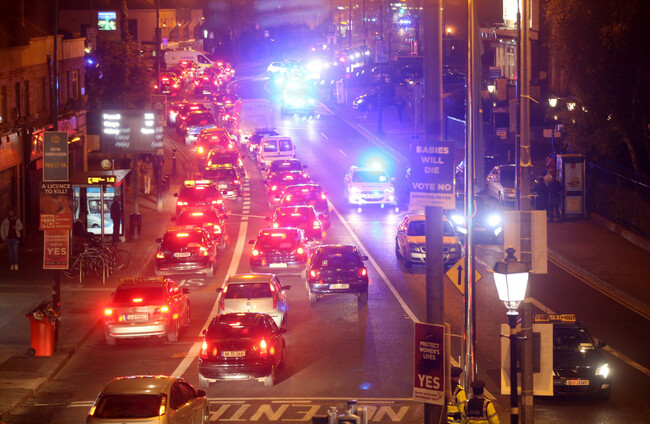
MANY GARDA DIVISIONS across the country have a skeletal number of members who are authorised and trained to drive in emergency situations.
In Dublin Metropolitan Region (DMR) Southern Region, which covers Tallaght, Crumlin and Terenure, just 17% of members can drive using speed or sirens.
Gardaí who are not trained to a higher standard are not allowed to use sirens, flashing lights or drive at higher speeds.
Gardaí who complete a one-day Competency Based Driver (CBD) Level 1 assessment may drive patrol cars, but they have to sign a document promising not to exceed the speed limit at any time and that they will not turn on their sirens or flashing lights.
CBD2 is the higher qualification which allows garda members to pursue vehicles at high speeds, use the sirens and turn on the flashing blue lights.
The latest report from the Garda Inspectorate published just before Christmas found that the number of members who have been trained in either CBD1 or CBD2 has drastically fallen since 2016. There are also CBD 3, 4 and 5 divisions of training – which are more advanced and usually reserved for specialist units.
Below is the number of gardaí trained in CBD 1, 2 and 3 in the last three years:
The standard CBD Level 2 consists of a three-week programme that trains a member to drive in response mode and enables them to provide an immediate response to calls for service. It also teaches them how to use warning lights and sirens and permits some exemptions under road traffic laws.
The Garda Inspectorate visited eight different districts to determine the number of qualified drivers at one time.
Below are the findings of the number of officers trained to CBD Level 2:
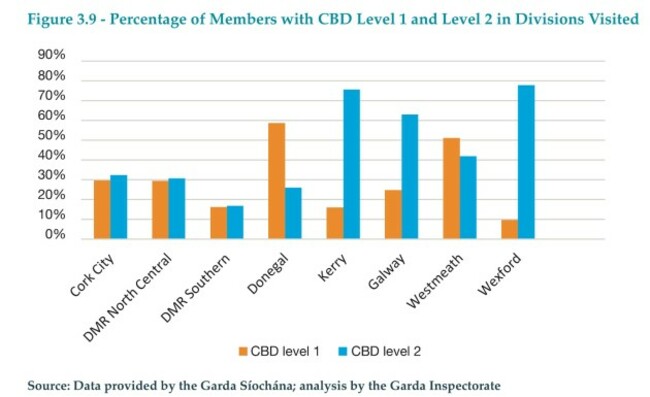
Analysis shows considerable variations across the eight divisions, with Wexford having nearly 78% of all members qualified to Level 2, while DMR Southern had only 17% qualified at that level.
During the inspectorate visits to stations, concerns were raised about the low number of Level 2 qualified drivers on front-line duties. In one district, a regular unit reported that only one member of the unit was qualified to Level 2.
The inspectorate found: “As a result, there are occasions when there is no qualified driver available. The Policing Authority in its fifth progress report to the Minister reported that, “out of 26 garda members in one garda unit the Authority visited, only one had sufficient training to drive in emergency situations. A further two had the very basic level of CBD driver training which would allow them to drive a service vehicle, but not respond to emergencies or engage in high-speed pursuits”.
TheJournal.ie reported over the weekend that a suspected drink driver was able to evade garda detection last week because the garda member driving the patrol car was not authorised to use the siren or drive at high speeds.
The Policing Authority, the nation’s garda oversight body, has also been vocal on the driving issue.
In its latest report, it said: “It continues to frustrate the authority that the training of drivers has not been included as an organisational priority.
The Policing Authority said the lack of qualified drivers is causing massive problems in response times to incidents.

To embed this post, copy the code below on your site








have your say