Sign in. It’s quick, free and it’s up to you.
An account is an optional way to support the work we do. Find out more.
Sign in. It’s quick, free and it’s up to you.
An account is an optional way to support the work we do. Find out more.
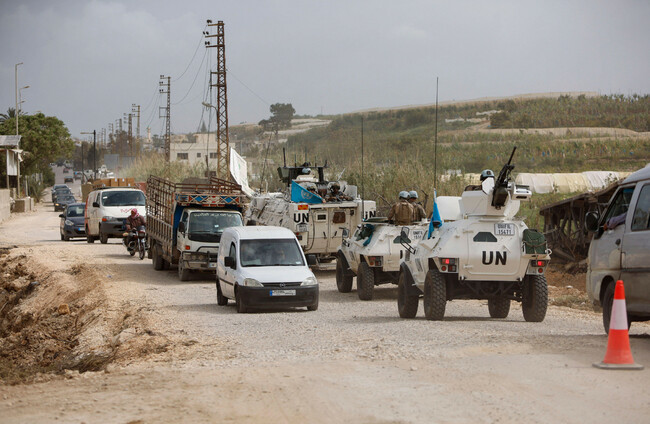

BOMBS RAINED DOWN on Beirut on Sunday, once again shattering another brittle ceasefire agreed between Israel and Lebanon just days earlier.
Nearly three years of war has left hundreds of thousands of Lebanese displaced from homes, which now lie in villages in territory occupied by Israeli forces or in towns that have become theatres for airstrikes and ground battles.
Lebanon’s death toll from the latest Israeli offensive now stands at over 3,630, with more than 11,100 wounded since 2 March. Meanwhile, Hezbollah, the Tehran-backed militia which drew Lebanon into the US-Israel war in March by firing rockets into Northern Israel, has killed at least 30 Israeli soldiers in southern Lebanon, as well as three Israeli civilians.
During a fragile ceasefire in April, hundreds of residents attempted to return to Tibnin, a Christian-Shia village which, from the 1980s until the 2000s, housed the main base for Irish peacekeepers in southern Lebanon.
“During the war, almost everyone had to depart Tibnin to safer places,” says Ali Saad, a Tibnin resident now working for the Red Cross in Beirut. He says around half of the village’s population returned when a ceasefire was announced in April.
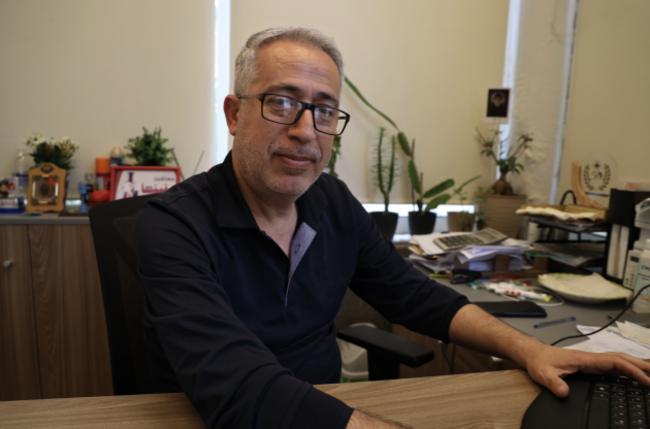
“I was one of those that returned that day, but it didn’t take 24 hours before we had to depart again in a hurry to save our lives and to return back to a safer place,” says Saad.
“The ceasefire did not hold 24 hours.”
“The drone and the airstrikes never stopped,” says Saad, whose phone pings regularly in his Beirut office where he coordinates Red Cross missions in southern Lebanon. “It’s very hard even to evacuate people from the South to hospitals or to a safe place.”
On 12 April 2026, a long-serving Lebanese Red Cross paramedic, Hassan Badawi, was killed by an Israeli drone strike in Beit Yahoun while conducting an emergency medical mission in southern Lebanon. The Red Cross ambulance used by Badawi was clearly marked and had coordinated safe passage with UNIFIL, the UN peacekeeping force in southern Lebanon.
The strike wounded another paramedic, Saad’s son, who remained in Tibnin with his other son, as volunteers with the Lebanese Red Cross. “I look at all the volunteers like my sons. This is the principles of the Geneva Conventions and the international movement of the Red Cross,” says Saad. “My sons and their friends are there to support those people who are in need. This is humanity.”
As well as lethal attacks on its members, The Red Cross has faced repeated obstacles in responding to those injured in this latest round of warfare.
On 22 April 2026, 42-year-old Lebanese journalist Amal Khalil lay alive but in a critical condition under the rubble of a building levelled by an Israeli airstrike, after the car in which she was travelling was first targeted.
Responders from the Red Cross, the Lebanese army, and civil defence were all denied permission to rescue her until she had died from her injuries.
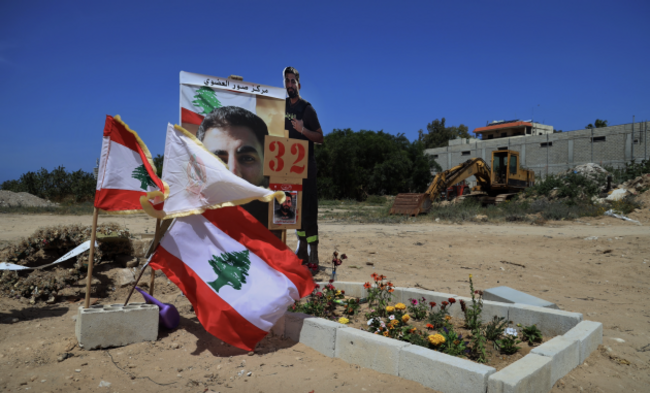
For the dead, the war has made journeys to graveyards where generations of families have been buried perilous for many southern Lebanese. Instead, make-shift graveyards have been built in small squares of public wasteland in Beirut, Saida and Tyre, a coastal city which lies around 20 km from the country’s border area with Israel and which has been under a forced evacuation warning from the Israeli military for two weeks.
On one side of Tyre lies a temporary graveyard for members of Amal, a Shia militia aligned with Hezbollah, and the local civil defence. As I walked along the fresh graves, three drone strikes rang out nearby, one after the other. By the end of the day, local news confirmed three dead from those strikes.
On the northern side of Tyre, lies another temporary graveyard, this one dotted with Iranian and Hezbollah flags, alongside images of the paramilitary group’s slain leader Hassan Nasrallah.
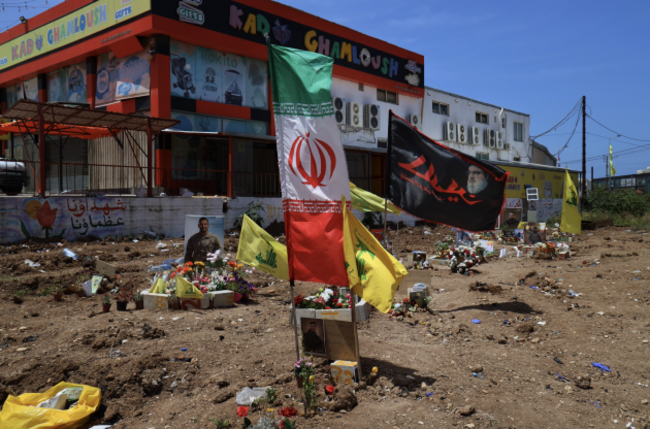
As I arrived at this graveyard, a man killed in a drone strike along the highway earlier that morning was being buried in a fresh but temporary grave. An imam arrived to say a short prayer to the man’s relatives who had gathered under the midday sun to lower a casket into the freshly dug grave.
Typically in Islam, a body should not be exhumed after burial. But during war, a special funeral rite called ‘wadiaa’ can be performed, where bodies are buried in a casket to be dug up again and relatives will then bury their loved ones in a shroud directly in the ground for a second time.
Saad says the dead from across southern Lebanon will be buried in these temporary graveyards until “a true cease comes – then we remove the remains of their bodies back to their own hometowns to be buried.”
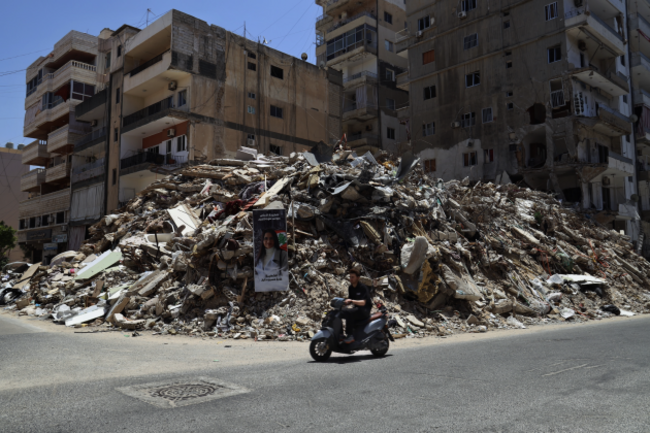
But as the war continues on, with Israeli forces levelling villages and towns, many Lebanese fear what they will return to, if they are ever allowed to.
Lebanese Prime Minister Nawaf Salam said that, since mid-April, Israel has carried out nearly 3,500 air strikes, 407 demolitions and flattened half a dozen Lebanese villages.
With a new Israeli occupation in operation across swathes of southern Lebanon, while Hezbollah vows to fight on despite the Beirut government’s attempt to broker peace, plans for UN peacekeepers to leave the war-torn border area are continuing at pace.
“As outlined in UN Security Council Resolution (UNSCR) 2790, agreed in August 2025, UNIFIL will cease operations on 31 December 2026, then begin the drawdown and withdrawal of its personnel through 2027,’ said a DFA spokesperson.
“The mission drawdown and withdrawal arrangements will be subject to a timeline to be confirmed by UNIFIL.”
“The people in Tibnin and the surrounding area are upset over this result or this decision,” says Saad. “We cannot see South Lebanon without UNIFIL. We have grown with them. There is a lot of generation and mixture of culture between UNIFIL peacekeepers and the local community, especially the Irish and the Polish.”
“Seeing UNIFIL out of the area, it’s a disaster,” says Saad.
“I cannot see how things will be if the UN leaves. UNIFIL is the only true witness on what’s going on in our homeland, who’s going to believe us from now on?”
“Even now, UNIFIL cannot do a lot, but at least they witness, and they make reports, and they tell the whole world that there is a violation to [UN Resolution] 1701.”
“What if UNIFIL pulls out? Who’s going to make those? Who’s going to believe us? I think if there are no multinational forces or another form of international forces in South Lebanon, I think we will be the second Gaza.”
To embed this post, copy the code below on your site










have your say