Sign in. It’s quick, free and it’s up to you.
An account is an optional way to support the work we do. Find out more.
Sign in. It’s quick, free and it’s up to you.
An account is an optional way to support the work we do. Find out more.
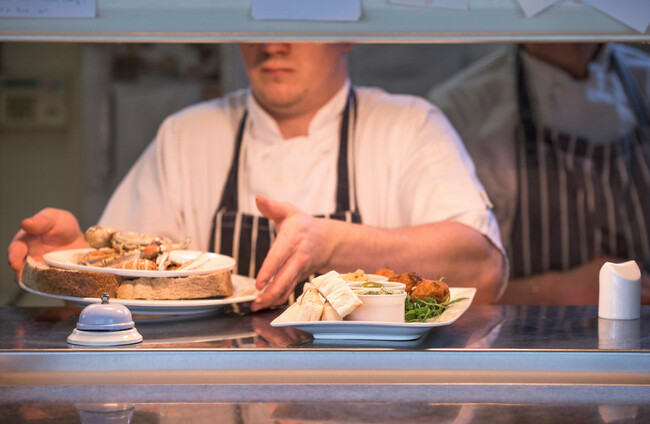
THE GOVERNMENT HAS been urged “not to delay its promise” of cutting the VAT rate for the hospitality sector to 9% in the upcoming budget.
Despite election promises and ministerial pronouncements, government this week has been signalling that a cut to the VAT rate for the hospitality sector may not go ahead in Budget 2026.
Tánaiste Simon Harris said the government had made a “solemn” commitment in the election to reduce the VAT rate for the hospitality sector, but this week the government has been sending mixed signals on how it will proceed.
Speaking to RTÉ Radio 1 yesterday, junior justice minister Niall Collins said the VAT cut was not a “done deal”.
VAT for the tourism and hospitality sectors was reduced to 9% during the Covid-19 pandemic at a cost of €1.2bn to the exchequer.
The previous 13.5% rate was reinstated last August, despite the sector’s opposition.
Retail Excellence Ireland (REI), the largest representative body for the retail industry in Ireland, has called on the Government to follow through on its “promise to permanently cut the rate of VAT for the hospitality industry to 9% in Budget 2026”.
Jean McCabe, CEO of REI, said that “after a tough few years, the Government’s solemn promise to cut the VAT rate for the hospitality industry was welcome”.
“It would be regrettable for it to delay its promise now,” she added.
“There are too many livelihoods at stake not to introduce a measure as soon as possible that would have such a significant impact on the industry, and on related industries such as retail.”
She said the government must do “everything in its power to strengthen our domestic economy at a time when we need it most”.
McCabe also called for the general rate of VAT be cut from 23% to 21% to assist the retail industry.
Meanwhile, the Irish Hotels Federation (IHF) has criticised the “deeply misleading” figure of €1 billion per year that was quoted earlier this week regarding the cost to the Exchequer of reducing VAT for hospitality businesses.
On Tuesday, during a press conference on the Summer Economic Statement, Minister for Finance Paschal Donohoe told reporters that the one-year cost for reducing the hospitality VAT rate to 9% for restaurants and hotels would be between €950mn and €1bn.
However, later in the press conference, Donohoe said he would need to clarify if that figure did include hotels.
A spokesperson for the minister told The Journal today that, based on CSO data, the total one-year cost for restaurants and hotels is actually €810mn.
This is split €675mn for restaurants and cafes and €135mn for hotels.
The cost for hairdressers would be an additional €40mn.
IHF Chief Executive Paul Gallagher said it’s time for an “honest and balanced debate” that “recognises the economic and social importance of hospitality food service businesses and gives them a fighting chance to survive”.
He noted that the “true cost involved is significantly lower than the widely quoted €1bn figure cited by the Government in recent days”
Gallagher added: “The Government’s narrative has had the effect, intended or otherwise, of driving a wedge between the public and the hospitality industry, framing the VAT reduction as a giveaway to businesses.
“This is extremely divisive and simply not true.”
He said the 9% VAT reduction sought would apply to prepared food services, such as meals in restaurants, takeaways, commercial kitchens and food served on transport.
“The real beneficiaries are small food businesses,” said Gallagher, “many of which are operating on the brink of survival due to extreme food cost inflation and shrinking margins.
“Reducing VAT on food services is not a handout to hospitality businesses – it is a vital intervention for a sector that supports over 270,000 livelihoods and contributes significantly to the economy.”

To embed this post, copy the code below on your site










have your say