Sign in. It’s quick, free and it’s up to you.
An account is an optional way to support the work we do. Find out more.
Sign in. It’s quick, free and it’s up to you.
An account is an optional way to support the work we do. Find out more.
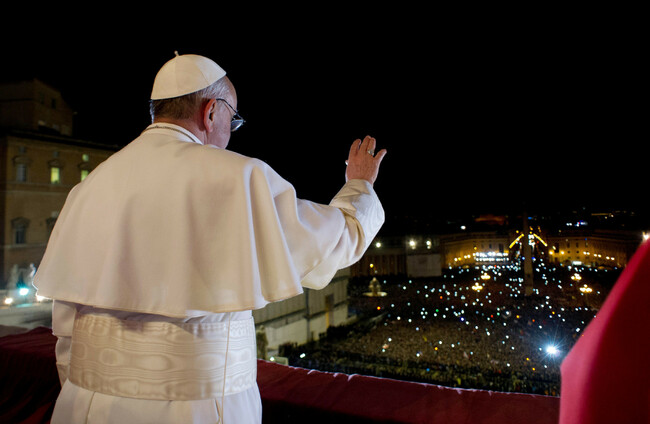

“TO SAY THAT I expected nothing like this, never in my life, or even at the beginning of that conclave, is certainly an understatement.”
In his memoir, Hope, which was published in January, Pope Francis recounts the 2013 conclave that elected him as the 266th leader of the Catholic Church.
Francis revealed that he was certain he would not become pope and had booked a return flight to Argentina, 11 days after the start of the conclave.
And in one of the first acts of his papacy, Francis was adamant that he would return to the hotel he had been staying in in Rome to square up the bill himself.
This photo captured perfectly how Francis’ pontificate was going to be different. On the morning after his election, Pope Francis went back to his hotel to pay the bill and pick up his own belongings. pic.twitter.com/QkDrMv0T5z
— Rich Raho (@RichRaho) April 21, 2025
Today, the staff involved in the conclave took their vow of secrecy.
At 10am tomorrow, the Cardinals will have Mass ahead of the conclave and then at 4.30pm, it’ll be their turn to take an oath of secrecy ahead of the first ballot.
Some 133 Cardinals will vote in the conclave, but as of yesterday, there was still one Cardinal outstanding – two pulled out due to sickness.
170 Cardinals, including 132 Cardinal electors, participated in the eleventh General Congregation on Monday afternoon, 5 May 2025. The Congregation began with a moment of prayer.
— Vatican News (@VaticanNews) May 5, 2025
According to the Holy See Press Office director, Matteo Bruni, around 20 interventions were… pic.twitter.com/CXwW9EcUjT
This will make the upcoming conclave the largest in history, so large in fact that there isn’t room for them all at the guesthouse made for Cardinals to stay in during conclaves.
Cardinal Camerlengo Kevin Farrell had to draw lots to see who would be the unfortunate few to have to reside in the old guesthouse.
Ahead of tomorrow’s conclave to elect the 267th pope, here’s how it played out in 2013, in Francis’s own words.
Pope Benedict XVI had stepped down, the first pope to do so in over 600 years, and Francis noted that he wasn’t “mentioned” in media circles as being “papabile” (or “pope-able”).
“The main candidates being suggested and sought out by journalists during those days in March 2013 were others.”
Indeed, the name of Cardinal Jorge Bergoglio, as Francis was back then, was missing from most of the news articles being written at the time.
After a pope dies (or resigns), Cardinals are summoned to the Vatican to prepare for a papal funeral and also to prepare for a conclave.
They engage in meetings called “general congregations” and during one such meeting, Francis made a short speech lasting four or five minutes.
Francis said he “hadn’t prepared” the remarks but he later discovered that the speech had “stirred interest, attention”.
He passed off such interest as “little more than kindnesses, courtesies”, but then one Cardinal approached him and wrote of the exchange:
“We could do with someone who will do things like that…” Yes, but where do we find him? I asked. “You,” he replied. I laughed: Ha ha ha, okay, ciao, and best wishes to the folks back home!”
The following day, on 12 March, the conclave began.
Francis said he had arrived at Santa Marta with “two cassocks and not much else”.
The Santa Marta is a hotel-like building constructed during the reign of Pope John Paul II to house cardinals during a conclave.
Francis would end up living there as pope as opposed to the more luxurious apostolic palace.
The late pope said this decision caused some “minor turmoil”.
“But I need to live my life alongside others,” said Francis. “Not even the pope can save himself alone.”
Francis said he had “left everything in Buenos Aires and had already bought the ticket for a return flight on 23 March.
“I decided to fly back on that Saturday. I’ll go back home. Full stop.”
He said the first round of voting is “more or less a matter of form”.
“A vote for a friend, for a person of respect…”
He explained: “When there are several strong candidates, those who are still undecided, like I was, vote for someone who won’t make it.
“These are ‘holding’ votes, cast in the expectation that the situation will develop and become clearer.”
Francis said he had thought that the votes cast for him in this first round were “stopgap votes”.
“At the second ballot, I still had ‘stopgap’ votes. On the third, there were a few more,” wrote Francis.
“The situation was clearly fluid, uncertain, and for this reason there was nothing that particularly surprised me.
“I thought that all would go smoothly, so that I could catch my flight to Buenos Aires and celebrate Palm Sunday and Easter there.”
But then something odd happened.
The archbishop of Havana asked if Francis would give him the text of the speech he had given to Cardinals.
Francis said there was nothing in writing, so he briefly wrote down the main points of the remarks.
“Oh, thank you,” he said. “I now have a memento of the pope to take home with me.” I still thought it was a joke.”
In his remarks to Cardinals, Francis had called for the Church to “go to the existential peripheries” and to stop engaging in “theological narcissism”.
That night in the dining area, Francis said he was quizzed by European Cardinals.
“They started to ask a thousand questions, of all kinds, about Latin America, about its peculiarities, about liberation theology.
“I found myself thinking: Hah, it seems like an exam… And in fact it probably was.”
But then the sometimes cutthroat nature of the conclave made itself known.
At the age of 21, Francis had a part of one of his lungs removed but this had been twisted into a grander story by Cardinals who didn’t want to see him succeed.
One Cardinal asked him if he was missing a lung.
“‘No,’ I replied, they cut away the upper lobe because I had three cysts.
“And when did it happen?” A long time ago, in 1957, I said.
“The cardinal turned red, uttered a swear word, and clenched his teeth: “These last-minute manoeuvres!” he exclaimed.
“It was then that I began to understand. I understood at least that the danger was there.”
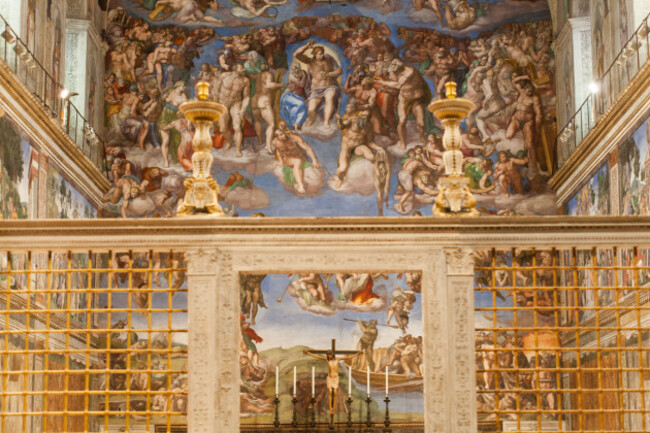
As seen in the film Conclave, some Cardinals follow along with the tallies – these too must be burned with the ballots.
“I never filled it out,” said Francis.
“I prayed the rosary, in peace. The vote counting is also tedious to follow—it seems like a Gregorian chant, but much less harmonious.
“I began to hear Bergoglio, Bergoglio, Bergoglio, Bergoglio.”
This was the fourth ballot, and Francis was now just a handful of votes away from being named pope.
On the fifth round of voting, an extra ballot slip which was empty was found.
“It was done again,” said Francis. “Even if that voting slip was blank, the whole procedure had to be repeated.
“They were all set on fire without even being opened, and the vote was immediately repeated.”
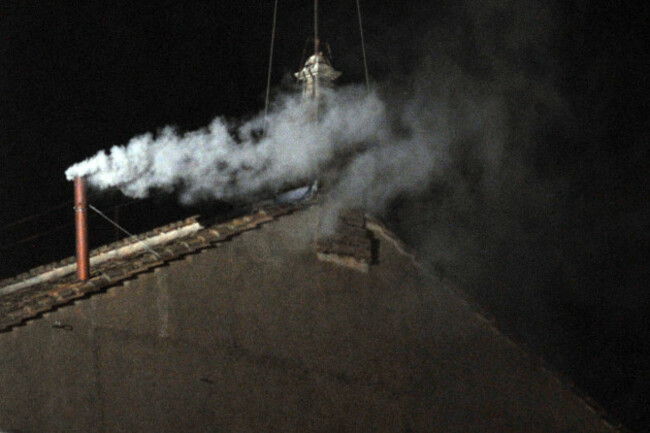
While Francis said he didn’t follow along with the tallies, others did.
When his name was called out for the 77th time, meaning he had hit the two thirds majority and was the new leader of the Catholic Church, “there was a burst of applause, while the reading of the votes went on”.
“There was a burst of applause, while the reading of the votes went on.
“I don’t know exactly how many votes there were in the end, I was no longer listening, the noise covered the voice of the scrutineer.
“But at that moment, while the cardinals were still applauding, Cardinal Hummes stood up and came to embrace me: ‘Don’t forget the poor,’ he said.
“Those words of his remained with me, I felt them in my flesh.”
Cardinal Bergoglio said it was then that the name of Francis appeared to him.
He recalled that during the days of the conclave, “a homeless man was wandering around Saint Peter’s Square with a placard around his neck. On it was written “Pope Francis I.”
He was then ushered into the sacristy in the Sistine Chapel known as the “room of tears”, where new popes are fitted for their first papal appearance from the central balcony of St Peter’s.
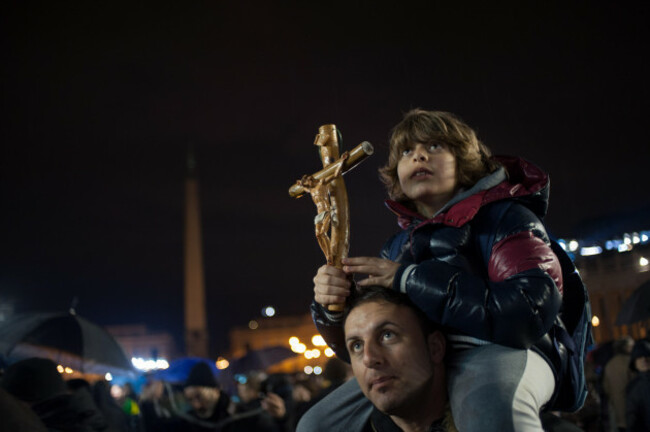
“They offered me a beautiful golden cross and I said: ‘I have this nickel silver one, I’ve been carrying it for twenty years.
“The red shoes? No, I have orthopaedic shoes. I’m rather flat-footed.
“Likewise, I didn’t want the velvet mozzetta, nor the linen rochet. They were not for me.
“Two days later they told me I would have to change my trousers, wear white ones. They made me laugh. I don’t want to be an ice cream seller, I said. And I kept my own.”
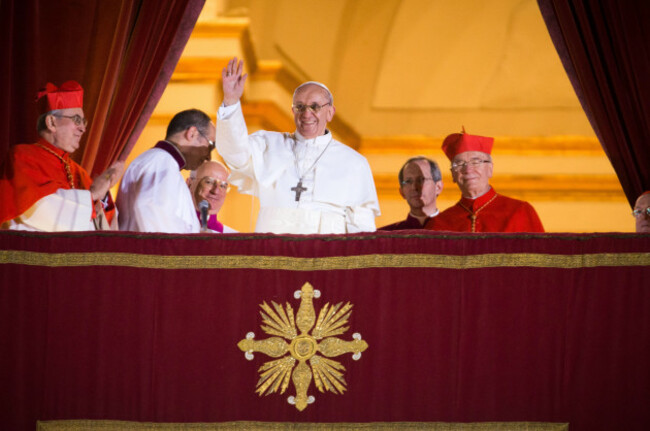
Francis also recalled how he physically stumbled moments before appearing as pope for the first time.
“Maybe because I wasn’t yet at ease in my new clothing, I tripped on a step. My first act as pope… was to stumble.”
Francis added that he didn’t sit on the papal throne that had been prepared, writing that there is “something medieval about someone kneeling in front of you and kissing your hand”.
“And so I went out onto the balcony overlooking the square. I had no idea what I would say.
“But I was at peace. Calm. A feeling that has never left me.”
When he rejoined the other Cardinals, a limousine was waiting.
“But I said calmly: No, no, I’ll go with the cardinals. We all took the minibus together and returned to Santa Marta. I saw no more of the limousine.”
Francis said he called the Argentine bishops that night to tell them not to come to his papal inauguration.
“Instead, donate the money to the poor and pray for me. Some of them came just the same, since that’s always what happens.”
His next call was to his sister: “The words had difficulty coming out. We gave each other a hug by telephone. We are always together, we said, in each other’s hearts.”
The next day, the new pope made a trip to the basilica of St Mary Major the place where he is buried and the place he visited before and after every papal journey.
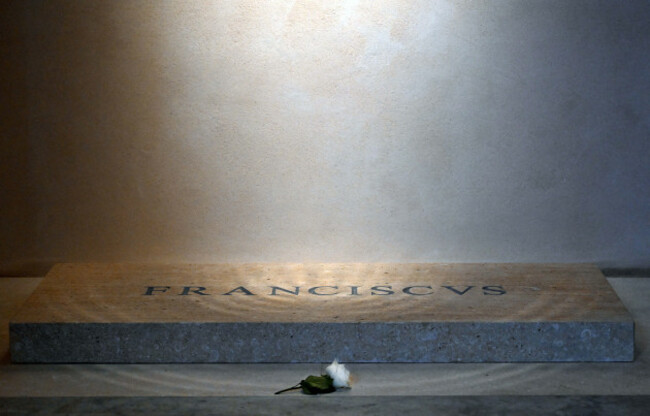
He also made an unscheduled stop here on his way back to Santa Martha following a 38-day stay in hospital.
“I asked to go early in the morning and – please – in a normal car,” said Francis of this trip to the basilica the day after becoming pope.
“They provided me with a blue Ford Focus, which I used for quite some time after that.”
Francis then asked to be taken to the hotel where he had been staying before the conclave in order to pay the bill.
“Don’t worry, we will sort that out,” I was told.
“But I wanted to go myself, since it was right that I should. I went up to my room, collected my things, packed my bag, and paid, saying goodbye to everyone.”
He also made a call to his news vendor in Buenos Aires, “thanking him and cancelling the delivery of the newspapers because… Well, you’ll know what has happened, I said.”
That evening, when he was shown the papal apartment which had been sealed since Benedict’s resignation, Francis wrote that he “said to myself immediately: I won’t be staying here”.
“I’m happy at Santa Marta because I have people around me,” wrote Francis.
Meanwhile, he said he had a “feeling” that his papacy would be “brief”.
“No more than three or four years, I thought. It was a vague yet fairly strong feeling that stemmed from the conviction of having been elected because the conclave was rapid: I had no other explanation.
“I never imagined that I would have made all those journeys to more than sixty countries.”

To embed this post, copy the code below on your site






have your say