Sign in. It’s quick, free and it’s up to you.
An account is an optional way to support the work we do. Find out more.
Sign in. It’s quick, free and it’s up to you.
An account is an optional way to support the work we do. Find out more.
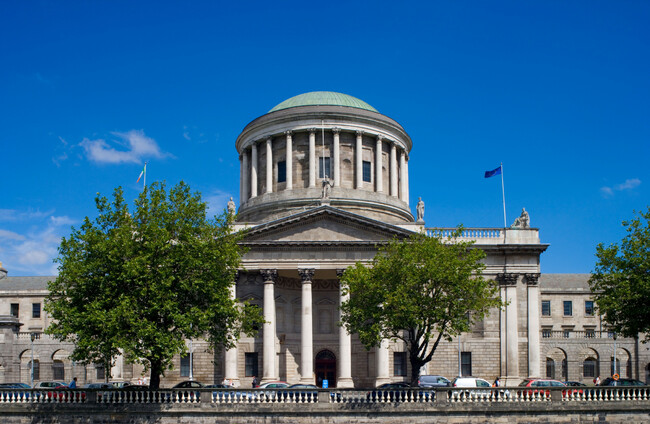
A TEENAGE GIRL who declined cancer treatment after she felt she wasn’t listened to by her doctor has the capacity to make decisions on her own medical care, the High Court has ruled.
President of the High Court, Mr Justice David Barniville, described the case as “very difficult and sensitive” but fully accepted a capacity assessment that found that the 17-year-old fully understood her diagnosis and treatment options.
His judgment was made in June and a written version was published by the Courts Service today.
Tusla, the Child and Family Agency, made an application to the court in May after a social worker raised concerns about the teenager’s medical welfare.
The teenager, who had been diagnosed with stage 4 vaginal cancer, had declined chemotherapy and other medical and hospital treatment.
As part of its application, Tusla said her condition “gave rise to urgent welfare considerations” and sought a number of orders concerning her medical care, including admission to hospital, if necessary, and “the provision of such medical treatment and care as might be considered to be in her best interests”.
Tusla also sought an order to prevent the girl from being removed from the state, outlining concerns that her parents might seek to take her out of the country if they had prior notice of its application.
These orders were granted and complied with, with Mr Justice Barniville noting that the girl and her parents participated “very constructively in the proceedings in what were no doubt very difficult and distressing circumstances”.
After the proceedings began, the girl’s guardian described her as “a very impressive person who was able to articulate her thoughts and views in a clear manner” and who was adamant that she was not willing to undergo a medical assessment.
She stated that she “had been through enough”, that she had undergone multiple scans and blood tests, that her body had been “tested and prodded” and that she felt “nobody was listening to her”.
However, she did indicate that she was willing to undergo a psychiatric capacity assessment, and the HSE subsequently arranged for one.
Dr Karen Humphries, a consultant psychiatrist, assessed the girl and concluded that she possessed “a detailed understanding of her diagnosis of Stage IV vaginal clear cell carcinoma, her prognosis, the treatment options available to her and the likely consequences of accepting or declining such treatment”.
She further concluded that the girl was “capable of understanding, retaining, using and weighing relevant information and communicating her decisions, and opined that she had capacity to make decisions concerning her healthcare and treatment”.
In her report, Humphries said teenager recalled that her diagnosis had been made due to scans that “my parents pushed for”. She described that she had been experiencing severe and prolonged bleeding and cramps when she menstruated so had gone to her GP, who had told her it was normal.
When her symptoms had persisted, she was taken back to her GP by her mother and on request a scan had been organised, which led to her diagnosis.
Humphries was satisfied that the girl understood the treatment options available to her.
When asked whether she would undergo further scans, the girl said she had had seven scans in 2025 and did not want more, stating that she “wants to get my body a break”.
The report also noted that the girl said she would be willing to attend for check-ups with her GP but would not go to the hospital. She expressed a lack of trust in the hospital and “her perception that she was not listened to”.
She said the girl “was quite aware that her diagnosis had a poor prognosis and that death was a probable outcome”.
“Despite this, given how she is currently feeling, she is quite positive and wants to continue feeling well. She understands the side-effects of traditional options and believes that these side-effects are worse than any potential benefits.”
Humphries concluded that she had the capacity to make decisions related to her treatment and care.
Before the final hearing of the case in June, the girl’s guardian provided an affidavit to the court to say that she was “doing very well” and was “not in any pain” and “able to complete all daily activities”.
When the matter returned to court last month, Tusla did not pursue its application for the orders originally sought related to the teenager’s care in light of the conclusion of Humphries’ report. This was supported by all parties involved.
Mr Justice Barniville said the teenager would turn 18 later this year “at which time
she would, of course, benefit from the presumption of capacity”.
He said it was very clear from the evidence that she understood her condition and what is likely to happen to her as her illness progresses. He said he “completely” accepted the evidence of Humphries and the girl’s guardian.
He described the teenager as “a remarkable young woman who has borne her serious illness with great dignity and fortitude with the support of her loving family”.
He added that Tusla was “entirely justified” in bringing its initial application in circumstances where there was “a very understandable concern” about the girl’s care and wellbeing.
He struck out the proceedings and thanked the girl’s parents and solicitor, before thanking her “for her cooperation with the professionals and with the court process”.
“I sincerely wish her and her family the very best in what no doubt will be very difficult times to come,” he said.

To embed this post, copy the code below on your site















have your say