Sign in. It’s quick, free and it’s up to you.
An account is an optional way to support the work we do. Find out more.
Sign in. It’s quick, free and it’s up to you.
An account is an optional way to support the work we do. Find out more.
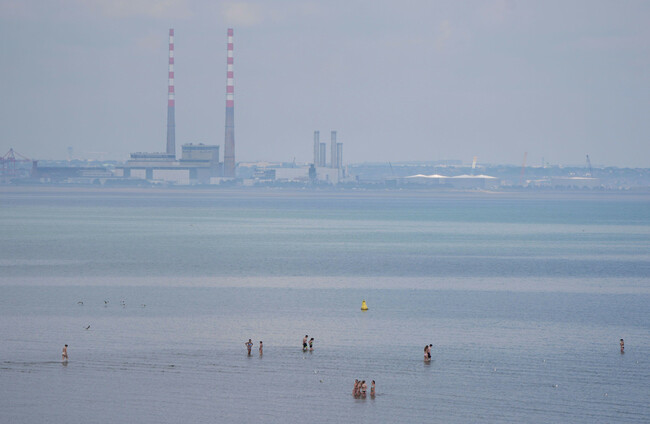
THERE ARE SUGGESTIONS that today may surpass the highest ever temperature set in the country, but when and where have the records been set to date?
According to data from Met Éireann, the highest temperature ever recorded in Ireland was on 26 June 1887 – exactly 139 years ago tomorrow – at Kilkenny Castle, Kilkenny coming in at 33.3C.
The summer of 2022 also experienced high heat, as Phoenix Park in Dublin comes in at second on the all-time list, as it recorded a temperature of 33C exactly on 18 August of that year.
The third-highest air temperature recorded was in the 20th century at 32.5C at Boora, Co. Offaly on 29 June 1976.
Coming in at fourth place was Athy, in Kildare which had a temperature of 32.4C on Monday 18 July 2022.
The previous holder before Phoenix Park for the highest temperature recorded in the 21st century was Elphin, Co Roscommon at fifth place on the list which set a record of 32.3C on 19 July 2006.
On Wednesday 30 June 1976, the day after a temperature of 32.5°C was recorded in Offaly, The Irish Times wrote an article on how the sunny weather heralded a rich and early harvest for farmers.
They say that the dry spell experienced at the time enabled farmers to save hay of very good quality. They also reported how Dun Laoghaire fire brigade had to deal with several gorse fires which they said were difficult to extinguish because of the distance from water sources.
Questions asked
The reliability of the 1887 record has been questioned in recent years, a fact that has been noted by Met Éireann.
Last year, the Royal Meterological Society previously conducted a study on the 1887 figure in which they concluded that the record should continue to stand, but with “some reservations noted.” Met Éireann also acknowledges this recommendation.
Speaking to The Journal today about the recent spike in temperatures, Maynooth University Emeritus Professor and climate change expert John Sweene said the link is clear with climate change.
“We now can use a phenomenon called attribution studies whereby we can run models with three industrial climates and with current carbon dioxide levels – and compare the frequency of density before and after we’ve messed up the atmosphere. What this shows is that there’s a very strong climate signal with extreme events in Ireland.”
He cited the floods in Middleton, Cork in 2024 which he says were deemed to be twice as likely as a consequence of climate change.
Around 100 homes in Midleton were flooded during Storm Babet, with roads submerged in water, shops destroyed, and a local hospital and many homes forced to evacuate for safety.
“Some attribution studies from heatwave events from last year, especially in Europe, indicate the topping up of the maximum temperature as a result of climate change would amount to between two and four degrees. We’re seeing enhanced maximum temperatures as a result of what we have done to the atmosphere primarily,” Sweeney said.
He concluded, “We’re going to see more intense extremes as time goes on. All of this is the price we have to pay for not tackling climate change in Ireland and globally and it’s part of something that we have to adapt to in the future”.
Keith Lambkin, Head of Climate Services Division for Met Éireann echoed these thoughts, as he spoke about how Irish attribution studies have also identified a link between climate change and extreme heat here in Ireland.
He noted that it has been found that the record-breaking May temperatures last month would not have been possible without human caused climate change.
“According to climate projections, it is virtually certain that the duration, frequency and intensity of heatwaves will increase into the future,” he said.
To embed this post, copy the code below on your site













have your say