Sign in. It’s quick, free and it’s up to you.
An account is an optional way to support the work we do. Find out more.
Sign in. It’s quick, free and it’s up to you.
An account is an optional way to support the work we do. Find out more.

The Housing Essay is a new weekly deepdive from a rotating variety of voices into issues impacting the property crisis in Ireland. Are there potential solutions that may be currently overlooked or traditionally ignored by policymakers?
“THE ONLY THING you can do is tax derelict properties” said a local politician who knocked on our door campaigning in the 2020 election. Even back then, before we started #DerelictIreland, we knew a tax wasn’t the only solution to rid ourselves of dereliction.
Yes, these so-called ‘sin taxes’ can be effective at nudging people to change behaviour away from harmful activities. That’s why we have sugar taxes and tobacco taxes. For the most part these have been successful at reducing consumption of these addictive and harmful substances. This is good for the personal health of smokers, and everyone else by reducing the burden on our healthcare system.
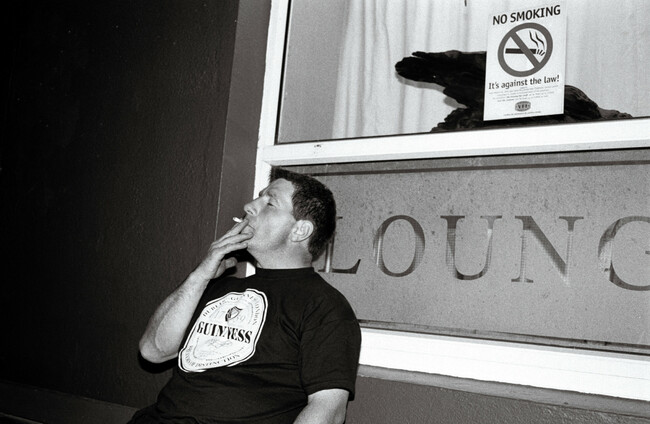
However, when it comes to individual behaviour harming others, we know that taxes alone aren’t going to protect us. That’s why the Irish government didn’t just tax tobacco, they brought in an outright ban on second-hand smoke in shared indoor spaces. By demonstrating real leadership, they helped to de-normalise smoking in public and social settings.
Like smoking, dereliction is also a public health issue.
The harms of dereliction don’t fall on the owner (who ultimately benefits from being able to hoard property until the market is willing to pay a higher price). The harms of dereliction fall on the rest of us. These range from direct impacts like rodent infestations and falling debris to indirect impacts like making a street feel dangerous.
Then there’s the wider social impacts of long-term vacancy, like reducing housing supply which leads to an increased burden on our housing system. So those buying or renting a home pay more, while the rest of us see more and more of our taxes being spent on keeping people in expensive emergency accommodation rather than providing them with their own home. All the time surrounded by long-term vacant and derelict properties that should be homes.
As with the smoking ban, we need to acknowledge that discouraging taxes are good but when used in isolation they are not enough to stop bad behaviour like hoarding and speculation. Yes, the new Derelict Property Tax, if well designed, should encourage many owners to either renovate or sell up. But this is a big IF, as from the details released to-date this new tax is at risk of being designed to fail, just like the Vacant Homes Tax was (we’ll explore this in more detail in a future Housing Essay).
On top of a potentially badly designed tax, very wealthy owners like the billionaire Comer brothers and waste magnate Eamonn Waters can always afford to pay a 7% tax so they can continue to hoard their derelict assets.
Therefore, we need to go beyond just taxing long-term vacancy and dereliction. We need to enhance our current ‘Use It or Lose It’ policy toolbox with additional measures that force owners to either maintain and use their buildings or else let someone else in. Note the words current and additional, because we already have well-established ‘Use It or Lose It’ policies under the Derelict Sites Act, meaning councils already have the power to enforce Compulsory Purchase Orders (CPOs) on derelict properties.
Despite the commonly held belief that CPOs are impossible to enforce, some councils have had a good success rate. For instance, between 2015-2018 Louth Council CPOed 92 derelict buildings to create nearly 100 social homes, quicker and cheaper than new builds. Yet this highly successful pilot was stopped without any justification or explanation. While examples like Louth make it clear that the current CPO process can be used more effectively, it’s important to note that the process does need to be streamlined.
A recent trend we are seeing is councils selling off properties they have CPOed. But this is a cumbersome, expensive and long-winded way to get vacant and derelict properties back onto the market. And potentially sees councils losing money if they overvalue derelict properties.
This is where Compulsory Sales Orders (CSO) comes into play and we don’t have to look too far to see examples of them working.
In Scotland, community groups can request to buy a commercial building that has been empty for five years. This Community Right to Buy could be replicated in Ireland for Cooperative Housing models and Approved Housing Bodies. Another example is England’s Enforced Sale Procedure, which enables Local Authorities to put derelict properties up for public auction. If the properties need to be made safe, costs are recovered from the sales price and the owners receives what’s left over.
When it comes to public health concerns, prevention is always better than cure.
Since vacancy is the gateway to dereliction we need measures that keep buildings in active use. This is where Compulsory Rental Orders (CRO) comes in. Ideal for habitable homes in high demand areas, CROs ensures that homes aren’t kept off the market for too long. Again, we don’t have to look too far to see examples of European countries legislating for CROs.
The Dutch Vacant Property Act (Leegstandwet) can put obligations on owners to rent out homes that have been empty for two months. Even if this is just for a short period of time like when an owner is waiting for renovations to start. Combined with mandatory reporting and fines of €4,500 – €9,000 for non-compliance, Amsterdam has managed to get homes reoccupied three times faster than before the introduction of this measure.
As we said before we believe everyone should have a home, so if the government continuously fails to uphold our constitutional right to common good and social justice, by enacting CPOs, CSOs or CROs, then citizens should be enabled to enforce a citizen-CRO (aka custodian squatting). This is where those in need of a home can use the long-term vacant homes once they maintain them to a good standard.
As we told an Oireachtas Committee last year, “It is not that you will have to enforce them against every owner. It is that if owners get an indication that there will be serious repercussions for owning derelict property and houses from now into the future, they will start selling” As such ‘Use it or Lose It’ polices could be designed to target homes owned by companies, bank and large landlords in a similar vein to Catalonia’s Vacant Home Tax.
Like all policy, the devil is in the detail and these details need to be fleshed out and debated, possibly through a Citizen Assembly.
There needs to be clear rules, fair exemptions and a consistent approach used across the country. Most importantly we need an agile and robust data system as we previously proposed.
So maybe ‘Use It or Lose It’s’ time has come, The evidence is strong, particularly given other democratic capitalist countries (who, like Ireland, see private property rights as core) have developed a variety of policies that are having an impact. And from our work with #DerelictIreland we have observed a marked increase in dialogue around compulsory sales and compulsory rental over the past two years, especially amongst politicians and the media.
As per the smoking ban, we need the government to demonstrate real leadership to de-normalise dereliction and long-term vacancy. And rather than dismissing the evidence we need to dig deeper and learn from other countries successes and failures before making some grown up decisions on what measures would actually bring vacant and derelict properties back into use.
We live with dóchas that they will move quickly to enact effective ‘Use It or Lose It’ policies, so we get even closer to ending dereliction and ensuring everyone has a home.
Jude Sherry and Dr Frank O’Connor are founders of anois.org, ffud.art and #DerelictIreland. They are part of a series of writers, academics and economists penning a weekly essay delving into the housing crisis and potential solutions.
To embed this post, copy the code below on your site












have your say