Sign in. It’s quick, free and it’s up to you.
An account is an optional way to support the work we do. Find out more.
Sign in. It’s quick, free and it’s up to you.
An account is an optional way to support the work we do. Find out more.
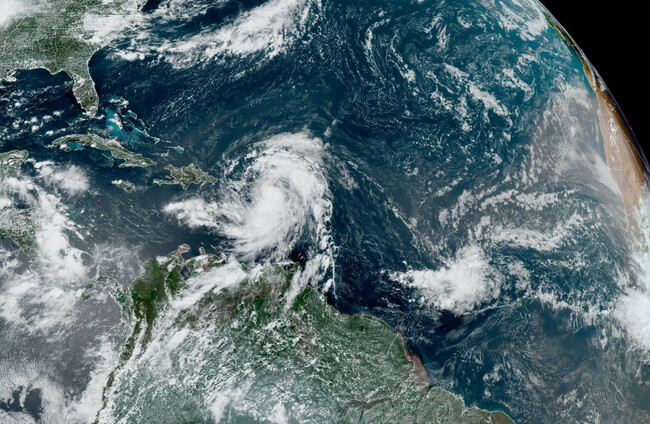
THE AFTER EFFECTS of a strong hurricane that has left thousands of people without power in Puerto Rico may be felt in Ireland next week as it tracks across the Atlantic.
Hurricane Ernesto reached maximum sustained winds of up to 100 m/ph near Bermuda late yesterday after hitting Puerto Rico on Tuesday, leaving up to 735,000 people without power as of Wednesday.
The UK’s Met Office said earlier that “remnants” of the hurricane could bring wind and rain to this side of the Atlantic next week.
Met Éireann has confirmed that there is still much uncertainty about the forecast but that it appears Ireland could experience some wet and windy weather in the middle of the week.
“Hurricane Ernesto is forecast to transition to a mid-latitude storm near northeastern Canada early next week with its remnants then tracking eastwards into the open Atlantic,” Met Éireann said in a new statement.
“As is typical with these systems there is a high degree of uncertainty in the forecast, but current indications suggest Ireland may experience some associated wet and windy weather on Wednesday (21st Aug) through to Thursday (22nd of Aug).”
It said it will be monitoring the evolution of Ernesto and any potential influence it could have on Ireland’s weather next week.
Seasonal hurricane predictions have anticipated an above-average Atlantic hurricane season in 2024.
In July, Hurricane Beryl became the earliest calendar year category 4 hurricane on record.
Sea surface temperatures in the tropical Atlantic are well above average for this time of year, which can have an influence on storms.
“Although climate change is not expected to lead to more tropical storms or hurricanes forming over the Atlantic in the future, the storms that do develop will have the potential to becoming stronger and more intense,” Met Éirean said.
“Sea surface temperatures (SSTs) of at least 27° Celsius are required to maintain tropical systems. As the world continues to warm, SSTs of 27° Celsius or higher will expand further north in the Atlantic to higher latitudes, enabling storms to maintain tropical status for longer as they travel north.”

To embed this post, copy the code below on your site













have your say