Sign in. It’s quick, free and it’s up to you.
An account is an optional way to support the work we do. Find out more.
Sign in. It’s quick, free and it’s up to you.
An account is an optional way to support the work we do. Find out more.
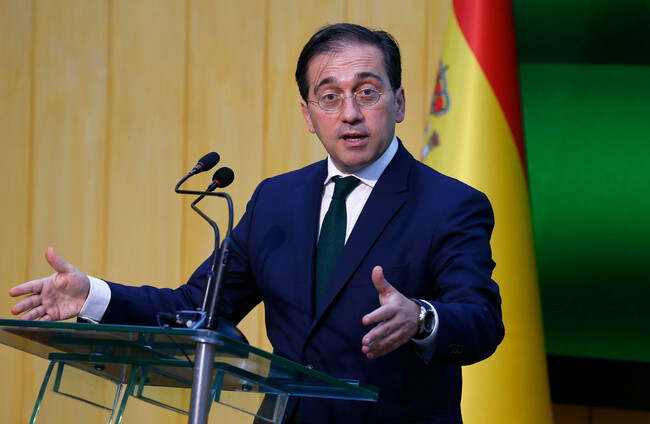
SPAIN’S FOREIGN MINISTER José Manuel Albares announced on Thursday that Spain would apply to join South Africa’s International Court of Justice case against Israel.
Albares, a member of Spain’s ruling Socialist Worker’s Party, made the announcement in a press conference on Thursday morning, saying: “We made this decision in light of the continuation of the military operation in Gaza… We want peace to return to Gaza and the Middle East, and for that to happen we must all support the court.”
Several other countries, including Mexico, Colombia, Nicaragua, Libya and Palestine itself, have already requested to attach themselves to South Africa’s case. Spain is the first European nation to do so. Spain, along with Norway and Ireland, formally recognised the state of Palestine last month.
Joining the case would enable Spain, as well as the other applicant nations, to make submissions to the court and speak during court proceedings.
In March of this year, Ireland’s Department of Foreign Affairs confirmed the State’s intention to intervene on behalf of South Africa in the case against Israel, though this is not expected to happen until later in the year.
In a statement to The Journal, a spokesperson for the department said that engagement with South Africa started from late January/early February, after early provisional measures were ordered by the court.
Public hearings in South Africa’s case, which alleges that Israel has committed and continues to commit genocide in Gaza, began in January of this year. The initial hearings resulted in an order from the court for Israel to take all measures to prevent the commission of genocide. In making the order, the court recognised that South Africa’s claim that Israel is committing genocide in Gaza is “plausible”.
The court, which is based in the Dutch city of The Hague, made an additional order in March which called on Israel to ensure the provision of food in Gaza as famine in the region worsened. This was followed by an order in late May for Israel to immediately cease its military offensive in Rafah. Notably, the court has not yet ordered a ceasefire. While the court’s orders are legally binding, it has no enforcement capacity.
The ICJ’s orders were made on the basis of early submissions made by counsel for South Africa, though it is anticipated that it will take years for the case to heard in full and a final verdict rendered.

To embed this post, copy the code below on your site















have your say