Sign in. It’s quick, free and it’s up to you.
An account is an optional way to support the work we do. Find out more.
Sign in. It’s quick, free and it’s up to you.
An account is an optional way to support the work we do. Find out more.
A LEGAL FRAMEWORK to recognise families which are created through international surrogacy has been proposed by TDs and Senators.
The Special Oireachtas Committee on International Surrogacy launched its report, which calls for both parents of a child born through an international surrogacy agreement be legally recognised as parents.
The report, which was launched this morning, has over 30 recommendations on international surrogacy and how it should be carried out.
Currently, there are no laws in Ireland to govern either domestic or international surrogacy.
Publication of the report comes as protests took place outside Leinster House calling for further protections for children who are born through surrogacy agreements.
Chair of the Committee, Social Democrats TD Jennifer Whitmore, said that Ireland has been a “laggard” in the area of international surrogacy and that the children and parents have been seriously impacted by legal issues.
“The pathways to parenthood are evolving with assisted human reproduction becoming a complex and fast-moving area of health care. Ireland must keep pace with this evolution and implement changes when necessary,” said Whitmore, in the foreword of the report.
“However, Ireland has been a laggard in this area for some time, and the resulting legal lacuna has had a significant impact on children and families from all across Ireland and presents risks to those on a surrogacy journey.”
The report recommends that a new legal framework be established to support families who have children born through international surrogacy.
This would see parental orders used to transfer parentage from the surrogate mother to the intended parents.
For this to be granted however, surrogacy must be legal within the chosen country and everyone involved in the surrogacy process must provide “full and informed consent”.
The committee is also recommending that the process of issuing parental orders should not begin until after the child is born.
The process itself will be guided through a new body, the Assisted Human Reproduction Regulatory Authority (AAHRA), which would be established under the proposed Assisted Human Reproduction Bill.
This bill was approved by Cabinet in late February and is currently making its way through the Dáil.
Additionally, the committee recommends that there should be a genetic connection between at least one parent and the child.
For parents of children who had already been born through international surrogacy, the committee is calling for a fast-tracked and “as close to automatic as possible” method for those families to be recognised.
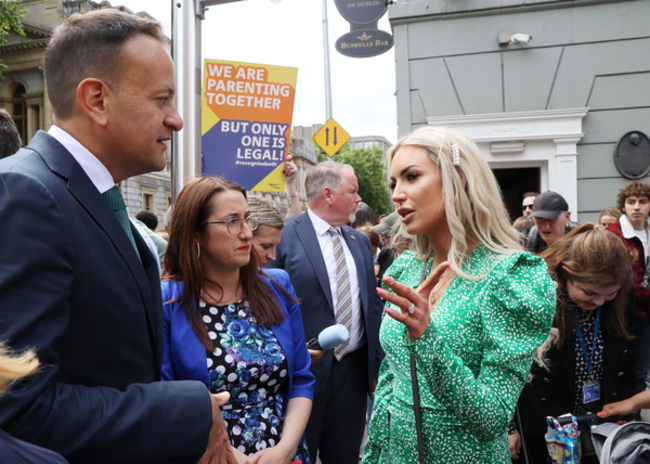
This afternoon, families and members of the Assisted Human Reproduction Coalition protested outside Leinster House calling for more work to be done for children born through international surrogacy.
Both Tánaiste Leo Varadkar and Health Minister Stephen Donnelly met with some of the protesters outside Leinster House.
Publication of the report has been welcomed by several committee members, including Fianna Fáil Senator Erin McGreehan, who said that the report will allow parents who have had a child through international surrogacy to be recognised.
“Many people in Ireland have a child through International Surrogacy and the recommendations within this report will allow for those people to be finally recognised as the legal parents of their child, as well as ensuring protections for the surrogate and access to genetic and gestational information for the child,” said McGreehan.
Ahead of the report launch, there had been controversy within the committee following comments from Independent Senator Sharon Keogan that she did not believe it was “everyone’s right to have a child”.

To embed this post, copy the code below on your site
















have your say