Sign in. It’s quick, free and it’s up to you.
An account is an optional way to support the work we do. Find out more.
Sign in. It’s quick, free and it’s up to you.
An account is an optional way to support the work we do. Find out more.
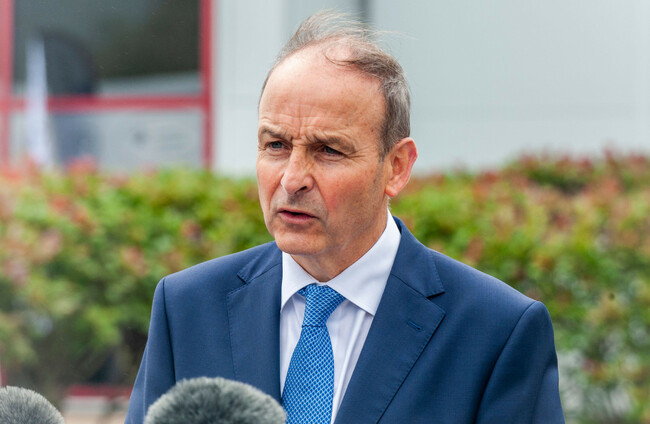
IRELAND HAS FORMALLY lodged a legal challenge in the European Court of Human Rights against the UK over its controversial Troubles legislation.
Tánaiste Micheál Martin had announced in December that the government intended to launch an inter-state challenge against the British government over the Northern Ireland Troubles (Legacy and Reconciliation) Act 2023.
The ECHR has now confirmed that it has received Ireland’s application, which argues that certain parts of the UK’s legislation are not compatible with the European Convention on Human Rights.
The act, which was signed into law in the UK in September, includes a form of limited immunity for some perpetrators of crimes committed during the Troubles and would also prevent future civil cases and inquests into Troubles offences.
The Tánaiste said in December that the decision to launch a legal case was “taken after much thought and careful consideration”.
“I regret that we find ourselves in a position where such a choice had to be made,” Martin said, adding that the UK’s actions had “left us with few options”.
“The British Government removed the political option and has left us only this legal avenue.”
In response, the UK’s Secretary of State for Northern Ireland Chris Heaton-Harris said the case was “unnecessary” and that it came at a “particularly sensitive time in Northern Ireland”.
“It did not need to be taken now, given the issues are already before the UK courts,” Heaton-Harris said.
https://www.echr.coe.int/documents/d/echr/press_q_a_inter-state_cases_eng
In a press release today, the Court outlines that the Irish Government is arguing “that certain provisions of the Act are not compatible with the European Convention”.
“They rely on Articles 2 (right to life), 3 (prohibition of torture and inhuman or degrading treatment), 6 (right to a fair trial), 13 (right to an effective remedy), and 14 (prohibition of discrimination),” the Court states.
“The Irish Government allege, in particular:
There have been only a few dozen inter-state cases since the European Convention entered into force in 1953, one of which was a case a case brought by Ireland against the UK in 1978 over interrogation techniques used during the Troubles, which the UK lost.

To embed this post, copy the code below on your site













have your say