Sign in. It’s quick, free and it’s up to you.
An account is an optional way to support the work we do. Find out more.
Sign in. It’s quick, free and it’s up to you.
An account is an optional way to support the work we do. Find out more.
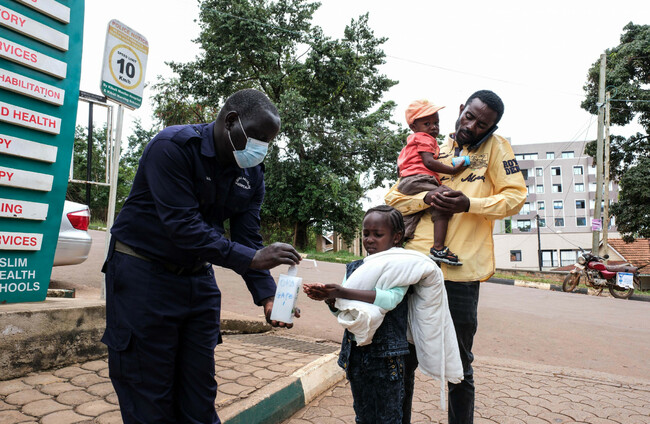
PROCEDURES ARE IN place to detect and manage cases of Ebola in Ireland, even though the risk to the Irish population is low, the HSE has said.
An outbreak of the deadly disease this month in the Democratic Republic of the Congo (DRC) and Uganda has caused alarm among international health officials and the World Health Organisation (WHO) has declared a public health emergency of international concern.
The head of the WHO has said he is “deeply concerned” by the rapid development of the epidemic.
“Early on Sunday, I declared a public health emergency of international concern over an epidemic of Ebola disease in the Democratic Republic of the Congo and Uganda,” Tedros Adhanom Ghebreyesus told the World Health Assembly in Geneva.
“I did not do this lightly… I’m deeply concerned about the scale and speed of the epidemic,” he said.
The strain of Ebola, caused by the Bundibugyo virus, has no treatment or vaccine and is different from the more common Zaire form of the virus. The new strain has a death rate of between 25% and 40%.
The full extent of the epidemic is not yet known.
Today, the DRC’s health minister Samuel Roger Kamba said today there have been an estimated 131 deaths from 513 suspected cases.
The previous figures from the epidemic in the country’s east were a total of 91 dead out of 350 suspected cases.
The Africa Centre for Disease Control has declared the outbreak to be a Continental Public Health Emergency.
“Africa CDC expresses deep concern about the high risk of regional spread due to intense cross-border population movements, mobility related to mining activities, insecurity in affected areas, weak infection prevention and control measures… and the proximity of affected areas to Rwanda and South Sudan,” it said.
The agency said it was working closely with the WHO to strengthen coordination, as developed in response to recent Mpox and cholera outbreaks.
“This outbreak is occurring in one of the continent’s most complex operational environments, marked by insecurity, population mobility, fragile health systems, and the limited availability of medical countermeasures for Bundibugyo strain Ebola virus disease,” said Africa CDC head Jean Kaseya.
“The current Ebola outbreak poses a low risk to the Irish population,” a HSE spokesperson said, adding that the European Centre for Disease Prevention and Control (ECDC) has made a similar assessment regarding the EU in general.
“Although the outbreak is serious, it is rare for Ebola cases to occur in returning travellers,” the HSE said.
The spokesperson said the HSE “routinely monitors outbreaks of infectious disease around the world and continually assesses the risk to Ireland” and that “the HSE has procedures in place for identification and management of cases of Ebola virus disease”.
The Department of Foreign Affairs said it was closely monitoring the outbreak in the DRC and Uganda and advised Irish citizens to avoid Ituri Province in the DRC in particular, where the disease was first detected.
“Those who develop symptoms should self-isolate immediately, avoid all travel, and contact health authorities or a healthcare facility for advice,” a spokesperson said.
The Department said it continues to advise against travel to the DRC while people visiting Uganda should exercise a high degree of caution.
Dr Gabriel Fitzpatrick, a former chair of Doctors Without Borders Ireland and a consultant in public health medicine who worked during the Ebola crisis in Sierra Leone in 2014, has said cuts to international aid funding from some countries has impacted the response to the latest outbreak.
“A number of large economies have recently cut funding to health projects in many countries,” he said.
The United States recently cut the vast majority of its foreign aid spending, while the UK has also reduced its aid funding.
“Such cuts result in the closure of clinics with the consequent delayed detection of outbreaks,” Fitzpatrick said.
“Irish leaders should push for a commitment from the EU to reimagine and strengthen global health funding.”

To embed this post, copy the code below on your site









have your say