Sign in. It’s quick, free and it’s up to you.
An account is an optional way to support the work we do. Find out more.
Sign in. It’s quick, free and it’s up to you.
An account is an optional way to support the work we do. Find out more.
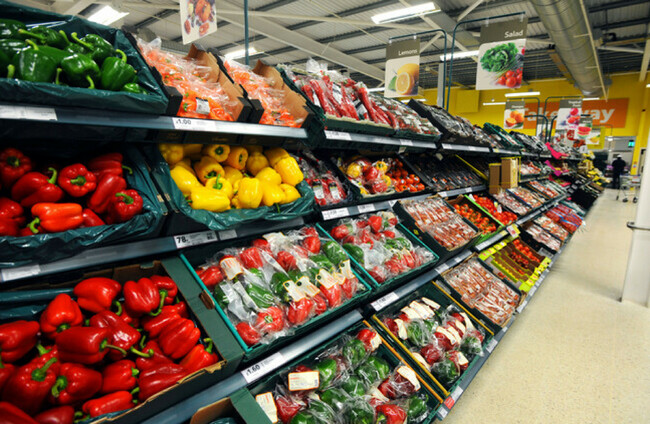
FOOD PRICES IN Ireland were the second most expensive in the Eurozone last year, according to new figures from the Central Statistics Office (CSO).
The survey compared the prices of food, drinks and tobacco across 36 European countries in 2024.
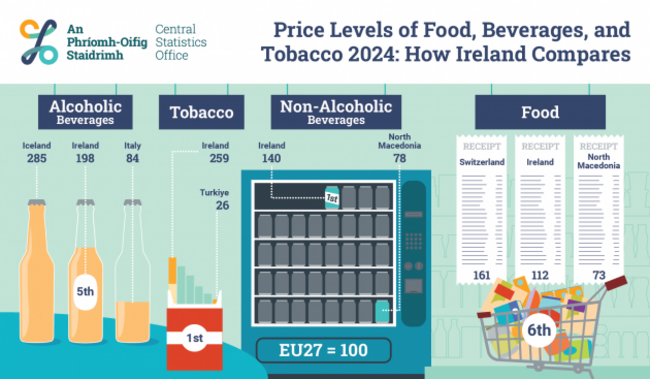
It found that Ireland were 12% above the EU average last year when it came to food prices, making them the third most expensive overall in the bloc of 27 countries.
Ireland was also the second most expensive country in both the Eurozone and the EU for alcoholic drinks, with prices just under double the EU average last year.
When it came to non-alcoholic drinks, Ireland was the most expensive of the 36 European countries in 2024, with prices 40% higher than the EU average.
Tobacco prices in Ireland were also the most expensive of the 36 countries surveyed last year, at some 159% higher than the EU average.
The data shows that Ireland was the third most expensive country in the Eurozone for bread and cereals, the sixth most expensive for fruits, vegetables and potatoes, the eighth most expensive for milk, cheese, eggs and fish, and the twelfth most expensive for oils and fats.
It was the ninth most expensive country for meat in the Eurozone. Meat was also the only food category where prices in Ireland were not higher than the EU average last year.
Of the 36 countries surveyed, food was the most expensive in Switzerland at 61% above the EU average, and the least expensive in North Macedonia at 27% below the EU average.
The highest alcohol prices were found in Iceland, at 185% above the EU average, while Italy’s alcohol prices were 16% below the average in the bloc and the cheapest overall.
At 22% below average, North Macedonia was the least expensive when it came to non-alcoholic drinks. Tobacco prices were found to be the lowest in Turkiye at 74% below the EU average.
The findings come after the Consumer Price Index (CPI) for June showed that the price of food in Ireland has increased by more than double the price of everything else over the past year.
Earlier this month, a report by children’s charity Bardarnos also revealed that four in ten parents had skipped meals or reduced their portion size so that their children had enough to eat over the past six months.
The rising cost of groceries has been raised in the Dáil in recent weeks, with the Social Democrats calling on the government to mandate that supermarket chains and retailers publish their profits, something they are not currently required to do.
In response, Taoiseach Micheál Martin claimed that the government introduced one of the most significant cost-of-living packages in Europe following Russia’s invasion of Ukraine and the subsequent inflation spike.
He also pointed to other government measures, such as free school lunches, free school books and free public transport schemes for some students, as ways in which the government has been trying to support households with the cost of living.
The government has ruled out any repeat of one-off cost-of-living measures in Budget 2026, something that the opposition has criticised them for.
But Fine Gael and Fianna Fáil ministers have repeatedly said that October’s budget will include more-targeted measures to help those who are struggling the most, and that public spending needs to be cut back in the face of a threat of US tariffs.

To embed this post, copy the code below on your site










have your say