Sign in. It’s quick, free and it’s up to you.
An account is an optional way to support the work we do. Find out more.
Sign in. It’s quick, free and it’s up to you.
An account is an optional way to support the work we do. Find out more.
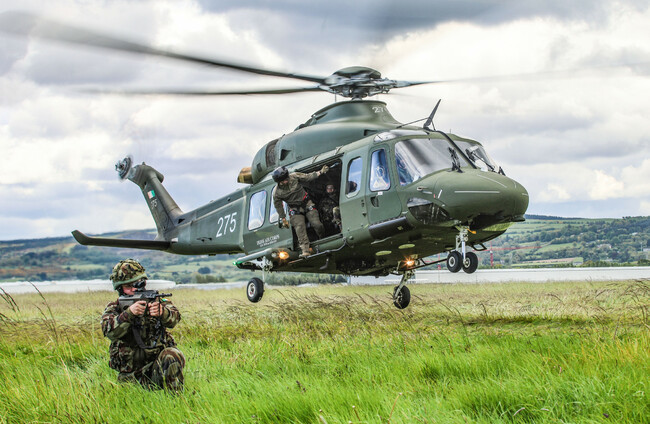

LATER TODAY, THE defence budget will refer to increased funding for more recruits and civilian staff, but behind the scenes the major projects to build capability remain shrouded in a lack of certainty because the money simply has not been assigned to fund them.
It’s a difficult task to try to get the solid reality of what is happening with defence spend ahead of the budget, with sources wary to put exact numbers on the money needed.
From the official side all we can go on from the Irish government are the positive platitudes of ministers as they declare record highs in expenditure and Ireland’s commitment to buy modern kit for the Irish Defence Forces.
Ireland maintains its position at the bottom for defence investment in Europe at 0.2% of GDP.
Budget 2027, set to be announced this afternoon, is the funding for the year ahead on how to run the various departments and agencies of State. It will announce the funding to recruit 400 military personnel, as well as additional civilian staff.
There will be a 10.5% increase in the annual Department of Defence budget for next year.
But the defence budget will not deal directly with the large scale capability development that has been mooted, that money, we have found, does not yet exist.
2022′s report of the Commission on the Defence Forces recommended a range of sweeping changes. A series of implementation plans have since been announced, however one key document still has not been signed off on – the long term investment strategy.
Answering a question in the Oireachtas on 16 September Minister Helen McEntee gave the figures that she said show a 45% increase in the Irish defence spend.
“This reference relates to the increase in Defence Vote Group funding from an allocation of €1.040 billion in 2020 to €1.492 billion in 2026, an increase of €452 million or 43% over this period,” she said.
There have been repeated announcements of purchased maritime surveillance and cargo aircraft, hastily bought counter drone equipment for the EU Presidency and a primary radar project that does genuinely look like it will be realised.
Scratch the surface though, and things get an awful lot more difficult to put a shape on – only the €300m to €500m primary radar project is certain. But the exact figures for that have never been uttered publicly.
The radar deal has been agreed as Ireland’s close ties to France get closer still, with a government-to-government agreement to purchase the kit from the French defence industry giant Thales.
We spoke to sources here and abroad about the defence spending issue and asked the simple question: is the money there to fund it?
The sources are nervous, even those not tied into Irish government jobs. No one will go on the record, and they are fearful of being identified as the person who lifts the lid on the reality.
Sources speak of a small, capable team inside the Department of Defence working through high-end projects that include new naval ships, a fleet of armoured cars and upgrades to barracks.
They are drawing up plans for a purchase of new Irish Air Corps training aircraft and working on a sometimes-on-sometimes-off plan for medium lift helicopters.
There have been revised Detailed Implementation Plans and other announcements, but gears move slowly when the figures are in the billions.
In most quarters there are exasperated sighs of dejection and an acceptance that while it sounds to the public like it is happening now, the reality is that the long-term defence plan has not been signed off on by the government and therefore the exact figures are not agreed.
In the five years since the Commission on the Defence Forces report there have been plenty of additional reports and no shortage of associated plans, but little movement in any real sense that has brought Ireland to the standard of defence investment that was initially set out.
The radar will be paid for out of the National Development Plan (NDP). In December last, the NDP was boosted with an extra €1.7 billion for defence to cover the next five years.
However, as one source puts it bluntly: “That’s a drop in the ocean, and it is at risk of being soaked up by other projects like barracks refurbishment. Everyone wants a piece of the pie.”
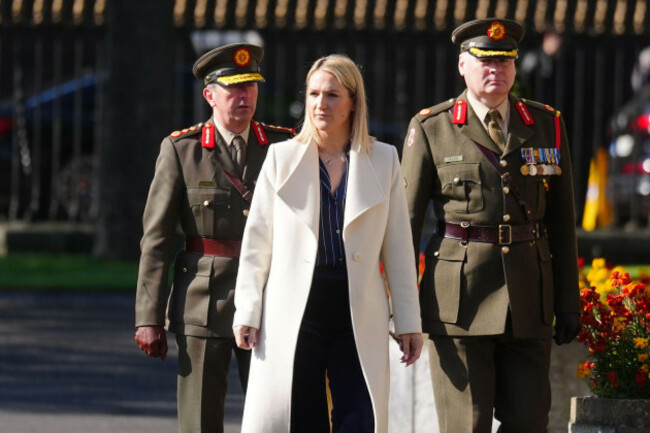
Three well-placed sources familiar with what is needed have all come up with a similar number.
Ultimately it has been identified that the State, if it is to meet its ambitions, will need upwards of €800m extra annually to just keep pace with its plans for the next ten years at least.
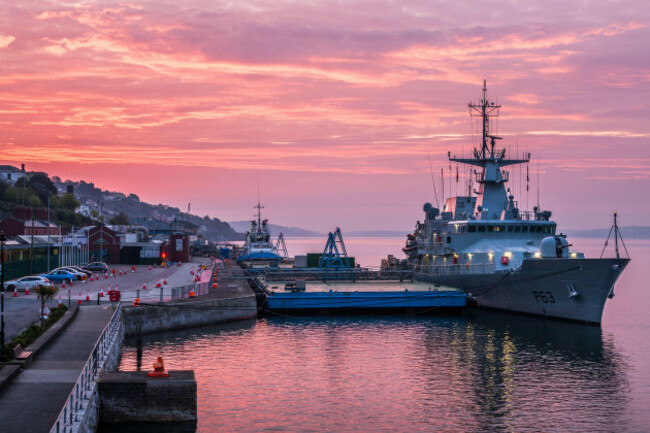
A well-placed source explained an example of the metrics of a deadline that will have to be met and paid for regardless of all the other hopes of capability increases. That issue is the need to replace the eight Irish naval patrol ships.
“The navy ships are the most needed asset given the Atlantic and the obligations to patrol the Exclusive Economic Zone.
“They will have to be replaced by 2040 – that has to happen. That investment in new ships is not just one and done – they will then last until 2070 or so but the reality is that all costs money and the navy ships are assets we can’t do without,” the source explained.
The sources said that a figure of between €9 billion and €11 billion is needed over the next 10 years just to meet what is needed to cover the expectations.
That figure will also have to keep pace with the ever-increasing toll placed on defence expenditure by an inflation in industry costs. In short, countries are buying so much kit to counter the Russian threat that the costs to purchase are increasing exponentially.
We went to government sources and asked them what they thought of the €800m figure. One well-placed source said the issue with putting any kind of figure on the defence spend is a simple one – the long term plan, which is being prepared, is still not complete.
“No one is at the point of being able to say 100% what we need, okay there’s been announcements, but the long term plan isn’t ready, it is nearly there, but it is not ready yet,” one well-informed source said.
That source also said that the budget on Tuesday will not have big announcements in it.
While many sources suggest Ireland’s issue is not one of ambition rather it is the issue of commitment to the spend.
Some have suggested, quite forcefully in some quarters, that Ireland should just join the €150 billion defence loan scheme known as Security Action for Europe (SAFE).
These are loans from the European Union to countries to help them advance their defence capability paid back over 30 to 40 years. Ireland has opted out of it but recently Tánaiste Simon Harris has mooted his tacit support for the Irish State joining the scheme.
We asked Finance sources will this be announced and they were non-committal.
One source suggested that the best way to fund the billions needed would be found in SAFE, but this has been dismissed to some degree by government sources. It simply would not cover the entirety of what is needed given that the last traunch of SAFE was around €20 billion.
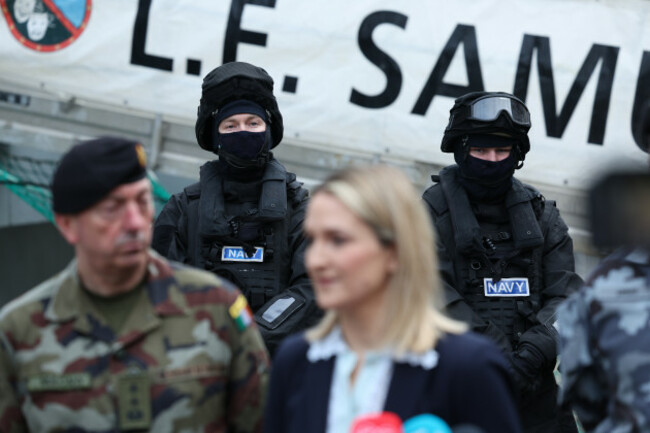
Behind the scenes the monstrous overspend in education this year has prompted a €12 million levy and the Department of Defence is not immune from that, in fact sources are saying it is causing a severe tightening of belts.
A spokesman for the Irish Defence and Security Association, a group focused on bringing financial gains for Irish companies in the defence sector, said it has been looking forward “to the Department of Defence finalising its local industrial participation policy in the near future”.
They’re advocating for local industry to provide a “sovereign” capability to maintain military equipment at home.
Martin Ryan, President of the Representative Association of Commissioned Officers (RACO) said “Planning without resources is simply dreaming”.
He said his members, the Defence Forces officers, are “hugely concerned with the lack of timely progress”.
A statement from the Department of Defence said there has been a steady increase in Defence budgets annually since the publication of the Commission on the Defence Forces (CoDF) Report in 2022.
“Overall, the Defence Vote Group funding allocation has increased by 43% since 2020, and specifically since the CODF in 2022 by €385million (35%) to €1.49 billion in 2026.
“These funding increases have been delivered across Pay, Current Non-Pay and Capital spending categories. There was a record spend of €1.039 billion on the Defence Vote in 2025,” it said.
The DOD explained that following on from a National Development Plan (NDP) review undertaken in 2025, capital funding of €1.7 billion was allocated to Defence for the period 2026-2030. This level of funding represents an increase of €600 million (55%) on the previous baseline figure of €1.1 billion provided to defence.
“The Government is committed to continued increased investment in defence, with a view to achieving a significantly enhanced capability by 2028 and, thereafter, moving as quickly as possible to develop defence capabilities that would match those of other similarly-sized Western European countries,” it added.
Whatever happens on Tuesday when the budget details are released – from talking to those nervous sources it is clear that there will be still no answers to the question: “is the money there to fund it?”

To embed this post, copy the code below on your site












have your say