Sign in. It’s quick, free and it’s up to you.
An account is an optional way to support the work we do. Find out more.
Sign in. It’s quick, free and it’s up to you.
An account is an optional way to support the work we do. Find out more.
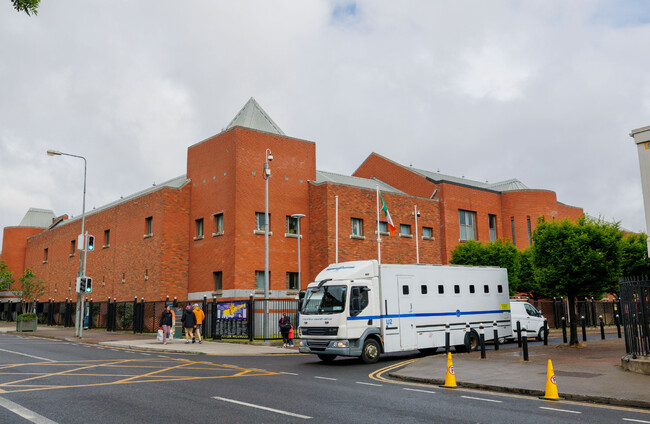
A NEW PILOT program to allow prisoners to receive phone calls from listed friends and family members to landline phones in their cells could be expanded, the Irish Prison Service (IPS) has said.
Inmates in the women’s Dóchas Centre and the Training Unit at Mountjoy Prison now have phones installed in the “vast majority of cells” as the project is being rolled out, an IPS spokesperson has said.
The Dóchas Centre is on the Mountjoy campus in Dublin, it features residential-style units and operates on a community-based model. In the last year it has dealt with significant overcrowding issues, as it reported earlier this year that it was at times operating at 155% capacity.
The Mountjoy training unit has 96 cells. It exclusively houses older male prisoners, many of whom are nearing the end of their sentence and are focusing on planning for life outside of prison, and reintegrating into society.
The inbound phone scheme that began this week allows prisoners to receive calls during lock-up hours between 7.30am and 11pm.
Enda Lee, press officer with the IPS, said that when it comes to planning for reintegration, building up contact with family and friends is vital.
“It supports family reintegration, people who are successful with adjusting to life after prison are those with strong supports and a network on the outside, so it’s way of keeping a link between the person in prison and the person at home,” he said.
He added that there can be “competition” for accessing shared phones at the end of prison floor landings.
“The six-minute phone call has always been the thing, and you don’t get a second call. So this is about a chance to get another call from the family, at a time that suits family members to make that call themselves, because it can be difficult for people with busy lives and kids,” Lee said.
Lee said that the IPS is open to expanding the pilot to higher security prisons if the three-month pilot program goes well.
“Anything that’s brought into a prison can be abused, and these phone lines will still be monitored – calls will be recorded – so we’re not ruling putting them in Portlaoise or other prisons if the trial goes well,” he added.
Access in in-cell phones is a privilege, and can be taken away in the event of misuse.
Saoirse Brady, the director of the Irish Penal Reform Trust (IPRT), has welcomed the new initiative, she said it will foster “stronger family relationships”.
She added that the chronic overcrowding levels in prisons means that the system for booking visits to see prisoners via the phone and online is under pressure as staff are “overstretched”.
Brady said that in this context, in-cell phones could prove to be a “vital way” of maintaining family contact.
Brady flagged that the IPRT is conscious that “many people are currently sharing a cell” and that this may cause issues and challenges that would need to be addressed as the rollout of the program continues.
She added that Ireland does not allow prisoners who are married or in long-term relationships to have conjugal visits, and the lack of privacy with the existing phone facilities means that there is little opportunity for people to have “any level of intimacy or private in-person conversations”.
Brady said that its particularly welcome that the pilot is being extended to the Dóchas centre.
“We know that many women in custody are mothers and primary caregivers, and the lack of contact with their children has long-lasting negative impacts on their wellbeing and can be deeply distressing for their children,” she said.
To embed this post, copy the code below on your site













have your say