Sign in. It’s quick, free and it’s up to you.
An account is an optional way to support the work we do. Find out more.
Sign in. It’s quick, free and it’s up to you.
An account is an optional way to support the work we do. Find out more.
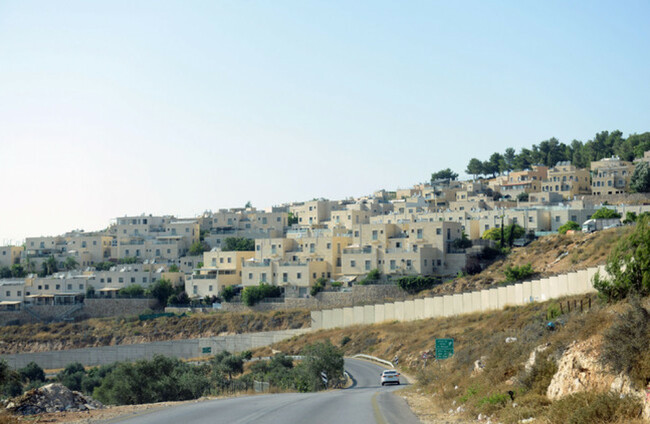
THE ISRAELI AMBASSADOR to Ireland has said she is “disappointed” to learn that the Government is conducting a review on the Occupied Territories Bill, which would ban trade between Ireland and illegal Israeli settlements in Palestine.
In a statement posted to X, Dana Erlich accused the Government of succumbing to the “pressure of the opposition” by seeking that the Bill, first proposed by independent Senator Frances Black in 2018, be legally reviewed by the Attorney General.
She claims the bill is a “discriminatory attempt to target Israel” and labels to proposed legislation as “anti-Israel”.
The Bill, as reported by The Journal‘s FactCheck last week, will not ban trade between Ireland and the Israeli state but rather aims to unilaterally ban the trade of goods and services that are imported from colonies in illegally occupied territories anywhere in the world.
In recent weeks the Government has, for the first time, been seriously considering enacting the Occupied Territories Bill 2018 after years of activism from pro-Palestinian rights groups, parties in the opposition and human rights’ organisations.
My statement on the proposed “Occupied Territories” bill. pic.twitter.com/czhtIFlkXK
— Dana Erlich 🇮🇱 (@DanaErlich) October 23, 2024
Coalitions leaders have said the decision to seek a legal review of the legislation was taken in light of a recent International Court of Justice advisory opinion that stated the settlements in Palestine by Israel were illegal.
Under Article 8 of the Rome Statute of the International Criminal Court (ICJ), it is illegal for a country to transfer its own citizens to the land of another territory that it occupies.
The new advisory opinion came after the UN General Assembly in December 2022 requested that the statue be reviewed in the context of prolonged occupation in Palestine.
Israeli colonies, or settlements as they are commonly known, have been taking place - with and without government approval - for decades. Israel has occupied Palestine, which includes the West Bank, East Jerusalem and Gaza, since 1967.
A notable settlement recently approved by the Israeli government was on a UNESCO World Heritage Site near Bethlehem in the occupied West Bank in Palestine. The ICJ’s advisory opinion recommends outlawing all Israeli settlements in Palestine.
Taoiseach Simon Harris has said that it is the duty of the Irish State, as a member of the ICJ, to ensure that its laws work in line with the rulings and opinions of the court.
Erlich claims, however, that the call for a legal review was a “cynical political decision” and argues that the advisory opinion by the ICJ is not legally binding, therefore not making it mandatory for States to take action.

She adds: “Unfortunately, Israel has been the subject of many baseless accusations that are regrettably and too often automatically accepted in Ireland without proper scrutiny.”
As an election looms, it is unclear whether the current coalition will enact the legislation by the time the Dáil is dissolved. The Labour Party led calls from the opposition this week for TDs to meet during recess next week to vote on the Bill.
The Taoiseach and Tánaiste Micheál Martin have both said that the legislation is legally complex and will require a substantial number of amendments so that it falls in line with rulings from the ICJ and EU trade law.
Simon Harris, speaking in Brussels last week, signalled that Ireland would press forward with enacting legislation in this area whether or not other EU leaders voted at a panEuropean level. The EU has largely been divided over the issue.
The motivation for drafting the Occupied Territories Bill was to introduce a ban on trade with Israeli settlements in occupied Palestine, which are considered illegal under international law and have been declared as such by the United Nations.
However, there are no direct references to Israel or Palestine in the text of the bill, and the legislation could apply to settlers in other occupied territories.
For example, it could include goods exported by Russia from Crimea, a Ukrainian territory that has been under Russian occupation since 2014.
Furthermore, it would only apply to goods produced in the settlements themselves, rather than the territory produced by the occupying power.
The bill would not lead to a wider ban on the importation of goods produced in the state of Israel.
Alternatively, to use the example of Crimea, it would not criminalise the importation of goods produced within Russia’s internationally recognised borders.
The provisions contained in the bill would apply to Irish companies, citizens and people who are ordinarily resident in Ireland.

To embed this post, copy the code below on your site
















have your say